
Why Replacement Day Looks Different Than You'd Expect
Homeowners across the DFW metro often picture roof replacement as one long blur of noise, but the day actually follows a tight, predictable sequence. Crews move in stages, not chaos, because each layer depends on the one before it being done right. Skipping a step or rushing it is how leaks and premature wear start years down the road.
Understanding the order also helps you plan your day. You'll know roughly when the loud tear-off happens, when things go quiet for underlayment and flashing, and when the final shingle courses and cleanup wrap up. Most single-family homes in this region get fully replaced in one day, though bigger roofs or multiple old layers can stretch that timeline.
What Actually Happens Under Those Old Shingles?
The real work of a replacement happens in the layers you never see once the new shingles go down. Tear-off exposes the decking, and that's the first real checkpoint of the day, because everything installed afterward depends on what the crew finds underneath.
Tear-Off and Decking Inspection
Crews start by stripping old shingles, underlayment, and flashing down to the bare decking, usually working section by section rather than opening the whole roof at once. Tarps go up around the house and over landscaping to catch debris as it comes off.
Once the decking is exposed, the crew checks every board for soft spots, rot, or delamination, often by walking the surface and pressing with a boot or pry bar. Any board that fails gets pulled and replaced before anything else is installed, since shingles need a firm, even surface to lay flat and seal.
Underlayment, Ice Barrier, and Drip Edge
With clean decking exposed, the crew installs drip edge along the eaves first, then rolls out synthetic or felt underlayment across the field of the roof. In valleys and along eaves where ice and wind-driven rain are a bigger risk, a self-adhering ice and water barrier often goes down as extra protection.
This layer is your roof's last line of defense if a shingle ever fails, so the overlap pattern matters. Courses run horizontally up the roof with each row overlapping the one below, shedding water downward even before a single shingle is nailed on.
| Stage | What Happens | Why It Matters |
|---|---|---|
| Tear-off | Old shingles, underlayment, and flashing removed down to decking | Lets the crew inspect the structure underneath |
| Decking repair | Soft or rotted boards replaced | Shingles need a solid, flat surface to seal correctly |
| Underlayment | Synthetic or felt barrier, plus ice and water shield in valleys | Backup protection against wind-driven rain |
| Flashing and shingles | Metal flashing set at valleys and walls, then shingles and ridge capped | Directs water away from the most vulnerable joints |
Flashing, Shingles, and the Ridge: The Visible Layer
Once the decking and underlayment are secure, the roof starts looking like a roof again. Flashing goes in first at the places water is most likely to find a way in, chimneys, walls, skylights, and valleys, because these joints can't rely on shingles alone to stay dry.
Shingles go on next, working from the bottom edge upward in overlapping courses so each row sheds water onto the one beneath it. Ridge cap shingles finish the top of the roof, sealing the peak where both sides meet, and ridge vents or other ventilation and energy efficiency components are tied in at this stage if they're part of the scope.
Step-by-Step: A Typical Replacement Day
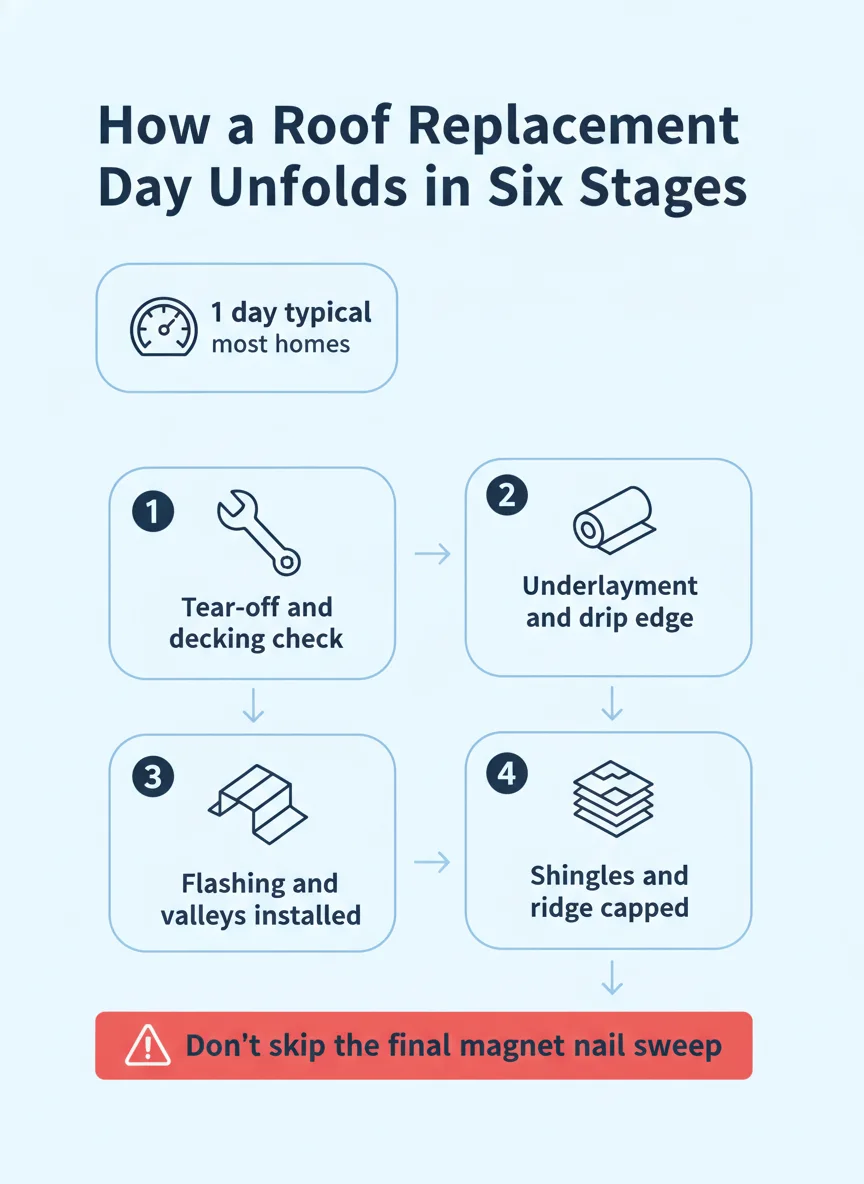
Here's the rough order a crew follows on most residential replacements, assuming decent weather and a straightforward single-layer tear-off.
- Setup and protection: Crews arrive early, stage the dumpster, and lay tarps or plywood over gutters, landscaping, and driveways before any tear-off starts.
- Tear-off: Old shingles, underlayment, and flashing come off section by section, with debris swept into the dumpster as the crew moves across the roof.
- Decking check and repair: Exposed decking is inspected board by board, and any soft or damaged sections are cut out and replaced with new decking.
- Underlayment and drip edge: Drip edge, underlayment, and ice and water barrier go down in overlapping courses across the whole roof surface.
- Flashing installation: Metal flashing is set at valleys, walls, chimneys, and any roof penetrations before shingles cover those areas.
- Shingles and ridge cap: Shingles are installed in courses from eave to ridge, finished off with ridge cap shingles and any ventilation components.
- Cleanup and magnet sweep: Crews clear debris, run a magnetic sweep across the yard and driveway for stray nails, and do a final walk-around with the homeowner.
What Does the Final Inspection Actually Check?
A final walk-through checks that every layer installed that day is sitting correctly before the crew leaves the property. This isn't a formality, it's the point where small fixes get caught before they turn into callbacks.
Visual and Physical Checks
The crew lead typically checks shingle alignment, nail patterns, and flashing seals from the ground and, often, from the roof itself. They're looking for lifted edges, exposed nail heads, and any spot where flashing doesn't sit tight against a wall or chimney.
Gutters get checked for debris that fell in during tear-off, and downspouts are confirmed clear. If gutters were part of the job, seams and hangers get a once-over too.
Yard and Property Sweep
Before the crew packs up, they'll run a magnetic roller across the driveway, lawn, and flower beds to pull up stray roofing nails. This step gets skipped by sloppy crews more often than homeowners realize, and it's worth asking about if it isn't mentioned.
A final walk-around with the homeowner, when scheduling allows, is the moment to point out anything that looks off, ask questions about what was replaced, and confirm the cleanup is thorough before the crew leaves for the day.
What Should You Handle, and What's the Crew's Job?
Most of replacement day is squarely the crew's responsibility, but a few things fall on the homeowner beforehand. Moving vehicles out of the driveway, taking down wall art or mirrors that vibration could shake loose, and covering or moving anything fragile in the attic are all worth doing the night before.
Pets should be kept indoors or at a sitter's for the day, since tear-off noise and an open worksite around the yard isn't a safe combination. If you have a home office or work from a room directly under the roofline, plan for a loud morning during tear-off.
Everything structural, the decking inspection, underlayment, flashing, and shingle installation, needs a licensed crew with the right equipment and training. This isn't a DIY-adjacent task; it's a full system install where one missed step under the shingles can cause a leak that doesn't show up for a year or more.
Knowing the Sequence Makes the Day Easier
Replacement day goes smoother when you know what's coming: a loud morning of tear-off, a quieter stretch for underlayment and flashing, and a finish with shingles, ridge cap, and cleanup. If you're weighing whether your roof needs a full roof replacement or just a roof repair, it helps to read up on the signs a roof is past repair first.
Homeowners in Plano and across the metro tend to have the same questions about timing, cleanup, and what to expect underfoot during the job. Absolute Professional Roofing Contractors LLC walks customers through each stage of replacement day before the crew ever shows up.
Frequently asked questions
How long does a roof replacement take in one day?
Most single-family homes in North Texas are torn off and reroofed in a single day, weather permitting. Larger homes, steep pitches, or multiple layers of old shingles can push a job into a second day.
Do I need to be home during roof replacement?
You don't have to be home, but someone should be reachable by phone in case the crew finds an issue under the old shingles, like soft decking. Many homeowners go to work and come back to a finished roof.
What should I move before roof replacement day?
Move vehicles out of the driveway, take down wall art or mirrors that could shake loose from hammering, and clear patio furniture or grills from under the eaves. Crews will also ask you to cover attic items from dust.
Will roof replacement damage my gutters or landscaping?
A careful crew protects gutters and plants with tarps and plywood, but some incidental contact can happen during tear-off. Walking the property with your crew lead beforehand helps flag anything fragile.
What happens if the crew finds rotten decking?
Any soft or damaged decking boards get replaced before underlayment goes down, since shingles need a solid, dry surface underneath. A reputable crew will show you the damage and explain the fix before moving forward.