How Long Roofs Really Last in the Dallas-Fort Worth Metro
Homeowners across the Dallas-Fort Worth metro, from Plano and Frisco to McKinney and Allen, ask some version of the same question: which roof lasts the longest? It's a fair question, because a roof is one of the largest investments a home carries, and the answer shapes everything from what you install now to how you maintain it later.
The honest answer has two parts. Material sets the upper limit on how long a roof can last. But installation quality, attic ventilation, and ongoing maintenance decide whether a roof actually reaches that limit or falls years short of it. Ignoring either half of that equation leads to disappointment, regardless of which material ends up on the house.
What Actually Determines How Long a Roof Lasts
Three forces combine to determine lifespan: the material itself, how it was installed, and how it's treated afterward. Skip any one of these and the other two can't fully compensate. A premium material poorly installed will underperform a modest material installed correctly, which is why the material conversation always needs the installation conversation next to it.
Material Choice Sets the Ceiling
Every roofing material has a general lifespan ceiling based on how it's manufactured and how it reacts to sun, heat, and moisture over time. Asphalt shingles sit at the more affordable end of that range. Metal, tile, and slate sit higher, generally because they resist UV breakdown and physical wear longer than asphalt does.
This ceiling is a starting point, not a guarantee. A premium material still needs the rest of the system working with it, including proper underlayment, flashing, and airflow, to actually perform anywhere near its potential over the decades.
Installation Quality Decides If You Reach It
Flashing details around chimneys and valleys, nailing patterns, underlayment choice, and attic ventilation all affect how fast a roof ages, regardless of material. A roof installed to manufacturer specifications with attention to these details is far more likely to reach its expected lifespan than one that was rushed.
This is also where Roof Replacement decisions matter most. The choice of material matters, but so does who's installing it and how carefully the details underneath the surface are handled.
| Material | Typical Lifespan Range | Maintenance Needs |
|---|---|---|
| Asphalt shingles | 18-25 years | Routine debris clearing, periodic flashing checks |
| Standing seam metal | 40-70 years | Low, occasional fastener and seam checks |
| Concrete or clay tile | 40-60 years or more | Low, but individual tiles can crack if walked on improperly |
| Slate | 50-100+ years | Low, but repairs require specialized skill |
The System Behind a Long-Lasting Roof
A roof isn't just the layer you see from the street. Underneath the shingles or panels sits underlayment, flashing at every penetration and valley, and a ventilation system that moves air through the attic. Each of these pieces protects the ones above it, and a weak link anywhere in that chain shortens the life of the whole system.
Ventilation deserves particular attention in North Texas, where summer attic temperatures climb fast. Trapped heat bakes shingles from underneath, which is one of the more common reasons a roof ages faster than its rated lifespan suggests it should.
Step-by-step: How a Long-Lasting Install Comes Together
Reaching a material's full lifespan starts well before the first shingle or panel goes down. Here's the general sequence that protects the investment over the long run.
- Tear-off and inspection: Removing the old roofing layer lets the deck be checked for rot or damage that would undermine anything installed over it.
- Deck repair: Any soft or damaged decking gets replaced before new material goes down, since a weak deck shortens the life of everything above it.
- Underlayment installation: A quality underlayment provides a secondary moisture barrier that protects the home even if the top layer is compromised.
- Flashing details: Valleys, chimneys, and penetrations get flashed carefully, since these spots are where most leaks eventually start.
- Material installation to spec: Shingles, panels, or tiles are installed to manufacturer specifications, including proper nailing or fastening patterns.
- Ventilation balance: Intake and exhaust vents are checked so air moves through the attic instead of stagnating under the roof deck.
- Final walkthrough: A completed roof gets a final check for any missed details before the job is considered done.
What Shortens a Roof's Life Before Its Time
Weather Exposure and Trapped Heat
Intense sun, big temperature swings, and severe wind or hail events all put extra stress on a roof over time. North Texas sees all three, which is part of why actual lifespans in this region often land toward the lower end of a material's published range rather than the upper end.
Trapped attic heat compounds this problem from below. A roof that looks fine from the ground can be aging faster than expected if the attic underneath isn't ventilated well, which is worth checking alongside any surface inspection.
Neglected Maintenance and Small Repairs Left Alone
A small leak or a few lifted shingles left unaddressed rarely stay small. Moisture that gets past the surface layer can damage underlayment and decking long before it shows up as a stain on a ceiling, which is why catching issues early through Roof Repair matters more than it might seem.
The same logic applies after severe weather. A roof that takes impact damage and isn't inspected can look fine for a season or two before the damage compounds into a bigger problem.
DIY vs Calling a Pro
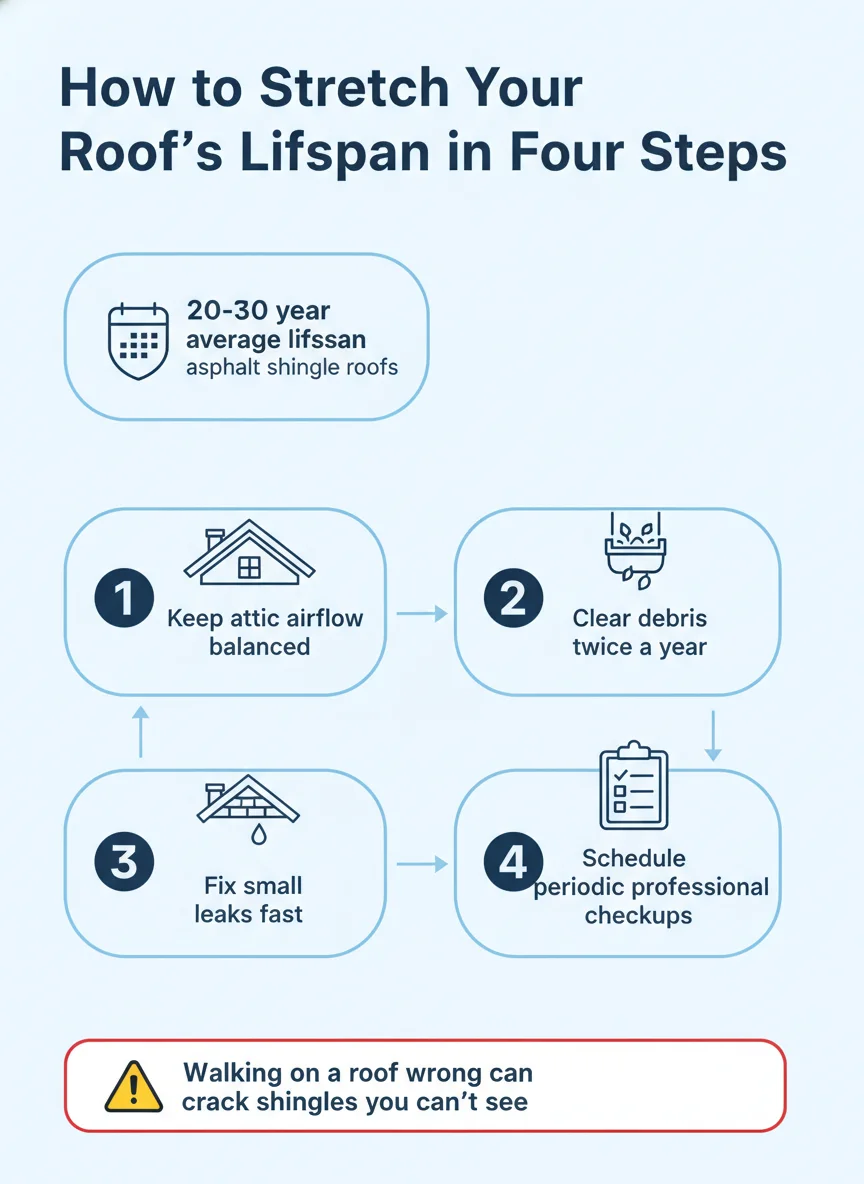
Homeowners can handle some of the lower-stakes maintenance themselves. Clearing leaves and debris from valleys, keeping gutters flowing so water doesn't back up under the edge of the roofline, and doing a visual check from the ground after storms are all reasonable DIY tasks that support a roof's lifespan without requiring a ladder on the roof itself.
Anything involving getting on the roof, replacing flashing, or evaluating hidden deck damage should go to a licensed roofer. Roofing surfaces are deceptively easy to damage by walking on them incorrectly, and missed flashing issues are one of the more common causes of leaks that could have been caught early.
Ventilation upgrades also fall into the professional category. Balancing intake and exhaust vents properly takes an understanding of attic airflow that's hard to get right without experience, and getting it wrong can trap heat instead of releasing it.
Choosing the Roof That Will Actually Last
There isn't one single answer to which roof lasts the longest, because material is only half the equation. A well-installed asphalt roof with good ventilation can outperform a premium material that was installed poorly or neglected afterward. The better question is which combination of material, installation, and upkeep fits your home, your budget, and how long you plan to stay in it.
For homeowners in Frisco and across the metro weighing these choices, pairing the right material with sound installation and ventilation is the real path to a roof that reaches its full lifespan. For more on how material choice plays out specifically, see our material comparison guide. Absolute Professional Roofing Contractors builds every roof around that same principle, material and installation working together for the long run.
Frequently asked questions
What roofing material lasts the longest?
Slate, concrete tile, and standing seam metal rank at the top of most lifespan charts, often reaching 50 years or more under good conditions. Asphalt shingles last less overall but remain popular because they cost less upfront and are easier to repair.
Does a longer warranty mean a roof lasts longer?
Not automatically. A warranty covers manufacturing defects in the material, but a roof's real-world lifespan depends just as much on ventilation, flashing details, and how well it was installed.
Why do two roofs with the same shingles age differently?
Installation quality and attic ventilation are usually the reason. A roof that traps heat or moisture underneath will degrade faster than an identical roof that breathes properly, even if both used the same shingle.
Does climate affect how long a roof lasts?
Yes, strongly. Intense UV exposure, big temperature swings, and severe weather events all accelerate wear, which is part of why lifespan ranges you read online are wide rather than exact.
Can regular maintenance actually extend a roof's life?
Yes. Clearing debris, resealing minor flashing issues early, and addressing small leaks before they spread routinely adds years to a roof's functional life compared to one that's left unchecked.