Storm and hail restoration, handled right.
Hail and high wind hit roofs across the DFW Metro hard some years, and the damage isn't always visible from the driveway. We inspect, document, and restore, and we help walk you through the insurance claim along the way.
After a hailstorm or high wind event, Absolute Professional Roofing Contractors LLC inspects roofs across Plano, Frisco, McKinney, Allen, Dallas, and the rest of the DFW Metro to determine what actually happened up top. Storm and hail restoration covers the inspection, the documentation an insurance adjuster needs, and the repair or replacement work that brings the roof back to full strength once a claim is settled. Damage from hail and wind is judged slope by slope, and it's frequently invisible from the ground.
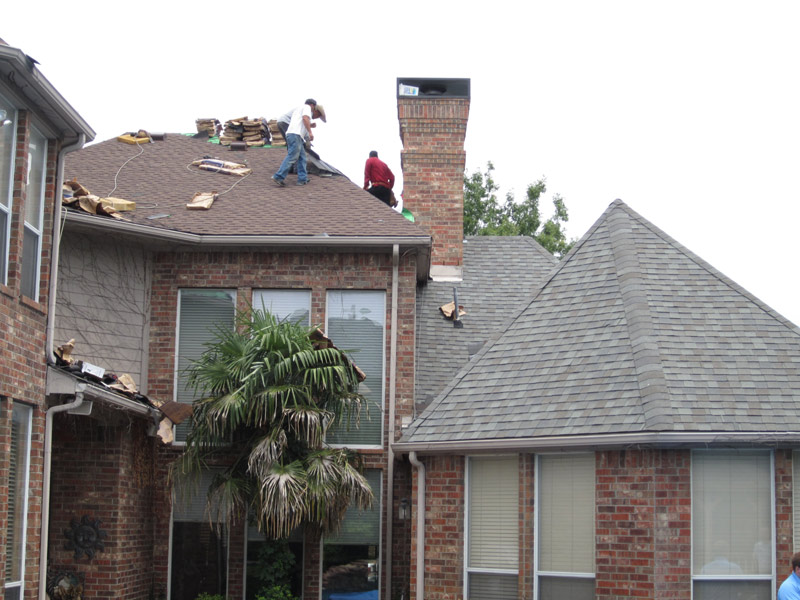
Not sure if your roof took real damage in the last storm?
Storm damage is rarely obvious from the yard, which is why a documented, up-close inspection is the only way to know for sure. Hail bruises the shingle mat and knocks granules loose without necessarily punching a visible hole, and wind gets under shingle edges in ways you'd have to be on the roof to spot. Insurance policies also put a time limit on filing a claim after a storm, so damage that goes unreported for too long can end up written off as ordinary wear and tear instead. A free inspection settles the question either way.
Warning signs to watch for
Granules piling up in the gutters
Hail bruises the shingle mat and knocks the protective granules loose, and finding them collecting at the downspouts after a storm is one of the clearest signs something happened up top.
Dents in vents, flashing, or gutters
Soft metals like vent caps, flashing, and gutters dent more easily than shingles, so damage there is often the first visible clue that hail hit hard enough to affect the roof too.
Creased or torn shingles
Wind gets under a shingle's leading edge and either creases it or tears it off outright, and a creased shingle won't reseal on its own, so it leaks in the next rain even if it looks intact from a distance.
Debris impact through the shingle layer
A falling limb or heavy debris can punch through shingles and underlayment and even crack the decking below, and it's worth checking even when the shingles nearby look untouched.
What is causing the problem
Direct hail impact
Hailstones bruise the asphalt mat and strip granules on impact, and enough hits across a slope compromise the shingle's ability to shed water and block UV over time.
Wind lifting the shingle seal
High wind gets under the edge of a shingle and breaks the factory seal strip, and once that seal is broken the shingle stays vulnerable to every storm after it.
Falling debris during the storm
Limbs and airborne debris can crack or puncture decking directly, which is a structural issue rather than just a surface one and needs to be checked from the attic side.
An aging roof that had less margin to begin with
A roof already near the end of its service life takes storm damage harder than a newer one, and sometimes the storm is what finally pushes it past the point of repair.
What to expect during the visit
We inspect and photograph every slope of the roof along with the gutters, vents, and any soft metals, checking for hail hits and lifted or creased shingles the same way an insurance adjuster will. We also check for collateral damage on siding, screens, and other exterior components. Once we've documented what we find, we give you a straight answer on whether the damage is repairable or points toward a full replacement, and if it's insurance-eligible, we explain what the adjuster meeting looks like. As a licensed contractor, we handle the documentation with the same detail an adjuster expects to see.
Related services you may need
Once a claim is approved, the restoration itself is often a Roof Repair for isolated damage or a full Roof Replacement when the damage is widespread. If the storm also affected gutters, we can address those in the same visit.
The cost of waiting
Storm damage that goes unreported doesn't heal itself, and the longer it sits, the more it starts to look like ordinary age instead of a single event, which can affect how an insurance claim is viewed. A creased shingle left in place leaks in the next hard rain, and hail-bruised granule loss keeps exposing the shingle mat to sun until it fails outright. Filing and documenting quickly protects both the roof and the claim.
Do you handle the insurance claim process?
Yes, our team guides you through the insurance restoration process with clear communication and careful documentation. We inspect the damage, provide photos and supporting information, meet with your adjuster, review the approved scope, and coordinate the project through completion.
Will my insurance cover hail or storm damage to my roof?
It depends on your policy and the extent of documented damage, but our team documents everything thoroughly, reviews the insurance estimate, and submits legitimate supplements for anything that may have been overlooked so you receive what you're entitled to under your policy.
How soon after a storm should I get my roof inspected?
As soon as reasonably possible, since insurance policies limit how long after a storm a claim can be filed. A prompt inspection also makes it easier to tie damage to a specific event rather than general wear.
If a recent storm rolled through your part of the DFW Metro, call Absolute Professional Roofing Contractors LLC for a free hail and wind inspection. We'll tell you plainly whether there's damage worth a claim.