Roof Pitch and Why It Shows Up in Every DFW Metro Estimate
Roof pitch is simply the steepness of a roof, expressed as inches of rise for every 12 inches of horizontal run. A 45 degree pitch is steep, equal to a 12/12 ratio, and it's a question we hear from homeowners across the DFW metro who are comparing architectural styles, planning an addition, or trying to understand why a quote on a steep A-frame section came in different than the rest of the house.
Most homes in Plano, Frisco, and the surrounding towns sit somewhere between a 4/12 and 8/12 pitch, which is moderate by national standards. A 12/12 pitch stands out because it's nearly a 45 degree angle off the horizontal, closer to a steep gable or chalet-style roofline than a typical ranch or traditional two-story. Understanding where your roof falls on that scale helps explain material choices, labor time, and why some repairs take longer than others.
Why Pitch Matters More Than Most Homeowners Expect
Pitch isn't just an architectural detail, it governs how water moves off the roof, how much wind load the structure handles, and what materials are even viable. A flatter roof relies more on membrane systems and careful flashing because water sits longer. A steep roof sheds water and debris fast, but it puts more strain on fasteners and requires more attention to how shingles or panels are secured.
The Math Behind the Angle
Pitch is written as a ratio, like 12/12 or 6/12, meaning the roof rises that many inches for every 12 inches of horizontal run. Converting that ratio to degrees uses basic trigonometry: a 12/12 pitch has a rise equal to its run, and the tangent of 45 degrees is exactly 1, which is why 12/12 and 45 degrees describe the same slope.
A 6/12 pitch, common on many Texas homes, works out closer to 26 degrees. An 8/12 pitch lands around 34 degrees. The relationship isn't linear, which is why even a modest-looking jump in the rise number on a blueprint can mean a meaningfully steeper roof in practice.
Where You'll See a 45 Degree Pitch
Steep 12/12 pitches show up most often on accent gables, dormers, turret-style features, and homes built in a chalet, Tudor, or farmhouse style where a dramatic roofline is part of the design. It's less common as the pitch for an entire house because of the added material and framing cost, but it's a frequent feature on a section of roof even when the main structure is more moderate.
If your home has a mix of pitches, like a steep front gable over a more moderate main roof, expect your roof replacement estimate to account for both conditions separately, since the labor and safety setup differ by section.
| Pitch Ratio | Approximate Degrees | Common On |
|---|---|---|
| 4/12 | 18° | Ranch homes, low-slope additions |
| 6/12 | 27° | Most traditional Texas homes |
| 8/12 | 34° | Two-story homes, steeper gables |
| 12/12 | 45° | Accent gables, chalet-style homes |
The Framing and Decking Behind a Steep Roofline
A 45 degree roof isn't just steeper shingles laid at a sharper angle, the framing underneath is built differently from the start. Rafters on a steep pitch carry weight at a different angle than a shallow roof, and the decking, underlayment, and fastening pattern all have to account for gravity pulling harder on every layer.
That's part of why steep sections often need extra attention during a roof repair visit. A leak on a 12/12 pitch can travel further before it shows up inside the attic, and tracing it back to the source sometimes means checking a wider span of decking than the visible damage suggests.
Step-by-Step: How to Estimate Your Own Roof's Pitch
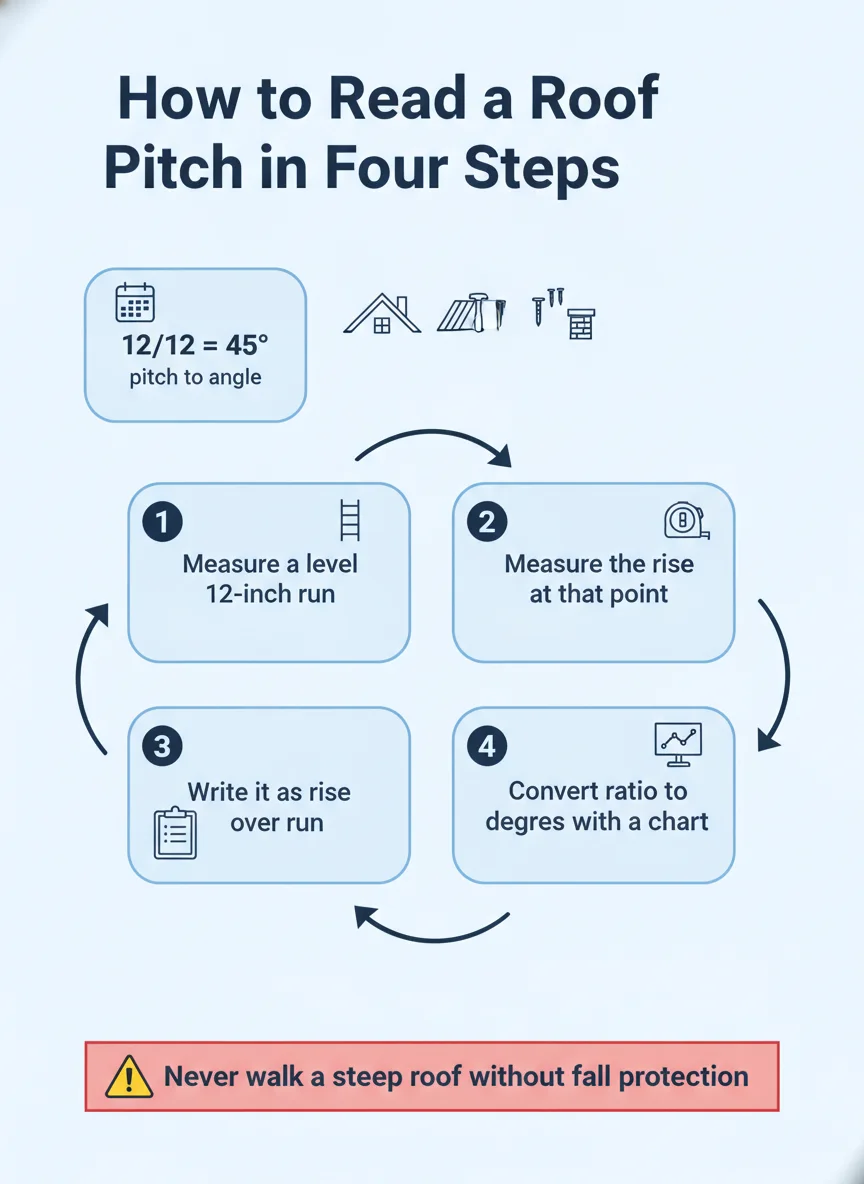
You don't need to get on the roof to get a rough read on pitch. A level, a tape measure, and a little patience from the ground or an attic vantage point will get you close enough to know where your home falls on the scale.
- Find a clear gable: Stand where you can see the triangular end of the roof clearly, usually from the street or driveway.
- Hold a level flat: Place a 12-inch level horizontally against the underside of the roof slope.
- Measure the rise: At the 12-inch mark on the level, measure straight down to the roof surface.
- Write the ratio: That rise measurement over 12 is your pitch, like 6/12 or 10/12.
- Convert if needed: Use a pitch-to-degree chart or the arctangent of the ratio to get the angle in degrees.
- Repeat on each section: Homes with gables, dormers, or additions often have more than one pitch, so check each distinct roof plane separately.
What a Steep Pitch Means When Something Goes Wrong
Signs of Trouble Look the Same, Access Is the Difference
A missing shingle, a cracked panel, or a flashing gap looks the same on a 12/12 pitch as it would on a 6/12 roof. What changes is how a crew reaches it safely and how long the repair takes once they're up there, since every movement on a steep section requires more deliberate footing and anchor points.
This is also why a visual inspection from the ground often undersells what's actually happening on a steep section. Binoculars and a trained eye can catch obvious damage, but confirming the full extent usually means getting someone up on the roof with the right gear.
Wind and Debris Behave Differently Up There
Steeper roofs generally shed wind-driven rain and debris faster than flat or low-slope sections, which can mean less standing water damage over time. But that same steepness means fasteners and adhesive bonds are working harder against gravity every day, not just during a storm, so routine maintenance matters more on a 12/12 pitch than it would on a gentler slope.
If your home has gone through a recent wind event, a storm and hail restoration inspection can check both the steep and shallow sections for damage patterns that differ by pitch.
DIY vs Calling a Roofer for Steep-Slope Work
There's plenty a homeowner can do from the ground: estimating pitch with a level, scanning for obvious shingle damage with binoculars, checking gutters and downspouts for debris, and watching the attic after heavy rain for signs of moisture. None of that requires getting on the roof itself.
Anything that requires physically being on a 12/12 pitch, though, belongs with a licensed roofer. That includes close-up inspection of flashing, replacing damaged shingles or panels, checking decking integrity, and any repair work at all. The angle alone removes the margin for error that a flatter roof might forgive.
A licensed crew brings harnesses, roof jacks, and the experience to move safely across a steep plane without damaging surrounding shingles in the process. That's the practical reason steep-pitch work tends to take longer and cost more in labor, even when the material itself is identical to a lower-slope section.
Getting a Clear Read on Your Roof's Pitch
Knowing your roof's pitch helps you understand material options, maintenance needs, and what a repair crew is working with before they ever show up. A 45 degree, or 12/12, pitch is on the steep end of what you'll find on a home in the DFW metro, and it changes the safety plan more than it changes the materials involved.
If you're not sure where your roof falls on that scale, or you want a closer look at a steep section after a storm, Absolute Professional Roofing Contractors LLC can take a look and walk you through what the pitch means for your home specifically.
Frequently asked questions
What pitch is a 45 degree roof?
A 45 degree roof works out to a 12/12 pitch, meaning the roof rises 12 inches for every 12 inches of horizontal run. It's one of the steeper slopes used on residential construction and reads as a dramatic, A-frame style roofline from the street.
Is a 45 degree roof pitch too steep?
It's steep but not unusual for certain architectural styles, chalet-inspired homes, and some custom builds in North Texas. It does mean more material, more labor time, and more safety equipment for any crew working on it.
What roofing material is best for a steep pitch?
Asphalt shingles, metal panels, and tile all perform well on steep slopes because water sheds quickly and debris doesn't sit. The limiting factor is usually installation safety and cost, not material compatibility.
Can you walk on a 12/12 pitch roof?
Walking a 12/12 roof without rope, harness, and roof brackets is not safe, and most roofing crews use fall protection as standard practice on anything steeper than about 6/12. Homeowners should not attempt to walk this pitch themselves.
Does a steeper roof pitch cost more to repair?
Yes, generally, because steep pitches take longer to work safely, often require additional equipment like roof jacks or harness anchors, and limit how much material can be staged on the roof at once. The slope itself doesn't change the materials needed, just the labor conditions.