Why Shingle Grade Matters More Than Most Homeowners Think
When a homeowner in the DFW Metro starts pricing a roof, the conversation usually jumps straight to color and cost, skipping right past the word that actually drives both: grade. Three-tab, architectural, and designer are not marketing labels, they describe real differences in how a shingle is built, how much wind and hail it can take, and how long it holds up under Texas sun.
North Texas roofs deal with a tough combination of intense summer heat, sudden hailstorms, and high wind gusts that come through ahead of spring storm fronts. Picking the right grade affects how well a roof handles that mix, and it affects the final look of the house, since thicker shingles cast a deeper shadow line that reads as a more substantial roof from the street.
What Makes One Grade Different From Another?
The difference comes down to layers, weight per square, and how the shingle is manufactured. A three-tab shingle is a single flat layer of asphalt and granules cut into three even tabs, which keeps it light and affordable but limits how much wind resistance and texture it can offer. Architectural and designer shingles add layers, weight, and shaping to change both performance and appearance.
Three-Tab: The Original Standard
Three-tab shingles were the industry standard for decades and are still manufactured today, mostly for budget-conscious repairs or homes where matching an existing three-tab roof matters more than upgrading. They're flat, uniform, and lightweight, which keeps material cost down but generally limits wind rating compared to laminated products.
Because there's only one layer, three-tab shingles tend to show wear sooner and have a shorter typical service life than architectural options. They still meet code when installed correctly, and for some homeowners, matching an existing roof's look or sticking to a tighter budget makes three-tab the practical call.
Architectural Shingles: Today's Default Choice
Architectural shingles, also called laminated or dimensional shingles, are built by fusing two or more layers of material together. That lamination creates a thicker, more rigid shingle with a dimensional, shadowed look that mimics wood shake from a distance. The added weight and layering generally push wind resistance and expected lifespan higher than three-tab.
This is the grade most roof replacement projects use today across North Texas, since it offers a meaningful step up in durability for a relatively modest price difference over three-tab. It's become the default recommendation for most residential replacements for exactly that reason.
| Feature | Three-Tab | Architectural |
|---|---|---|
| Layers | Single flat layer | Two or more laminated layers |
| Typical look | Flat, uniform tabs | Dimensional, shadowed texture |
| Wind performance | Lower rating range | Higher rating range |
| Common use today | Budget repairs, matching older roofs | Standard for most new replacements |
What Is a Designer Shingle, Exactly?
Designer shingles sit at the top of the asphalt shingle category. They're built heavier and shaped more deliberately than standard architectural shingles, often designed to mimic the look of natural slate or cedar shake without the weight or cost of those materials. The extra thickness and irregular tab shapes create a more custom, high-end appearance on the roofline.
That premium construction comes at a premium price, and the jump in cost over standard architectural shingles is driven by material weight and manufacturing complexity rather than a dramatic leap in lifespan. Homeowners who choose designer shingles are usually prioritizing curb appeal on a prominent home, a historic-style renovation, or a roofline that's highly visible from the street.
Step-by-Step: How to Compare Grades Before You Choose
Working through shingle grade decisions in order keeps the comparison honest and keeps you from choosing based on color alone. Here's a practical sequence to walk through with whoever quotes your project.
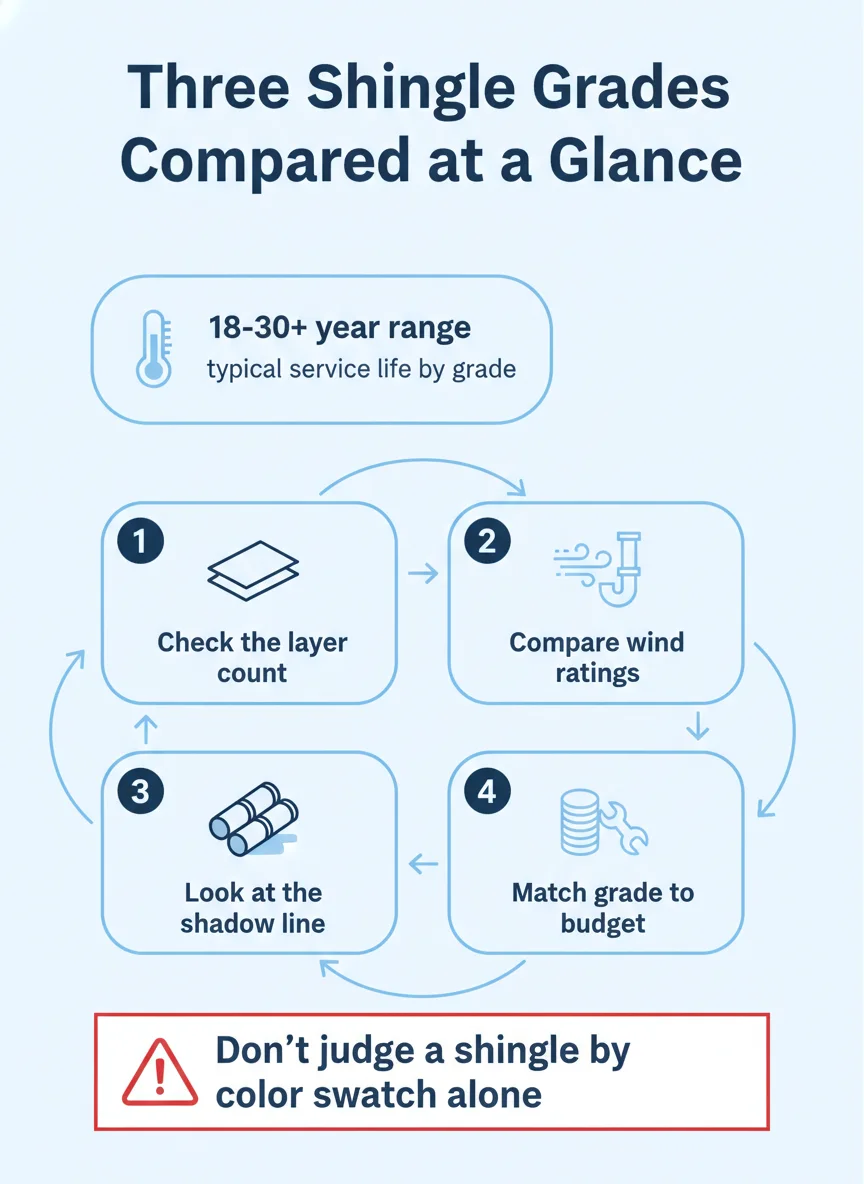
- Ask for the layer count: Find out if the shingle is single-layer (three-tab) or laminated (architectural or designer) before anything else.
- Compare wind ratings: Ask what wind speed rating each option carries, since this matters more in storm-prone areas than most buyers realize.
- Look at warranty terms: Check what warranty length each grade carries from the manufacturer, since higher grades often come with longer coverage.
- Request physical samples: See the actual shadow line and texture in person rather than judging from a photo or brochure swatch.
- Check neighborhood context: Consider what grade is common on nearby homes if resale value or HOA guidelines matter to your decision.
- Get a written scope: Make sure the grade, brand, and product line are spelled out clearly in your written estimate before work begins.
How to Tell What's on a Roof You're Looking At
If you're trying to identify what grade is currently on a house, whether you're buying a home or evaluating your own roof before a repair, there are a few visual cues that make it fairly easy to tell without climbing a ladder.
Spotting Three-Tab From the Ground
Three-tab shingles read as flat and uniform from the street, with evenly spaced cutouts creating a repetitive tab pattern. There's little to no shadow effect, and the surface looks almost two-dimensional compared to a laminated product.
Older neighborhoods across Plano, Richardson, and Garland still have plenty of three-tab roofs from past decades, so it's a common sight on homes that haven't been through a recent replacement. It's worth noting if missing shingles after a windstorm show up more often on these older, single-layer roofs.
Spotting Architectural and Designer Grades
Architectural and designer shingles both show a noticeably thicker edge and a layered shadow effect that gives the roof depth from the ground. Designer shingles go a step further with irregular, staggered tab shapes meant to break up the uniform look entirely.
If a roof looks like it has texture and dimension rather than flat rows, it's almost certainly a laminated product. The heavier the shadow and the more irregular the pattern, the more likely it's a designer-tier shingle rather than standard architectural.
Can a Homeowner Choose Grade on Their Own, or Does It Need a Pro's Input?
Homeowners can absolutely do their own research and come in with a preference, and understanding the basic differences covered here puts you in a strong position for that conversation. Comparing samples, reading warranty terms, and deciding on budget range are all things you can reasonably handle before a contractor ever shows up.
Where a licensed roofer earns their keep is matching grade to your specific roof structure, local wind exposure, and manufacturer requirements. Not every grade is compatible with every underlayment system or deck condition, and a roofer who works with commercial roofing membranes as well as residential shingles has seen how material choice affects long-term performance across very different roof types.
A good contractor will also flag when a higher grade doesn't make sense for a particular home, such as a rental property or a roof that's likely to be replaced again within a shorter timeframe. That honest back-and-forth is part of what separates a solid quote from a rushed one.
Choosing the Right Grade for Your Next Roof
Shingle grade is one of the few roofing decisions that's entirely yours to make, and now you've got the vocabulary to make it with confidence instead of guessing based on price tags or a brochure photo. Three-tab, architectural, and designer each have a place depending on budget, home style, and how long you plan to stay put.
Whatever grade ends up on your roofline, the install quality matters just as much as the material choice. Absolute Professional Roofing Contractors LLC walks homeowners across the DFW Metro through these exact grade decisions as part of every roof replacement estimate.
Frequently asked questions
What is the difference between three-tab and architectural shingles?
Three-tab shingles are a single flat layer cut into even tabs, while architectural shingles (also called laminated shingles) are built from two or more layers bonded together for a thicker, dimensional look. That extra layer generally gives architectural shingles a longer service life and a higher wind rating than three-tab.
Are designer shingles worth the extra cost?
It depends on what you're after. Designer shingles are a premium tier built to mimic the look of slate or wood shake, so the added cost reflects the heavier material and more detailed profile, not necessarily a dramatically longer lifespan than a quality architectural shingle.
Do most roofers still install three-tab shingles?
Three-tab has become less common on new installs because architectural shingles now dominate the market at a similar price point with better wind performance. Most replacements today use architectural shingles as the standard choice, with three-tab mostly seen on older homes or budget-driven repairs.
How long do architectural shingles actually last?
Architectural shingles typically fall in the 25 to 30 year range under normal conditions, though actual lifespan depends on climate, ventilation, and installation quality. In Texas heat and hail exposure, actual performance can land anywhere in that range depending on how the roof is maintained.
Can I mix shingle grades on one roof?
It's technically possible but not recommended for a main roof surface, since mixed grades create uneven thickness, inconsistent wind resistance, and a visibly mismatched look. Matching grade and often matching product line across the whole roof keeps warranties valid and keeps the surface performing evenly.