Why Shingle Condition Matters Across North Texas
Homes across the Dallas-Fort Worth metro deal with a tough combination for asphalt shingles: long stretches of intense summer heat, sudden swings into freezing temperatures, and the occasional hailstorm thrown in between. That mix accelerates wear in ways that homeowners in milder climates never see. Shingles that might last decades in a cooler region can show real wear well before the 20 year mark here.
The tricky part is that shingle failure is gradual. A roof doesn't go from fine to failing overnight, it degrades a little every summer until one day a leak shows up in the ceiling. Knowing what to look for on the shingles themselves, not just inside the attic, gives you a much earlier warning than waiting for a stain to appear on the drywall.
What Actually Happens to a Shingle as It Ages
An asphalt shingle is built in layers: a fiberglass mat, asphalt coating, and a top layer of mineral granules that reflect UV light and protect the asphalt underneath. Heat and sun exposure slowly dry out the asphalt, and the granules loosen and wash away with every rain. Once enough granules are gone, the asphalt underneath is exposed directly to sunlight and starts to break down faster.
Granule Loss and UV Damage
Granule loss is the first domino. You'll often spot it as a buildup of dark, sand-like grit in the gutters or at the base of downspouts after a rainstorm. Some loss is expected early on, but ongoing heavy loss means the shingle's UV shield is thinning out in that spot.
Once granules are gone, the exposed asphalt oxidizes and becomes brittle. Brittle shingles crack more easily in wind and lose their ability to seal against each other, which is often the first step toward a leak during a heavy rain.
Curling, Cracking, and Lifting Edges
Curling happens when the shingle edges pull up or the middle cups downward, usually from heat stress or moisture trapped underneath. Once a shingle curls, wind can get underneath it more easily, and that's when shingles start lifting off or blowing away entirely.
Cracking shows up as thin lines running through the shingle surface, often near the tabs. A few cracked shingles here and there might be fine with a repair, but widespread cracking across the whole roof surface usually points to asphalt that has simply run its course.
| Sign | What It Means | Typical Response |
|---|---|---|
| Light granule loss in gutters | Normal wear in first 1-2 years | Monitor, no action needed |
| Heavy granule loss, bald patches | UV protection is thinning | Schedule an inspection |
| Curling or cupping shingles | Heat or moisture stress, aging asphalt | Repair isolated areas or plan replacement |
| Cracking across most of the roof | Asphalt has dried out and lost flexibility | Replacement is usually the better long-term fix |
The Role of Attic Ventilation in Shingle Life
A lot of premature shingle failure actually starts in the attic, not on the roof surface. When an attic doesn't vent properly, heat builds up underneath the roof deck in summer, and that heat bakes the underside of the shingles on top of the sun hitting them from above. Over years, that doubled heat exposure can shave real time off a shingle's service life.
Improving airflow with proper intake and exhaust venting, or adding features like ridge vents or solar-powered attic fans, can meaningfully reduce attic temperatures. If you're seeing shingle wear well ahead of schedule, it's worth having ventilation checked alongside the shingles themselves. Ventilation & energy efficiency upgrades are often part of that conversation.
Step-by-Step: How to Check Your Own Shingles From the Ground
You don't need to get on a ladder to do a basic visual check. Binoculars and a walk around the house will catch most of the obvious warning signs.
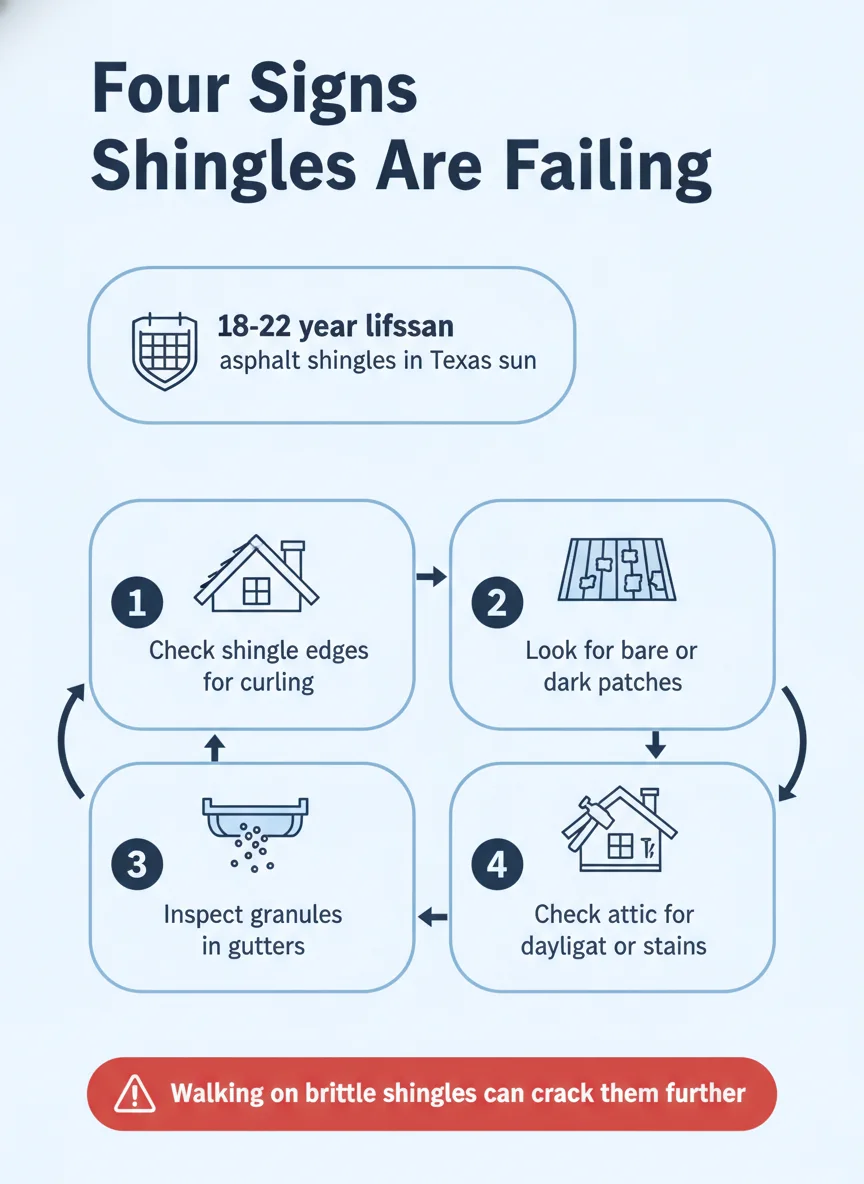
- Scan roof edges: Look along the roofline for shingles that appear to be lifting, curling upward, or missing entirely compared to the rest of the roof.
- Check the gutters: Look for a buildup of dark granules, especially after a recent rain, which signals accelerated wear on the shingle surface.
- Look for color changes: Patches that look lighter, shinier, or a different shade than the surrounding shingles often mean the granule layer has worn thin there.
- Note any sagging: A roofline that dips or sags in sections can point to deck or structural issues underneath, not just the shingles.
- Check the attic: Daylight coming through the roof deck, damp insulation, or dark water stains on the underside of the roof sheathing are signs water is already getting in.
- Photograph problem spots: Take clear photos of anything unusual so a roofer can see the exact condition before an in-person visit.
- Schedule a closer look: If you spot two or more of these signs, it's worth having a roofer inspect the roof up close rather than guessing from the ground.
What You'll Typically Find Once Shingles Start Failing
Localized Damage vs. Roof-Wide Wear
Sometimes the damage is isolated, like a cracked shingle from a fallen branch or a section near a vent pipe that's lifting. That kind of damage is often a candidate for roof repair rather than a full tear-off, especially if the rest of the roof is still in decent shape.
Other times, what looks like one bad spot is actually a preview of what's happening across the whole roof. If a roofer finds similar granule loss or brittleness in multiple test areas, that's a sign the whole roof is aging at roughly the same pace and a full roof replacement will serve you better than chasing repairs one at a time.
When Storm Damage Complicates the Picture
Hail and high wind can accelerate all of the issues described above, sometimes compressing years of wear into a single storm event. Bruised shingles from hail impact don't always look dramatic from the ground, but they can crack the mat underneath and shorten the shingle's remaining life significantly.
If a storm has rolled through recently and you're also seeing age-related wear, it's worth having both evaluated together. A storm and hail restoration inspection can sort out what's storm-related and what's simply the roof reaching the end of its lifespan.
What You Can Check Yourself and What Needs a Licensed Roofer
Ground-level checks like scanning for curling shingles, checking gutters for granules, and looking inside the attic for daylight or moisture are all things a homeowner can reasonably do without special tools. These checks are useful for catching early warning signs and deciding whether it's time to call someone.
Getting on the roof itself is a different story. Shingles that are already brittle or cracking can be damaged further just by someone walking across them, and a fall risk isn't worth the information you'd gain. A trained eye can also spot subtler issues, like flashing separation or soft spots in the decking, that aren't visible from the ground.
The safest approach is to do the ground-level scan yourself and treat it as a screening tool. If anything looks off, or if the roof is approaching the upper end of its expected lifespan, bring in a licensed roofer for a closer inspection before small issues turn into bigger repairs.
Keeping an Eye on Your Roof Over Time
Shingle wear is gradual, which means the earlier you catch the signs, the more options you have, whether that's a targeted repair, improved attic ventilation, or planning ahead for a full replacement on your own timeline instead of in a rush after a leak shows up. A quick seasonal check from the ground costs nothing and can save a lot of hassle down the road.
If you're noticing curling, bald patches, or granules piling up in the gutters on your home in Plano or anywhere else across the metro, Absolute Professional Roofing Contractors LLC can take a closer look and lay out what's really going on with your shingles.
Frequently asked questions
How do I know if my shingles are too old?
Curling edges, cracking, and bald spots where the granules have worn off are the clearest signs that shingles are past their service life. Asphalt shingles in North Texas typically last 18 to 22 years depending on sun exposure and ventilation, so age combined with visible wear is a strong signal.
Can a few damaged shingles be replaced instead of the whole roof?
Yes, isolated damage from a fallen branch or a localized leak can often be handled with a spot repair rather than a full replacement. If the surrounding shingles are also brittle or granule-bare from age, a repair may only buy a short amount of time before more failures show up nearby.
What causes shingles to curl or buckle?
Curling usually comes from age, heat buildup in the attic, or moisture trapped underneath the shingle mat. Poor attic ventilation accelerates the process because trapped heat bakes the shingles from below as well as above.
Is granule loss always a sign of a failing roof?
A small amount of granule loss is normal in the first year or two after installation as loose granules wash off. Heavy, ongoing granule loss that leaves shiny bald patches on the shingle surface means the protective layer is wearing thin and the shingle is losing its UV and weather protection.
Do dark streaks on shingles mean they need to be replaced?
Not necessarily. Dark streaks are commonly algae growth and are a cosmetic issue rather than a structural one, though heavy growth can shorten shingle life over time if left untreated.