Why Warranty Terms Matter More Than the Sales Pitch
Every roofing estimate across the DFW metro mentions a warranty, but the word covers three very different documents: a manufacturer material warranty, a contractor workmanship warranty, and an extended or enhanced warranty that combines pieces of both. Homeowners comparing quotes often focus on the number of years printed on the brochure without reading what each warranty actually promises to pay for.
That gap matters most years after the crew leaves, when a leak shows up and you're trying to figure out who's responsible for the repair. A roof warranty comparison done before you sign protects you from assuming coverage you don't actually have, and it's a conversation worth having with any roofer working in North Texas, not just this one.
How Roof Warranties Actually Work
Every roof carries at least two separate warranties stacked on top of each other, and they come from different parties with different obligations. Understanding who issues each one is the first step to reading the fine print correctly instead of assuming one document covers everything.
Material Warranties From the Manufacturer
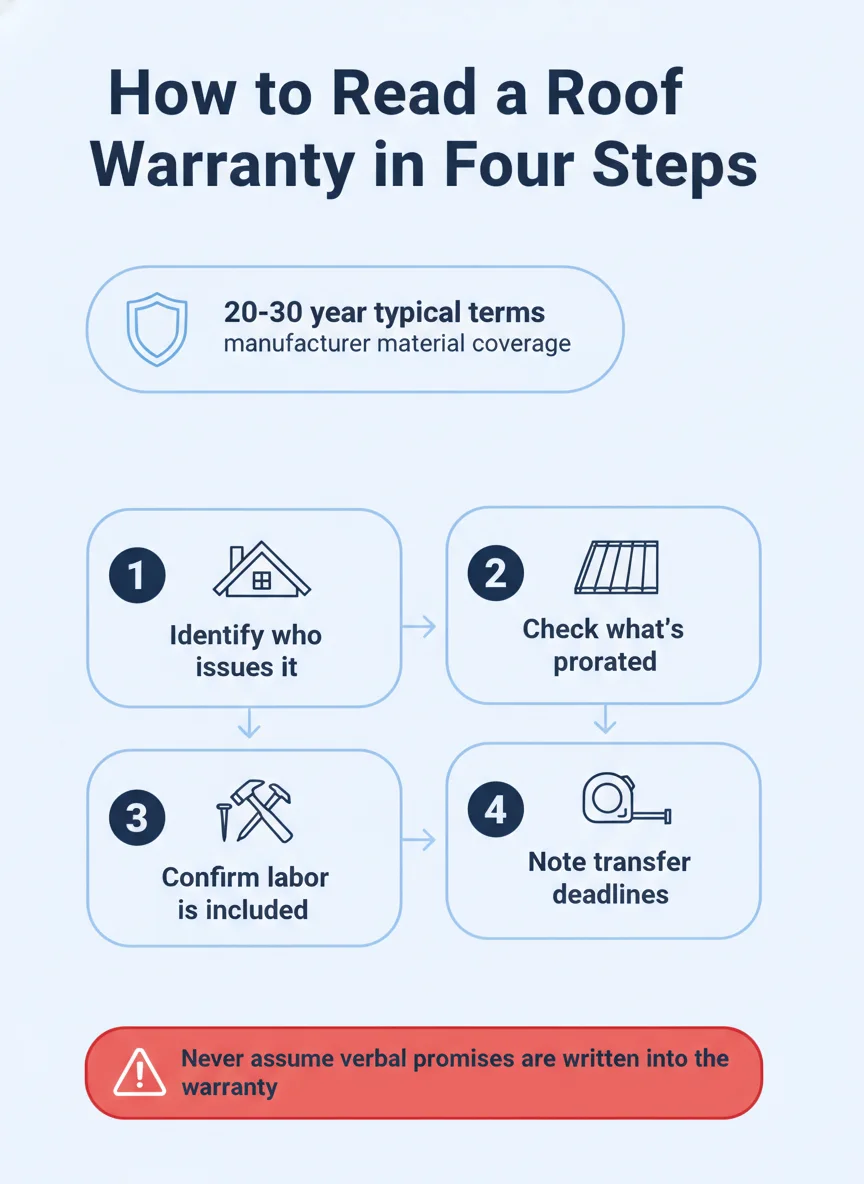
The material warranty comes from the company that makes the shingles, membrane, or metal panels, not from the contractor who installs them. It covers manufacturing defects, meaning the product itself failing to perform as designed, like premature granule loss on shingles or a membrane that delaminates. These warranties typically run 20 to 30 years for asphalt shingle lines published by major manufacturers, though terms vary by product tier.
Most material warranties are prorated after an initial full-coverage period, often the first several years, after which the payout shrinks as the product ages. A homeowner reading only the headline number on the warranty card can be surprised to learn the actual reimbursement years down the road is a fraction of replacement cost.
Workmanship Warranties From Your Roofer
The workmanship warranty is issued by the contractor and covers installation errors, things like improperly sealed flashing, incorrect nailing patterns, or ventilation that wasn't installed to spec. This is the warranty that matters most when a leak traces back to how the roof was put together rather than a defective product.
Workmanship warranty length is set by the individual contractor, so it's one of the few places where comparing roof replacement quotes side by side actually tells you something meaningful. A longer workmanship term generally signals a contractor confident in their install process, since they're the one on the hook if something goes wrong.
| Warranty Type | Who Issues It | What It Typically Covers |
|---|---|---|
| Material warranty | Shingle, membrane, or metal manufacturer | Product defects, often prorated after an initial full-coverage window |
| Workmanship warranty | Your roofing contractor | Installation errors such as flashing, fastening, and ventilation mistakes |
| Extended/enhanced warranty | Manufacturer, through a certified installer | Combines material and labor coverage, often with stronger non-prorated terms |
What's Inside the Warranty Document
A warranty document is more than a cover page with a number on it. The real terms live in the fine print: coverage limits, the proration schedule, what counts as labor versus material, and a list of exclusions that spell out exactly what will void the agreement. Skimming past those pages is how homeowners end up surprised later.
Extended or enhanced warranties, available through manufacturer-certified installers, typically bundle material and labor into one non-prorated term for a set number of years. These tend to offer the strongest protection because the manufacturer has reviewed and approved the installer's process, which reduces disputes over whether a failure was a product defect or an install mistake.
Step-by-step: How to Read a Roof Warranty Before You Sign
Before committing to any contractor, walk through the warranty paperwork with the same attention you'd give a lease. These steps apply whether you're comparing one quote or five.
- Identify the issuer: Confirm whether each warranty comes from the manufacturer or the contractor, since that determines who you call first if something fails.
- Find the proration schedule: Look for the year the coverage starts shrinking and by how much, not just the total number of years listed on the cover.
- Check for labor coverage: Material-only warranties leave you paying for removal and reinstallation labor even on a covered defect, so confirm whether labor is included.
- Read the exclusions list: This section spells out what voids coverage, from unapproved repairs to skipped ventilation components required by the manufacturer.
- Note the transfer window: If you might sell the home, confirm how many days you have to register a transfer and who you need to notify.
- Get it in writing: Verbal assurances about coverage length or what's included don't hold up later, so ask for the actual warranty certificate before the project starts.
What Voids a Roof Warranty?
Most warranty disputes trace back to one of two causes: how the roof was installed or maintained, or a paperwork step that got skipped. Knowing both in advance is the easiest way to keep coverage intact for the life of the roof.
Installation and Maintenance Issues
Manufacturers require specific underlayment, fastening patterns, and ventilation components to be used exactly as specified in order for the material warranty to stay valid. If a contractor substitutes a cheaper component or skips required ventilation, the manufacturer can deny a claim even if the roof was installed by a certified crew.
On the maintenance side, ignoring basic upkeep like clearing debris or letting a small leak sit unaddressed can also be grounds for denial, since most warranties expect the homeowner to prevent avoidable damage. A separate roofer handling a repair without manufacturer approval can unintentionally void the original warranty too.
Transfer and Paperwork Mistakes
Warranty transfers almost always come with a deadline, often a set number of days after a home sale closes. Buyers who assume coverage automatically follows the house, and sellers who forget to file the transfer paperwork, are both common ways a perfectly good warranty quietly expires.
Keeping the original warranty certificate, the final invoice, and any inspection documentation together in one folder makes a future transfer or claim far simpler. For a deeper breakdown of how manufacturer and workmanship terms interact, see our guide on manufacturer warranty vs workmanship warranty coverage.
DIY vs Calling a Pro to Understand Your Warranty
Reading a warranty document yourself is something every homeowner can and should do. Highlighting the proration schedule, exclusions, and transfer window takes an afternoon and doesn't require any roofing knowledge, just patience with fine print.
Where a professional matters is in confirming whether an install qualifies for an extended or enhanced warranty tier in the first place. Those typically require manufacturer certification and specific system components installed together, which is something only a licensed roofer familiar with that manufacturer's requirements can verify before the project starts.
A pro is also useful when a claim gets denied and you're not sure whether the issue is a material defect, a workmanship problem, or routine wear. Getting an independent opinion before accepting a denial can be the difference between paying out of pocket and getting the repair covered.
Getting Warranty Terms in Writing Before Replacement Day
The strongest protection on a new roof isn't the longest number printed on a brochure, it's a clear, written understanding of who covers what, for how long, and under what conditions. Comparing material, workmanship, and extended coverage side by side before you sign a contract is a small amount of homework that pays off years later.
Homeowners across towns like McKinney and throughout the DFW metro run into the same confusion when a warranty question comes up after a storm or a slow leak. Absolute Professional Roofing Contractors LLC can walk through warranty paperwork with you as part of any roof replacement estimate.
Frequently asked questions
What's the difference between a manufacturer warranty and a workmanship warranty?
A manufacturer warranty covers defects in the shingles, membrane, or other materials themselves, issued by the company that made them. A workmanship warranty covers installation errors and is issued by the roofing contractor, which is why the length and terms vary a lot from one roofer to the next.
Can I transfer my roof warranty if I sell my house?
Many manufacturer and workmanship warranties allow a one-time transfer to a new homeowner, but most require you to notify the warranty holder within a set window after closing. Missing that window is one of the most common reasons a buyer discovers the warranty no longer applies.
Does an extended warranty cover labor costs for repairs?
It depends on the tier. Basic manufacturer warranties often cover material only, while enhanced or extended warranties through a certified installer can add labor coverage, so it's worth asking specifically whether labor is included before you compare price between contractors.
What voids a roof warranty?
The most common causes are improper installation, skipped manufacturer-required components like specific underlayment or ventilation, unapproved repairs by another contractor, and lack of basic maintenance. Reading the exclusions section of the warranty document tells you exactly what's expected to keep it valid.
Is a longer warranty always better?
Not automatically. A 50-year material warranty that's prorated after year 10 can pay out less than a shorter warranty with full replacement value, so the proration schedule matters as much as the number of years printed on the cover page.