A Leak Rarely Waits for Convenient Weather
North Texas homes see a mix of heavy spring storms, high summer heat that stresses roofing materials, and the occasional winter freeze-thaw cycle, all of which put stress on different parts of a roof system. A leak that shows up during a downpour in Plano or a freeze in McKinney isn't really a sudden event. It's usually the final sign of something that's been wearing down for a while, whether that's aging flashing, a cracked vent boot, or wind-lifted shingles.
What you do in the first hour matters almost as much as the repair itself. Water that sits in drywall, insulation, or wood framing causes damage that keeps growing long after the dripping stops. Acting fast limits that spread and gives a roofer a cleaner picture of where the water actually entered, instead of a ceiling full of secondary stains that make the source harder to pin down.
Why Does a Roof Leak in the First Place?
A roof is a layered system, and leaks happen when water finds a gap in that system, whether through worn material, a failed seal, or physical damage. Most leaks trace back to just a handful of weak points, and knowing them helps you understand what a roofer is checking for when they get up there.
Flashing and Penetrations
Flashing is the metal or sealant barrier around anything that interrupts the roof plane, chimneys, vent pipes, skylights, and wall intersections. These spots are the single most common source of leaks because they rely on a seal rather than a continuous surface. Heat cycling in Texas summers and the occasional ice event in winter both cause the sealant and metal to expand and contract, which loosens the bond over years.
A failed vent boot, the rubber collar around a plumbing stack, is especially common because rubber degrades faster than metal or shingles under constant UV exposure. When that collar cracks, water tracks straight down the pipe and can show up on a ceiling well away from the actual roof penetration, which is part of why self-diagnosis from inside the attic is so useful before any repair starts.
Worn or Damaged Shingles
Shingles that have lost granules, curled at the edges, or cracked from age no longer shed water the way they're designed to. Wind can also lift the edge of a shingle just enough to let wind-driven rain sneak underneath during a storm, even if the shingle looks intact from the ground. This is one reason a leak often appears right after a windy weather event even when no shingles are visibly missing.
Once water gets past the shingle layer, the underlayment underneath is the last line of defense before it reaches the wood deck. Underlayment does have a usable lifespan too, and in an older roof it may already be brittle or torn in spots, which turns a minor shingle gap into an active leak much faster than it would on a newer roof.
| Situation | Likely Source | First Action |
|---|---|---|
| Stain appears during active rain | Flashing, vent boot, or wind-lifted shingle | Contain water inside, photograph, call for repair |
| Stain appears only after storms | Wind damage or storm-loosened shingles | Check attic and exterior for visible gaps |
| Stain appears with no rain for days | Condensation or a slow, older leak path | Check attic ventilation and insulation for dampness |
| Water near a chimney or skylight | Flashing seal failure around the penetration | Avoid the area electrically, schedule an inspection |
What's Actually Between You and the Water
Between the shingles you see from the street and the drywall ceiling inside your home, there are several layers working together: underlayment, the wood deck, insulation, and often a vapor barrier. Water that gets past the shingles still has to work through most of these layers before it becomes a visible stain, which is why the drip point inside your house is often several feet from where the water actually entered the roof.
That gap matters for anyone trying to self-diagnose. Chasing the stain straight up to the roof surface above it will often lead to the wrong spot. A proper inspection traces the water path along the rafters and decking in the attic, working backward toward higher ground, rather than assuming the leak sits directly over the ceiling mark.
Step-by-Step: What to Do Right Now
The goal in the first hour isn't to fix the roof. It's to stop the water from spreading and to collect the information a roofer will need to find the source quickly once they arrive.
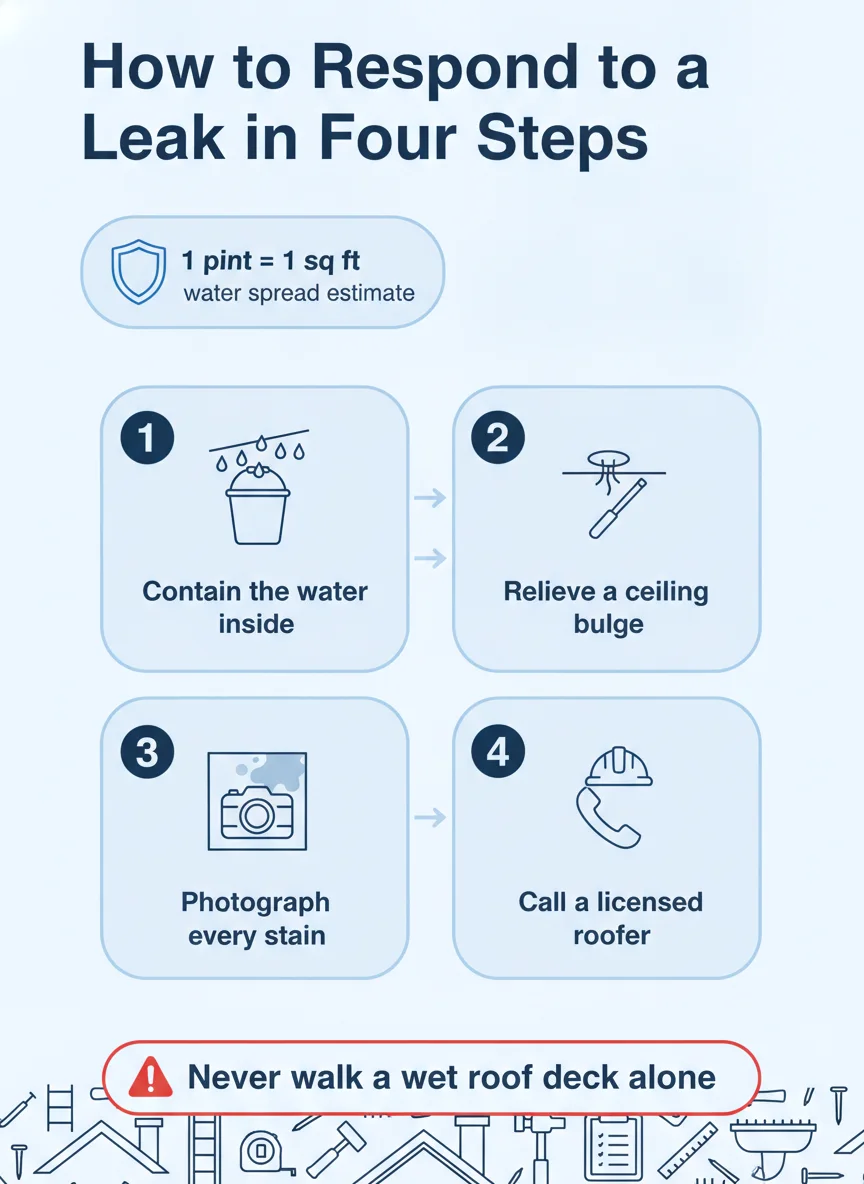
- Move belongings clear: Get furniture, electronics, and anything valuable away from the dripping area before you do anything else.
- Contain the drip: Set a bucket or large container under the leak and lay towels around it to catch splashing and protect flooring.
- Relieve a ceiling bulge: If drywall is sagging or bubbling, carefully poke a small hole at the lowest point to release trapped water before the ceiling collapses on its own.
- Check the attic with a flashlight: Look for wet insulation, dark streaks on rafters, or daylight coming through the roof deck, and note the location relative to the nearest vent pipe or chimney.
- Photograph everything: Take wide and close-up photos of the ceiling stain, the attic, and any visible exterior damage for your records and for insurance if needed.
- Shut off nearby power: Cut power at the breaker to any outlet or fixture close to the leak before continuing cleanup.
- Call a licensed roofer: Schedule a roof repair visit to find the entry point and stop the leak at the source rather than just managing the drip.
What the Stain Pattern Is Telling You
The shape and behavior of the stain itself gives real clues before a roofer ever climbs a ladder. A ring-shaped stain that grows slowly usually points to a slow, steady drip from a failed seal, while a sudden large wet patch after a storm points to wind-driven water getting past a shingle edge or flashing joint in one event.
Active Drips vs. Old Stains
An active drip means water is currently moving through the structure, and that's the version that needs containment right away. An old, dry stain with no new growth can still mean a problem, often a leak that only shows up during specific wind directions or heavy rain, and it's worth having checked even if nothing is dripping today.
Residents searching for signs your roof needs attention often start exactly here, with a stain they assumed was old and harmless until it reappeared after the next storm. A dry stain today doesn't rule out active damage above it.
Location Relative to the Roof Plane
A stain near an exterior wall often points to flashing where the roof meets a wall or dormer, a notoriously leak-prone joint. A stain in the middle of a room, away from any wall, more often traces back to a plumbing vent boot or a damaged shingle section directly uphill from that spot, assuming the attic framing runs in a straightforward path.
Multiple stains that line up in a row usually mean water is traveling along a single rafter or truss from one entry point, not multiple separate leaks. That distinction changes the whole repair plan, since fixing one source might resolve several ceiling marks at once.
What You Can Handle vs. What Needs a Licensed Roofer
Containing water, checking the attic from a stable platform, and documenting damage are all reasonable for a homeowner to do safely. These steps don't require climbing on the roof itself and give you useful information to share with whoever comes out to make the repair.
Anything that involves getting onto the roof deck, removing and replacing shingles, resealing flashing, or working near a chimney or skylight penetration is a job for a licensed roofer. These repairs need to be tied back into the surrounding roofing system correctly, or the next storm finds the same weak spot, or a new one right next to it.
There's also a cost argument for calling sooner rather than later. A single failed vent boot or a strip of lifted shingles is a contained repair. The same leak left unaddressed through another two or three storms can soak decking and framing, turning a straightforward patch into a larger structural repair.
Getting Ahead of the Next Leak
Once the active leak is stopped, it's worth having the rest of the roof looked at rather than treating the repair as an isolated event. A single failure point is often a sign that the surrounding materials are at a similar age and stage of wear, especially on a roof that's taken more than one North Texas hailstorm or windstorm over the years.
Towns across the metro, from Dallas to Plano, see this pattern regularly: one visible leak followed by a handful of smaller issues once a roofer gets a full look at the surface. Absolute Professional Roofing Contractors LLC inspects the whole roof when called out for a leak, not just the spot that's dripping, so you know what else is coming before it does.
Frequently asked questions
Why is my roof leaking when it's not raining?
A leak that shows up on dry days is usually condensation from poor attic ventilation, or water that traveled along a rafter from an old entry point and is only now reaching the ceiling drywall. Either way, the source is rarely directly above the stain.
Can I patch a roof leak myself?
You can slow a leak temporarily with a tarp or interior containment, but finding and sealing the actual entry point usually requires getting on the roof safely and knowing what you're looking at. A small mistake in a patch can trap moisture and make the damage worse underneath.
How fast does water damage spread after a roof leak?
Water follows gravity and the path of least resistance, so it can travel several feet from the actual entry point before it shows up as a stain. Once drywall and insulation are saturated, mold risk starts within 24 to 48 hours in Texas humidity.
Does homeowners insurance cover a roof leak?
Coverage depends on the cause. Sudden damage from wind or hail is commonly covered, while leaks from gradual wear or lack of maintenance often are not, so check your policy and document the damage with photos as soon as you notice it.
Should I turn off electricity near a roof leak?
Yes, if water is dripping near a light fixture, outlet, or electrical panel, shut off power to that area at the breaker before doing anything else. Water and electricity are a serious shock and fire hazard, and that step comes before any cleanup.