
Why the Adjuster Appointment Matters So Much
In the Dallas-Fort Worth metro, hailstorms and high wind events roll through often enough that most homeowners will file a roofing claim at some point. The adjuster appointment is the single moment where the insurance company decides, largely, how much of your roof they're willing to pay to fix. Everything that happens in that 30 to 60 minutes on your roof sets the tone for the rest of the claim.
A lot of homeowners treat this like a routine visit and let the adjuster walk the roof alone. That's a mistake. The adjuster is working from the insurance company's perspective, measuring damage against a threshold, not trying to find every covered item. Having someone who installs roofs for a living present, pointing out what's actually damaged and what isn't, changes what gets written into that report.
What the Adjuster Is Actually Looking For
Adjusters are trained to assess damage quickly and consistently across claims, which means they rely on a standardized method rather than a full inspection of every shingle.
The Test Square Method
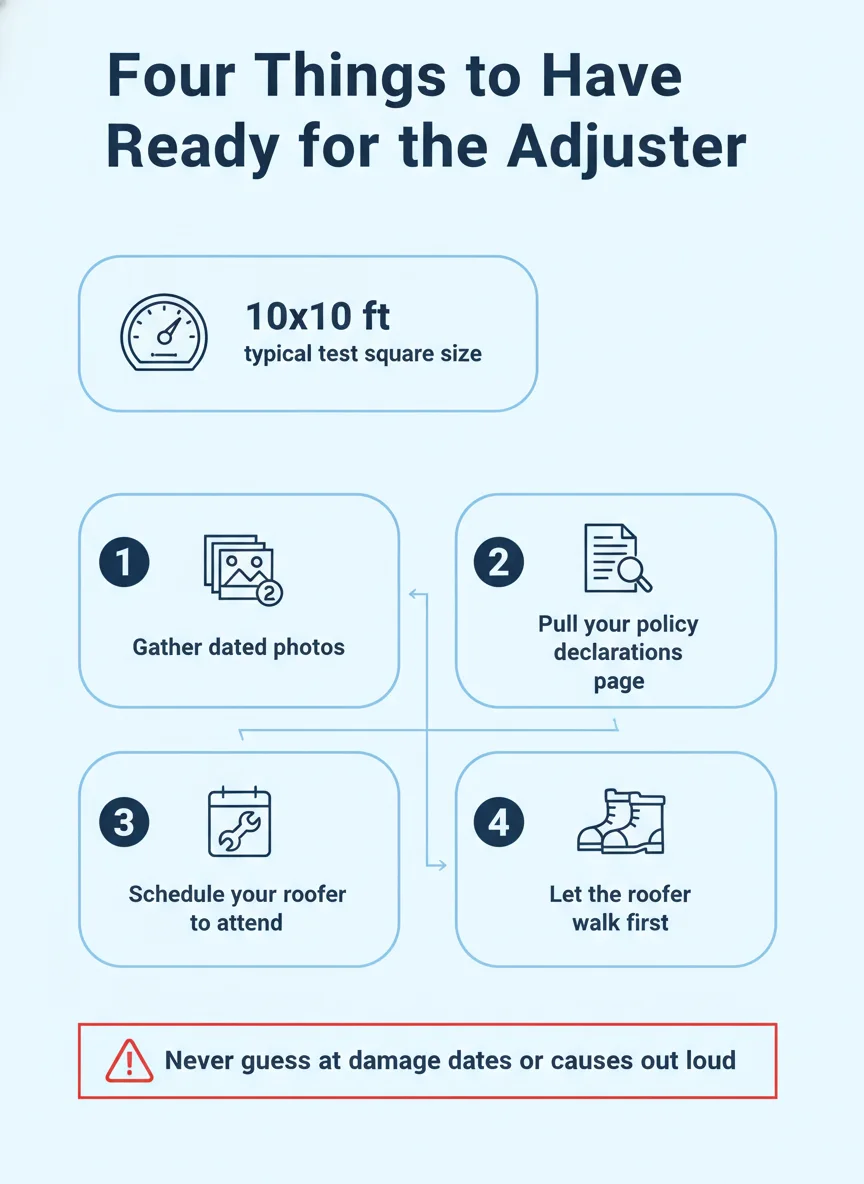
Most adjusters mark off a measured section of roof, often around 10 feet by 10 feet, and count the number of impact marks or damage points inside that section. If the count clears the threshold their insurer uses, that slope typically qualifies for a covered claim. If it's close or falls short, that's where a roofer's documentation of the full roof matters.
The test square is a sampling method, not a guarantee it captures every damaged spot. A roof can have scattered hits that don't cluster neatly into one square, and a thorough roofer walks the entire surface, not just the marked section, so nothing gets missed in the official count.
Flashing, Vents, and Soft Spots
Beyond the shingle surface, adjusters check flashing around chimneys and valleys, the condition of pipe boots and vents, and soft or spongy spots that can indicate decking damage underneath. These areas often get less attention in a quick walk-through, which is exactly where having your roofer along to flag specific spots pays off.
Decking issues in particular can be invisible from the surface and only show up once old material comes off during a roof replacement. That's one reason the initial adjuster estimate sometimes needs a supplement later in the process.
| Scenario | What Happens | What You Should Do |
|---|---|---|
| Adjuster inspects alone | Report reflects only what they personally noted | Request your roofer be present for any re-inspection |
| Roofer present at inspection | Both parties walk the roof and compare notes | Let your roofer point out items the adjuster may pass over |
| Estimates don't match | Insurer's scope is lower than the roofer's quote | Roofer submits photos and documentation as a supplement |
| Decking damage found mid-project | Original estimate didn't account for it | Roofer documents and requests a supplement before work continues |
What to Have Ready Before the Adjuster Arrives
The appointment goes smoother, and your case gets stronger, when you walk in prepared instead of scrambling. Dated photos of the damage, taken as soon as you noticed it, help establish a timeline. Your policy's declarations page tells both you and the adjuster what coverage you're working with, including your deductible structure.
It also helps to have a rough history of when you last had any roof work done, even informal notes, since adjusters sometimes ask about the roof's maintenance history. You don't need a file folder of paperwork, just enough to show you're organized and paying attention, which tends to get taken more seriously.
Step-by-Step: Preparing for the Adjuster Visit
Most of this prep takes less than an hour, and doing it ahead of time makes the actual appointment move faster and produce a more accurate outcome.
- Document the damage: Take dated photos of visible damage from the ground, including any interior ceiling stains, as soon as you notice them.
- Pull your policy: Locate your declarations page so you know your deductible and coverage limits before the appointment.
- Call your roofer first: Schedule a storm and hail inspection so your roofer has already seen the roof before the adjuster shows up.
- Coordinate the schedule: Set the adjuster appointment for a time your roofer can attend, not just whenever is convenient for you.
- Let the roofer lead on the roof: Stay on the ground and let your roofer walk the roof with the adjuster, pointing out specific damaged areas.
- Take notes on the spot: Write down anything the adjuster says about the scope while it's fresh, including any areas they called borderline.
- Review the estimate together: Once the insurer's estimate arrives, go over it with your roofer line by line before agreeing to anything.
What Happens When the Estimates Don't Match
Why Gaps Happen
It's common for a roofer's estimate to come in higher than the insurer's initial scope. Sometimes it's because the adjuster's test square missed a cluster of damage elsewhere on the roof. Other times it's because decking or flashing issues only become visible once the old roof is actually removed.
A gap in estimates isn't automatically a fight. Most insurers have a formal supplement process built for exactly this situation, where new documentation gets submitted for review after the initial estimate is written.
The Supplement Process
When your roofer finds something the original estimate didn't cover, like hidden rot in the decking or missed flashing damage, they document it with photos and submit a supplement request. This goes back to the adjuster or the insurer's estimating team for review, and approved items get added to the claim.
This process takes some patience, but it's a normal part of how roofing claims work, especially on older roofs or ones with more complex damage. Clear photo documentation is what moves a supplement from a maybe to an approval.
What You Can Handle Yourself vs. What Needs a Roofer
You can absolutely handle the paperwork side yourself. Pulling your policy, taking ground-level photos, and keeping a simple timeline of when you noticed damage are all things any homeowner can do without special training.
What you shouldn't handle alone is the roof walk itself and the technical back-and-forth with the adjuster. Reading damage severity, distinguishing storm damage from normal wear, and knowing what counts toward a test square all take experience most homeowners don't have, and getting it wrong can mean leaving coverage on the table.
A licensed roofer bridges that gap. They know what adjusters typically look for, how to document findings in a way insurers accept, and how to push back professionally when something's been missed, all without putting you in an awkward position with your own insurance company.
Walking Into the Appointment Prepared
The adjuster meeting isn't something to wing. A little preparation on your end, paired with a roofer who's done this walk dozens of times, turns a stressful appointment into a straightforward one. If you're unsure whether your roof repair situation qualifies for a claim at all, that's worth figuring out before you even schedule the adjuster, which you can read more about in how to check your roof for hail damage from the ground.
Homeowners across Plano and the surrounding metro call Absolute Professional Roofing Contractors LLC when it's time to meet the adjuster, because having someone on the roof who knows what to point out tends to make the whole process go a lot smoother.
Frequently asked questions
Should I be on the roof when the adjuster inspects it?
You don't need to climb up there yourself, and most homeowners shouldn't. Your job is to have documentation ready on the ground and let your roofer walk the roof alongside the adjuster, since that's the part that requires training and a harness.
What does the adjuster actually measure on the roof?
The adjuster typically marks out a test square, a small measured section, and counts the impact marks or damage points inside it to decide whether the roof meets the threshold for a covered claim. They'll also check flashing, vents, and any slopes you flagged as concerning.
What if my roofer's estimate doesn't match the adjuster's?
This happens more often than homeowners expect, and it's usually resolved through a supplement request rather than a dispute. Your roofer documents what the adjuster may have missed, like hidden flashing damage or decking issues found once materials come off, and submits that evidence for review.
Do I need to be home for the adjuster appointment?
It's a good idea to be home or at least reachable, since the adjuster may want to walk the interior for ceiling stains or attic evidence too. Many homeowners coordinate the appointment time with their roofer so someone experienced is present for the whole visit.
Can I just handle the adjuster meeting myself without a roofer there?
You can, but it's not usually the strongest move, since the adjuster works for the insurance company and you're left interpreting construction findings on your own. Having a roofer present means someone who does this daily is pointing out what the adjuster might otherwise pass over.