Why Attic Airflow Matters in North Texas
In the Dallas-Fort Worth area, roofs spend months baking under triple-digit heat and then swing into cold snaps that can bring condensation into play. An attic sits between those two extremes and the living space below, and what happens inside that attic has a direct effect on the roof deck and shingles above it. Good ventilation is not a luxury upgrade, it's part of how a roofing system is designed to work.
Homeowners usually think about the roof surface, the part they can see from the driveway, but the attic is where a lot of long-term damage actually begins. An attic that runs too hot in summer or traps moisture in winter puts stress on the roof from underneath, often long before any problem becomes visible from the street.
How Intake and Exhaust Ventilation Work Together
A healthy attic ventilation system depends on two things working in balance: intake low on the roof and exhaust high on the roof. Air needs a way in and a way out, and both sides need to be sized to match each other. When that balance is off, the whole system underperforms no matter how much venting is installed on one side alone.
Intake: Where Fresh Air Enters
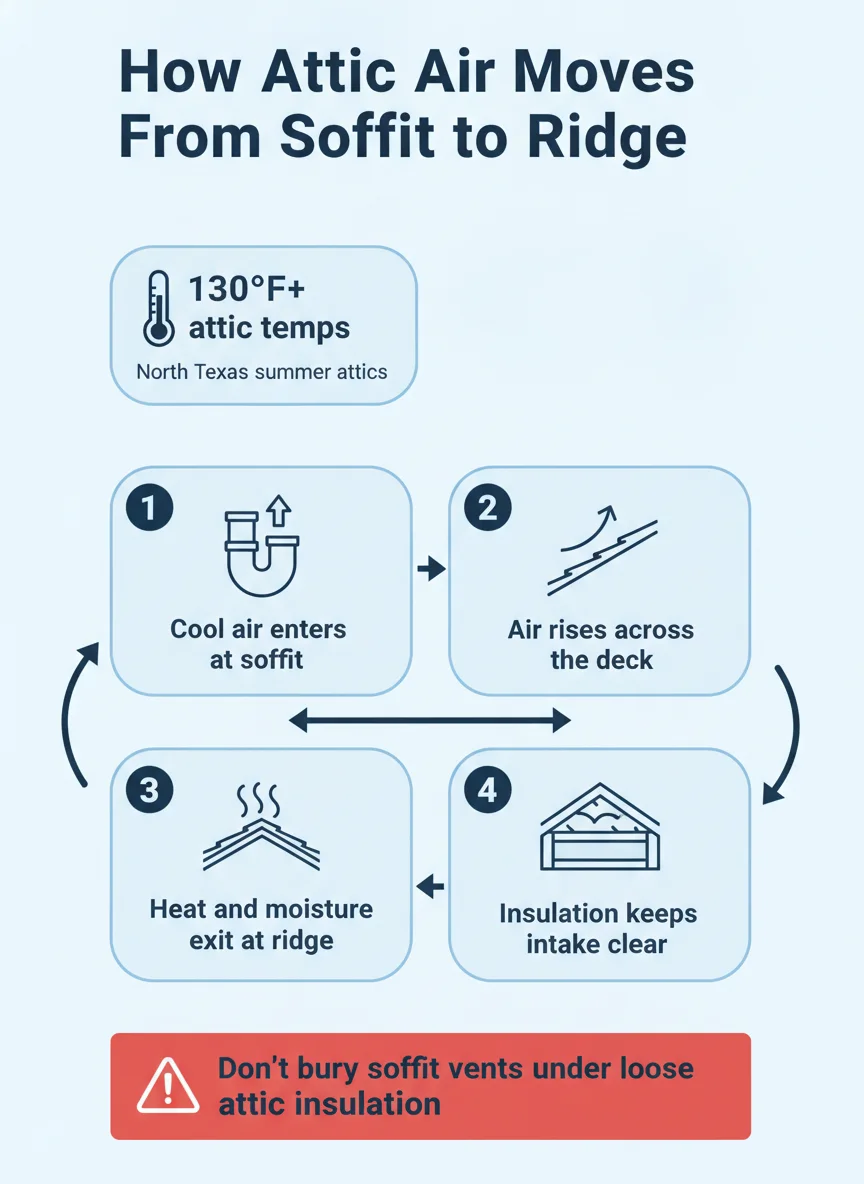
Intake ventilation usually happens at the soffit, the underside of the roof overhang. Soffit vents pull outside air into the lowest part of the attic, where it's coolest and driest. This is the starting point for the whole airflow cycle, and if it's blocked or undersized, the rest of the system has nothing to work with.
Common culprits for blocked intake include paint overspray sealing the vent holes, insulation pushed too far into the eaves, or soffit vents that were simply never sized for the attic above them. Any of these can choke off airflow before it even starts.
Exhaust: Where Heat and Moisture Leave
Exhaust ventilation sits at the highest point of the attic, most often a ridge vent running along the peak of the roof, though some homes use turbines or power vents instead. As intake air warms and rises, exhaust vents give it a path out, carrying heat and moisture with it rather than letting them sit under the deck.
Products like high-tech turbines and solar-powered attic vents, which fall under ventilation and energy efficiency work, are built to move that rising air out faster in homes where passive ridge venting alone isn't keeping up.
| Condition | Summer Attic | Winter Attic |
|---|---|---|
| Main risk | Trapped heat baking the underside of the deck | Condensation and frost forming on the deck |
| What good airflow does | Carries hot air out before it radiates into shingles | Keeps the deck closer to outdoor temperature, limiting condensation |
| Visible warning sign | Higher cooling bills, hot upstairs rooms | Frost on nail tips, damp insulation near the ridge |
| Left unaddressed | Accelerated shingle aging from sustained heat | Deck staining, mold growth, and rot over seasons |
What's Actually Up There: Vents, Baffles, and Barriers
A ventilation system is more than just the vents themselves. Soffit vents and ridge vents are the entry and exit points, but baffles, also called chutes, are what keep the air channel clear once insulation is added to the attic floor. Without baffles holding a gap open at the eaves, loose-fill or batt insulation can slump right over the soffit vents and shut off intake entirely.
Radiant barrier systems work alongside ventilation rather than replacing it. A radiant barrier reflects heat before it radiates into the attic space, which reduces the overall heat load that the ventilation system has to move out. The two work best as a pair, not as substitutes for one another.
Step-by-step: What a Ventilation Check Looks At
Checking an attic for ventilation problems is a methodical walk-through, not a single glance. Here's the general order a thorough check follows, from the eaves up to the ridge.
- Check soffit vents: Look at every soffit vent from outside for paint, debris, or screens that are clogged shut, since this is the most common point of failure.
- Inspect from inside the attic: From inside, confirm that insulation hasn't crept over the soffit intake and that baffles, where installed, are still holding a clear air channel.
- Look at the ridge line: Check that ridge vents or turbines are unobstructed, properly seated, and free of debris that could block exhaust airflow.
- Feel the temperature gradient: A properly vented attic should feel noticeably closer to outdoor temperature than a sealed, stagnant space, especially near the ridge.
- Check for moisture signs: Look for staining on the underside of the deck, rusted nail tips, or compressed, damp insulation, all signs that moisture has been sitting rather than venting out.
- Confirm balance: Compare the total intake vent area against exhaust vent area, since an imbalance on either side limits how well the whole system performs.
What Poor Ventilation Looks Like Once It's Done Damage
By the time ventilation problems show up on the outside of the roof, they've usually been building for a while inside the attic first. Knowing the pattern helps homeowners catch it earlier instead of waiting for a visible failure.
On the Shingles
Shingles that curl, blister, or appear to age faster in patches, especially on south and west-facing slopes, are often reacting to sustained heat coming from underneath as much as sun exposure from above. A roof that's otherwise in reasonable shape but shows early wear concentrated in certain areas is worth a closer look at the attic below it.
Inside the Attic Itself
Frost on the tips of roofing nails in winter, musty odors, visible mold on the underside of the decking, or insulation that feels damp are all signs that moisture is condensing rather than escaping. In summer, an attic that feels noticeably hotter than it should, combined with rooms below that are hard to keep cool, points to the same underlying airflow problem working in the opposite direction.
DIY vs. Calling a Pro
Some parts of attic ventilation maintenance are reasonable for a homeowner to check. Walking the attic to look for daylight gaps at the soffit, feeling for obvious heat buildup, or noticing a musty smell are all things anyone can do without special tools, as long as the attic is safely accessible.
Anything involving the roof deck itself, cutting in new vents, adjusting ridge line venting, or diagnosing whether intake and exhaust are properly balanced for the size of the attic, is better left to a licensed roofer. Getting the vent math wrong, or cutting into decking without understanding the framing underneath, can create new leak points instead of solving the original problem.
A full roof system check, including attic airflow, is also a natural thing to fold into a roof repair visit if curling shingles or deck staining are already showing up, since the surface symptom and the attic cause are usually connected.
Keeping the Whole System Working Together
Attic ventilation isn't a single part, it's a system of intake, exhaust, baffles, and sometimes radiant barriers all working in balance. A homeowner who understands how air is supposed to move from soffit to ridge has a much easier time spotting when something's blocking that path, whether it's old insulation, a sealed vent, or a ridge line that's never had proper exhaust to begin with. Pairing attic checks with routine seasonal maintenance, like the kind covered in A North Texas Roof Calendar, keeps small airflow issues from turning into shingle or deck damage.
If an attic in Plano or anywhere else in the metro feels like an oven in summer or shows frost on the nails in winter, that's the ventilation system asking for attention before the roof above it starts to show it. Absolute Professional Roofing Contractors LLC can take a look at the airflow and recommend what the attic actually needs.
Frequently asked questions
How do I know if my attic has bad ventilation?
The clearest signs are high cooling bills in summer, visible frost or condensation on the underside of the roof deck in winter, and shingles that curl or look prematurely worn from above. A musty smell or heat that feels trapped when you open the attic hatch are also common signs.
Can too much attic ventilation be a problem?
Ventilation needs to be balanced between intake and exhaust, not maximized on one side. A roof with plenty of ridge venting but blocked or undersized soffit vents can actually pull conditioned air from the living space instead of pulling fresh air from outside, which defeats the purpose.
Do ridge vents work without soffit vents?
Not effectively. A ridge vent is an exhaust point, and it needs a matching intake source low in the attic, usually at the soffit, to create real airflow. Without intake, a ridge vent has little air to pull and the attic stays hot and stagnant.
Does attic insulation affect roof ventilation?
Yes, insulation that is piled too high or pushed into the eaves can block the soffit vents that feed the whole ventilation system. Baffles or chutes are typically used to hold a clear air channel open above the insulation at the eaves.
Can poor attic ventilation shorten the life of a roof?
Yes, sustained heat and trapped moisture both accelerate wear on shingles and roof decking over time. A well-ventilated attic keeps the underside of the roof closer to outdoor temperature, which reduces the stress that heat and humidity put on the materials above it.