Why Longevity Matters for North Texas Roofs
Across Plano, Frisco, McKinney, and the rest of the DFW metro, a roof spends its life absorbing summer heat that routinely pushes past 100 degrees, then cooling fast overnight, all while taking the occasional hailstorm. That cycle of expansion and contraction is harder on a roof than steady weather in a milder climate, and it means the "typical lifespan" number printed on a material's packaging often needs an asterisk for this region.
Choosing a material isn't just about which one lasts longest in a lab test. It's about which one lasts longest on your specific roof, at your slope, with your attic ventilation, under North Texas sun. A homeowner planning a Roof Replacement should weigh lifespan against upfront cost, appearance, and how the material has historically performed on homes in towns like Frisco before deciding.
What Actually Determines How Long a Roof Lasts
Material matters, but it's only one piece. The same shingle can last 15 years on one house and 25 on another depending on installation quality, attic airflow, and how quickly small problems get addressed.
Material Composition and Weathering
Asphalt shingles are built from a fiberglass mat coated in asphalt and mineral granules, and those granules are the first line of defense against UV breakdown. Once granules wear thin, the asphalt underneath degrades faster, which is why shingle roofs tend to show their age gradually rather than failing all at once.
Metal panels and standing seam systems resist UV degradation almost entirely since the finish is baked-on paint over steel or aluminum, not an oil-based coating that dries out over time. Clay and concrete tile share a similar advantage, the material itself is essentially inert to sun exposure, which is a big reason both metal and tile routinely outlast shingle roofs by decades.
Installation Quality and Maintenance
A premium material installed poorly will still underperform a mid-grade material installed correctly. Flashing details around valleys, chimneys, and penetrations are where most early failures start, regardless of what's covering the field of the roof.
Attic ventilation also plays a bigger role than most homeowners expect. Trapped heat bakes the underside of shingles and can shorten their service life by years, which is one reason upgrades like Ventilation & Energy Efficiency work are often recommended alongside a replacement rather than treated as optional.
| Material | Typical Lifespan | Best For |
|---|---|---|
| Asphalt shingles | 18-25 years | Most residential homes, moderate budgets |
| Metal (standing seam) | 40-70 years | Long-term homeowners, steep or low slopes |
| Clay or concrete tile | 50+ years | Homes built for the weight and style |
| TPO/EPDM membrane | 20-30 years | Flat or low-slope commercial buildings |
The Roofing System Beneath the Surface
What's visible from the street is only the top layer of a roofing system. Underlayment, decking, flashing, and ventilation all work together, and a weak link in any one of them can shorten the life of even the best surface material.
Underlayment is the roof's backup barrier against moisture if the top layer is ever compromised by a lifted shingle, cracked tile, or seam failure on a membrane roof. Decking condition matters too, since soft or water-damaged decking can't hold fasteners properly no matter how good the material on top of it is.
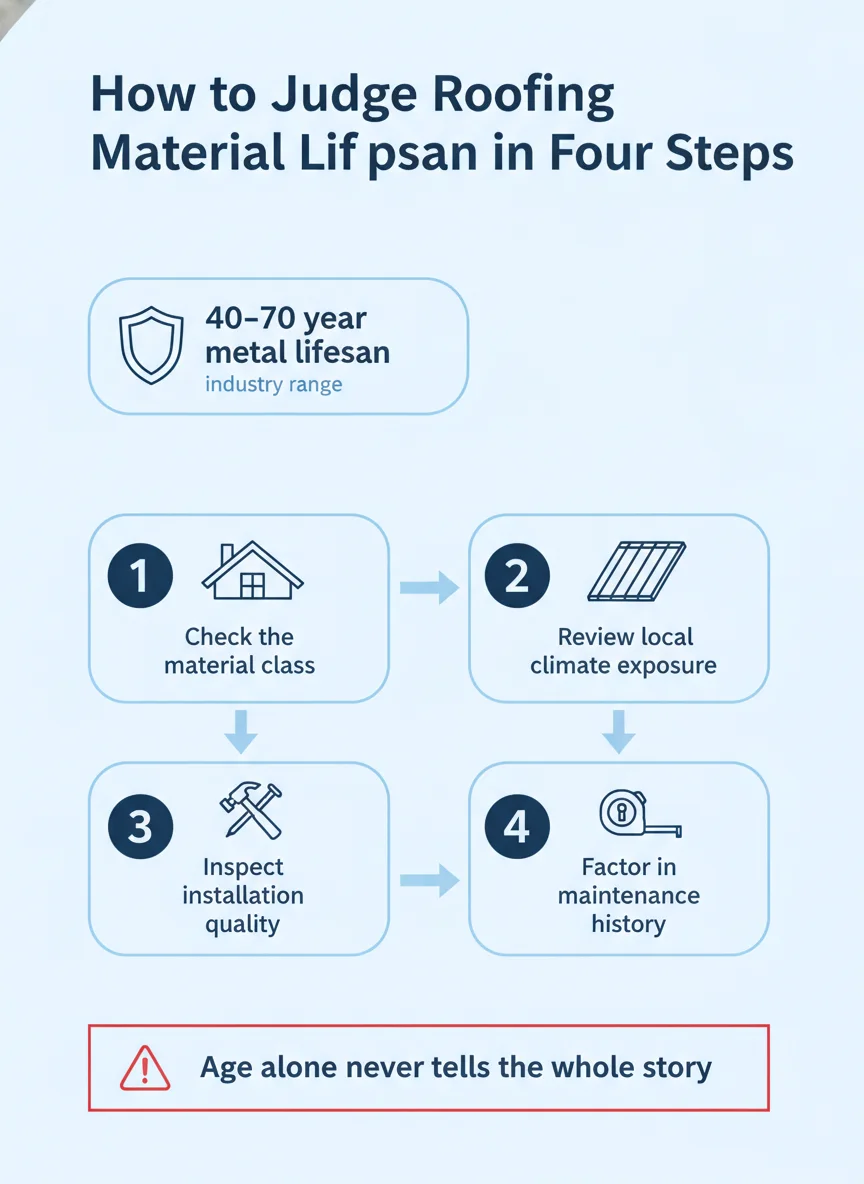
Step-by-step: How to Evaluate a Roofing Material for Longevity
If you're comparing materials for a replacement, walk through these factors in order rather than just picking by price or looks alone.
- Confirm the slope: Steep slopes shed water fast and suit most materials, while low-slope sections usually call for membrane roofing instead of shingles or tile.
- Check structural load: Tile is heavy and some older homes need a structural review before it's an option, so confirm your framing can support the material you want.
- Review climate exposure: Homes with more direct afternoon sun or exposed hilltop positions will wear a roof faster than shaded, sheltered lots.
- Compare warranty terms: Manufacturer and workmanship warranties vary by material and installer, so read what's actually covered rather than assuming all warranties are equal.
- Ask about ventilation: A material rated for 25 years can fall short of that if the attic underneath it isn't venting heat properly.
- Factor in maintenance: Metal and tile need less routine upkeep than shingles, but every material benefits from periodic checks after severe weather.
Diagnosing What You're Actually Looking At
Signs an Asphalt Roof Is Reaching Its Limit
Granules collecting in gutters, curling or cupping shingle edges, and dark streaking that won't wash off are all common signs an asphalt roof is nearing the end of its useful life. Bald patches where granules have worn completely away expose the asphalt mat to direct UV light, which accelerates the remaining decline.
Soft spots underfoot or visible sagging along the roofline point to decking issues beneath the shingles, not just surface wear. At that stage, repair options narrow and a full Roof Replacement usually makes more financial sense than patching.
Signs a Metal or Tile Roof Still Has Life Left
Metal panels with intact finish and no rust bleed at fastener points, and tile with no widespread cracking or slipping, are usually still performing well structurally even after many years of service. Surface fading or chalking on metal is largely cosmetic and doesn't necessarily signal a failing roof.
The real warning signs on these longer-lasting materials are loose or missing fasteners on metal panels, or multiple cracked and displaced tiles that expose the underlayment. Those are repairable issues when caught early, which is part of why these materials earn their reputation for longevity.
DIY vs Calling a Pro
Homeowners can handle plenty of the ground-level legwork themselves. Checking gutters for granule buildup, looking for daylight in the attic, and photographing visible shingle damage from the ground are all reasonable DIY steps that help you understand roughly where your roof stands before calling anyone out.
What shouldn't be DIY is getting on the roof itself, especially a steep-slope or tile roof where a misstep can mean a fall or cracked tiles underfoot. Flashing repairs, fastener replacement, and any structural assessment of decking need a trained eye and the right safety equipment to do without making things worse.
A licensed roofer can also tell you things a homeowner can't easily see from the ground, like whether granule loss is cosmetic or a sign of real wear, or whether a tile crack is isolated or part of a wider pattern across the field. That distinction is usually the difference between a small repair and a full replacement.
Choosing the Right Material for Your Home
There's no single "best" material for every home in the DFW metro. A homeowner planning to stay put for decades may get more value out of metal or tile despite the higher upfront commitment, while someone prioritizing cost and familiar style may lean toward architectural shingles and simply stay on top of maintenance.
Whatever direction you're leaning, it helps to compare options side by side before committing, including how asphalt and metal perform against each other in this breakdown of the two most common choices for Texas homes. Absolute Professional Roofing Contractors LLC can walk through which material fits your home, your budget, and how long you plan to own it.
Frequently asked questions
What roofing material lasts the longest?
Metal and concrete or clay tile roofs generally outlast asphalt shingles by a wide margin when installed correctly, with some metal and tile systems holding up for decades longer than standard shingles. The exact lifespan still depends on the specific product, the slope of the roof, and how well it's maintained over the years.
Is metal roofing worth it compared to asphalt shingles?
Metal roofing tends to last far longer than asphalt shingles and holds up better against North Texas hail and heat cycling, but the tradeoffs are a different look, a different installation process, and upfront cost. Whether it's worth it depends on how long you plan to stay in the home and what you want from the roof long term.
How long do asphalt shingles last in Texas heat?
Asphalt shingles in Texas commonly reach the lower end of their rated lifespan because intense UV exposure and heat cycling accelerate granule loss faster than in milder climates. Good attic ventilation and regular maintenance help shingles get closer to their full expected range.
Does roof color affect how long a roof lasts?
Roof color can influence attic heat buildup, with darker materials absorbing more solar heat, but color is a smaller factor than material quality, ventilation, and installation. A well-ventilated dark roof will usually outlast a poorly ventilated light one.
Can I combine materials, like metal accents on a shingle roof?
Yes, many homes mix materials, using standing seam metal on porches or low-slope sections while the main field stays asphalt shingle or the reverse. This is common and can work well as long as the transitions and flashing are detailed correctly by a licensed roofer.