What a Roof-Over Actually Is
A roof-over, sometimes called a re-roof or overlay, means a new layer of shingles goes directly on top of the existing layer instead of removing it first. It's been a common shortcut for decades because it cuts labor time and skips the dumpster, and in plenty of DFW metro neighborhoods you can spot a roof-over just by the slightly wavy look along the ridge line.
The appeal makes sense on the surface. Less demo, less disposal, a shorter job. But a roof is a system, not just a top layer, and what you can't see from the ground, flashing condition, decking integrity, trapped moisture, matters more over the life of the new shingles than what's visible on install day. That's why most licensed roofers in Texas will walk a homeowner through the tradeoffs before recommending it.
Why Removing the Old Layer Matters
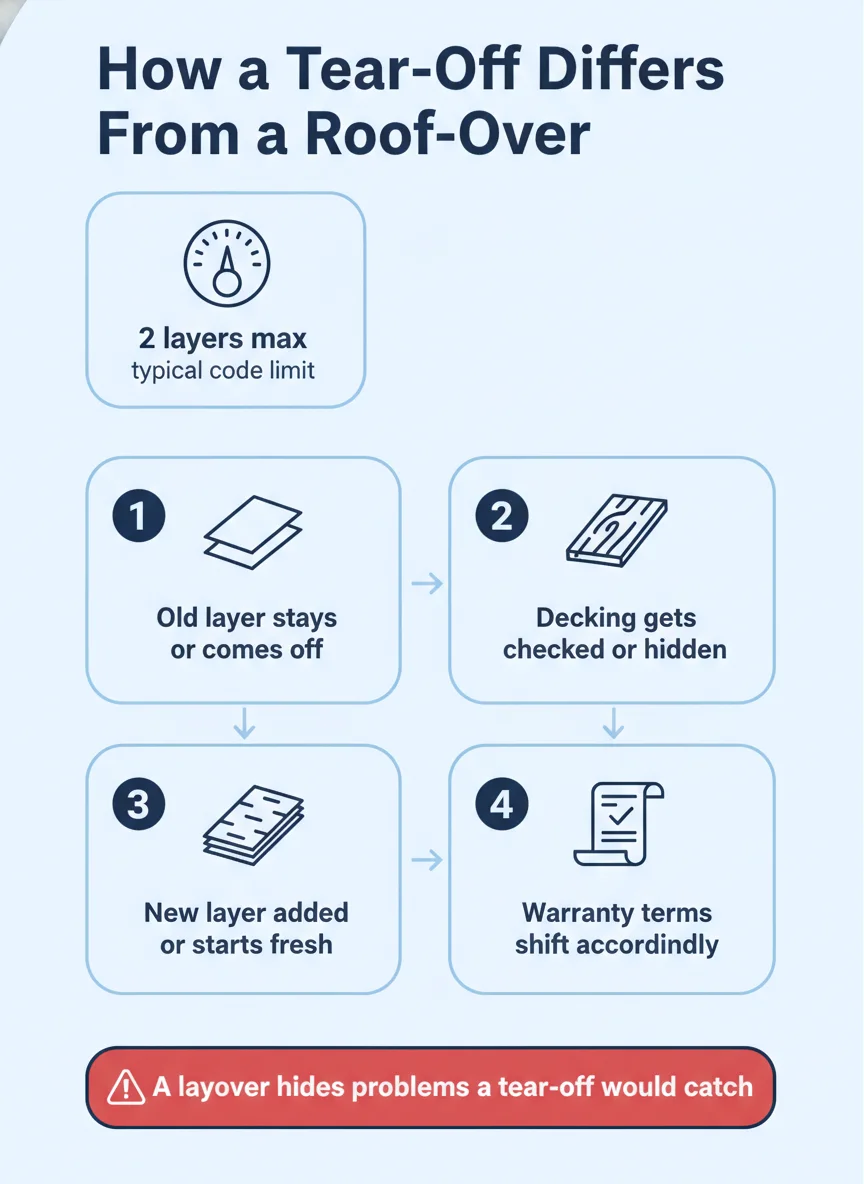
Pulling the old shingles off isn't just about starting clean, it's about finding out what's actually underneath before you cover it up for another 15-20 years. A tear-off is the only point in a roof's life where the decking, the flashing, and the ventilation are fully exposed and fixable.
What a Tear-Off Reveals
Once the old shingles come off, a crew can see the plywood or OSB decking directly, check for soft spots, water staining, or delamination, and replace any damaged sections before the new layer goes down. They can also inspect flashing around chimneys, vents, and valleys, areas that fail quietly and cause leaks long before a homeowner notices anything from inside.
A tear-off is also the point where attic ventilation gets evaluated properly. Ridge vents, soffit intake, and any gaps in the system are easiest to fix when the deck is exposed. That matters for heat buildup in North Texas attics, which affects both shingle lifespan and cooling costs, something covered in more detail in our ventilation and energy efficiency services.
What a Roof-Over Hides
A roof-over seals the existing layer in place, which means any decking damage, trapped moisture, or deteriorated flashing underneath stays exactly where it is. If there's a slow leak nobody's caught yet, it keeps leaking, now under two layers of shingles instead of one, making it harder and more expensive to track down later.
It also adds weight. Two layers of shingles is meaningfully heavier than one, and older framing wasn't always built with that extra load in mind. Combined with the added heat retention from a second layer, it's a big part of why a roof-over tends to shorten the service life of the new shingles compared to a clean tear-off.
| Factor | Roof-Over | Tear-Off |
|---|---|---|
| Decking inspection | Not possible, stays hidden | Fully exposed and repairable |
| Added weight | Two layers on the structure | One layer, original load |
| Manufacturer warranty | Often limited or reduced | Full warranty typically available |
| Code allowance | Usually capped at one overlay | No layer limit, always compliant |
What's Actually Underneath Every Roof
Underneath any shingle layer is the decking, usually plywood or OSB sheathing, nailed to the rafters or trusses. That decking is what the shingles are actually fastened to, and it's what gives a roof its structural rigidity. Over time it absorbs the effects of any leak, condensation, or attic moisture that makes its way through.
Beneath the decking sits the attic, and the two are connected by ventilation pathways that are supposed to move hot, moist air out before it causes problems. A roof-over doesn't touch any of this. A tear-off is the one chance to address all three layers, decking, ventilation, and the shingle layer itself, in a single project.
Step-by-step: How a Tear-Off Replacement Works
A proper tear-off follows a predictable sequence, and knowing the steps helps homeowners understand what they're paying for beyond just new shingles.
- Strip old layer: Crews remove all existing shingles, felt, and old flashing down to bare decking, then haul away the debris.
- Inspect decking: Every section of exposed decking gets checked for soft spots, rot, or delamination and replaced as needed.
- Address ventilation: Intake and exhaust venting get evaluated and corrected so attic airflow works the way it's supposed to.
- Install new underlayment: A fresh moisture barrier goes down across the clean deck before any shingles are installed.
- Flash penetrations: New flashing goes in around chimneys, vents, and valleys, the spots most likely to leak over time.
- Install new shingles: Shingles go down to manufacturer spec, which is usually required to qualify for the strongest warranty tier.
- Final walk-through: The finished roof replacement gets checked for proper nailing, sealing, and clean site cleanup.
What You'll Typically Find Once the Old Layer Comes Off
On an Older Home
Homes that have gone a long stretch without attention to the roof often reveal soft decking around valleys and penetrations, areas where water tends to find its way in slowly over years. It's common to find flashing that was reused from a previous install instead of replaced, which is one of the quieter causes of leaks that show up well after a project wraps.
Ventilation gaps are also common on older homes, where attic venting was never properly sized for the home's square footage. Addressing that during a tear-off, rather than sealing it under a second layer, is one of the clearer long-term benefits of going the full route instead of a quick overlay.
On a Newer Home
A newer home with one well-installed layer may reveal very little once the old shingles come off, sound decking, intact flashing, adequate venting. In those cases, the tear-off still matters because it confirms what's there rather than assuming it, and it clears the way for the new shingles to go down flat and fully nailed, which matters for wind performance.
Even in a best-case scenario, a tear-off gives the new roof the cleanest possible foundation, no trapped air pockets, no uneven surface from a prior layer telegraphing through. That flatness is part of why tear-offs tend to look and perform better over their full lifespan.
What Homeowners Can Decide, and What's Best Left to a Pro
Homeowners can absolutely weigh in on the decision between a roof-over and a tear-off once they understand the tradeoffs, and it's worth asking directly during a quote how a contractor plans to handle the existing layer. Homeowners can also walk the attic beforehand and note any visible staining, daylight through the decking, or musty smells, information worth sharing with whoever provides the estimate.
The actual inspection of the decking, flashing, and structural load, though, needs a licensed roofer. Determining whether a roof can safely carry a second layer involves checking the framing and current layer count, not something that's safe or accurate to assess from the ground or an attic flashlight check.
The same goes for any repair work discovered once the old layer comes off. Replacing damaged decking, correcting ventilation, and re-flashing penetrations all require someone who installs to manufacturer specification, both for the sake of performance and for the new shingles to actually qualify for their intended warranty coverage.
Making the Call for Your Roof
A roof-over isn't automatically the wrong choice everywhere. On a newer roof with a single, well-installed layer and no history of leaks, it can be a reasonable way to extend a budget, provided local code allows it and the structure can handle the added weight. But once a roof already carries one layer, has any history of water issues, or is due for a full replacement anyway, a tear-off is almost always the sounder long-term move, and it's the only option once a roof already has two layers on it.
If you're trying to figure out which situation your roof is actually in, a straightforward inspection answers most of the questions above, and it's worth getting one before committing either direction. For homeowners weighing a full roof replacement against smaller fixes, Roof Replacement: Repair or Replace? covers that decision in more depth. Homeowners in Plano and across the metro can reach out to Absolute Professional Roofing Contractors LLC for a straight answer on which approach fits their roof.
Frequently asked questions
Is it OK to put a new roof over an old one?
In many areas, building codes allow one additional layer over an existing roof as long as the decking underneath is sound and the structure can handle the added weight. That said, most roofing contractors recommend against it because it hides the condition of the decking and any existing damage instead of fixing it.
How many layers of shingles can be on a roof?
Most building codes cap it at two layers total, meaning one existing layer plus one new layer over it. Once a roof already has two layers, a full tear-off becomes the only code-compliant option for the next replacement.
Is a roof-over cheaper than a tear-off?
A roof-over typically costs less upfront because it skips the labor and disposal involved in removing the old layer. The tradeoff is that it can shorten the lifespan of the new shingles and may limit the manufacturer warranty you qualify for.
Does a roof-over affect the warranty?
Yes, most manufacturers offer reduced or limited warranty coverage on roof-overs compared to a full tear-off installation. A tear-off lets the installer verify proper nailing into clean decking, which is usually a requirement for the strongest warranty tiers.
How do I know if my roof needs a tear-off instead of a roof-over?
A tear-off is the better call if your roof already has one layer of shingles, if there are soft spots or visible sagging in the decking, or if you've had leaks that may have reached the wood underneath. A licensed roofer can check the existing layers and decking condition during an inspection and tell you which option actually applies to your home.