Why This Question Comes Up So Often in North Texas
Every roofer in the Dallas-Fort Worth metro hears this question from homeowners looking at an aging roof and wondering if there's a faster, cheaper path than a full tear-off. A roof-over means installing a new layer of shingles directly on top of the old layer instead of stripping the roof down to bare decking first. It sounds like it saves a step, and sometimes it genuinely does, but the decision depends on what's already up there and what condition it's in.
In a region that sees intense summer heat, heavy spring storms, and the occasional hard freeze, a roof has to handle a wide swing in conditions every year. Layering shingles changes how that roof breathes, how much weight the structure carries, and how easy it is to catch a problem early. Before deciding, it helps to understand what's actually happening under that second layer.
What Happens When You Build a Second Layer
A shingle roof is designed to lie flat against the decking so each course seals tightly against wind and water. When a second layer goes down over an existing one, the new shingles sit on an uneven surface instead of a smooth deck. That unevenness can keep the new shingles from sealing the way the manufacturer intended, which matters most in high-wind events common to this part of Texas.
The weight question
Every layer of shingles adds weight to the structure below. A single layer of standard asphalt shingles isn't heavy on its own, but a second layer roughly doubles that load across the entire roof deck. Most homes built to current residential standards can handle it, but older framing or a roof that's already showing sag deserves a closer look before adding more weight.
This is also where the difference between asphalt and metal becomes important. Metal panels installed over an existing shingle layer add a different kind of load and a different moisture dynamic, which is part of why most manufacturers want an air gap between the two surfaces rather than a direct lay.
The hidden decking problem
The biggest risk with any roof-over is what you can't see once the new layer goes down. Soft spots, rot, or old leak damage in the decking get covered up rather than fixed. If that damage is there, it keeps getting worse underneath a roof that now looks brand new from the street, and it won't surface again until it's a bigger, more expensive problem.
A thorough roof repair or replacement estimate should always include a look at deck condition, not just a shingle count, before anyone commits to layering instead of a full tear-off.
| Factor | Roof-Over | Full Tear-Off |
|---|---|---|
| Deck inspection | Not possible once covered | Full visibility before new install |
| Added weight | Roughly doubles shingle load | Single layer only |
| Wind performance | Can seal less reliably | Shingles seal flat against new deck |
| Warranty terms | May not meet manufacturer requirements | Typically meets full warranty terms |
What Code and Layer Limits Actually Allow
Most residential building codes cap a roof at two layers of shingles total. That means a home that already has one layer can typically add a second, but a home with two existing layers needs a tear-off before any new shingles go on. This limit exists for structural and fire-safety reasons, and it's checked during permitting on most reroof projects.
Counting layers isn't always obvious from the ground. A roofer pulling test squares at the eaves, ridge, and a few spots in the field can tell you exactly how many layers are present and what the decking looks like underneath, which is the information that actually drives the roof-over decision.
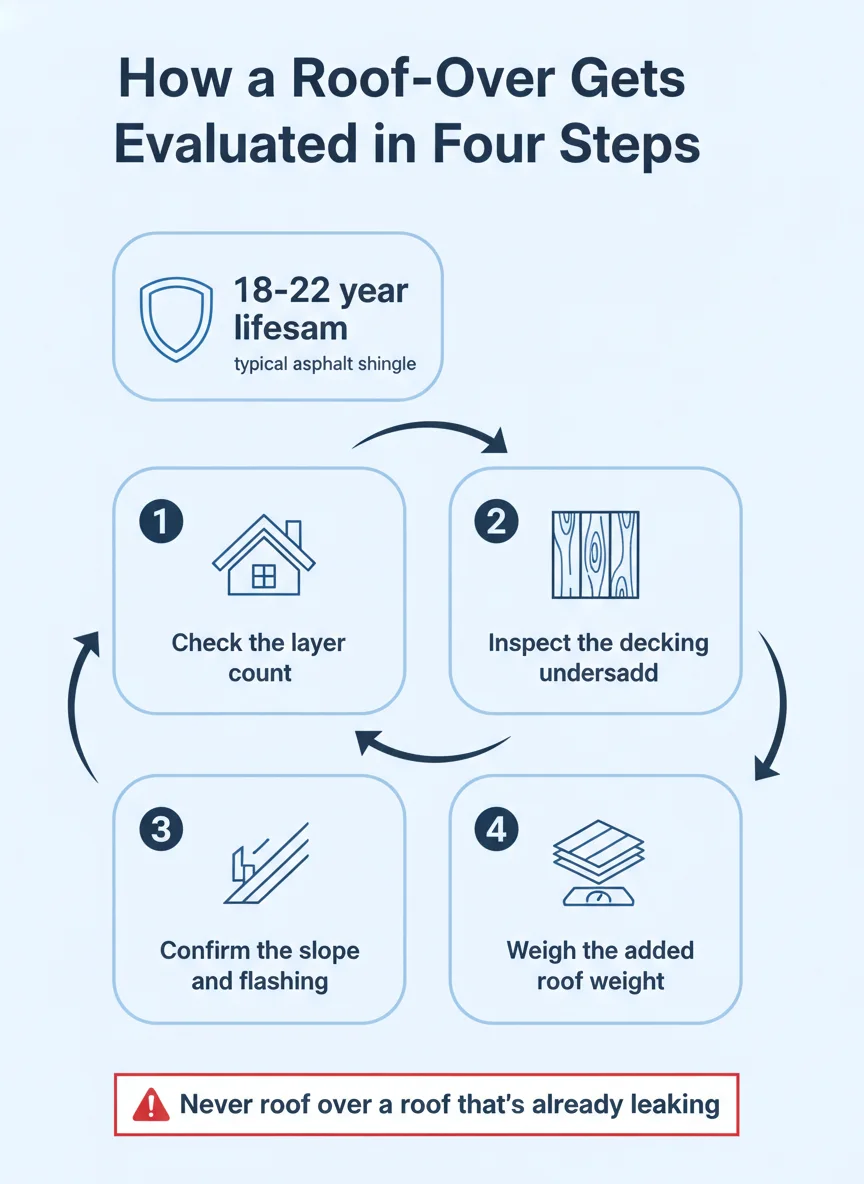
Step-by-Step: How a Roof-Over Gets Evaluated
A roof-over isn't a decision made from a drive-by look. Here's the general sequence a roofer walks through before recommending one option over the other.
- Count the layers: A roofer pulls test squares in a few spots to confirm whether one or two layers of shingles are already present.
- Check the decking: Where shingles are pulled back, the deck gets checked for soft spots, rot, or water staining that would rule out a roof-over.
- Inspect the flashing: Flashing around valleys, chimneys, and vents gets reviewed since old flashing often can't be reused under a new layer.
- Review the slope: Steeper slopes shed water faster and tend to be better roof-over candidates than low-slope sections.
- Confirm the weight load: The home's framing gets considered against the added weight of a second shingle layer before signing off.
- Compare the cost trade-off: A roof-over skips tear-off labor and disposal, but it may mean a shorter overall lifespan for the new layer.
What You'll Find Once the Old Layer Comes Up
Homeowners who choose a tear-off instead of a roof-over are often surprised by what turns up once the old shingles are removed. It's common to find decking that looks fine from above but is soft or delaminated underneath, especially around valleys and lower edges where water collects longest.
Signs the deck needs attention
Spongy spots when walking the roof, daylight visible through the decking from the attic, or dark staining on the plywood are all signs the deck has taken on moisture over the years. None of these are visible from a roof-over inspection alone, which is part of why a tear-off gives a more complete picture.
Replacing damaged decking during a tear-off is a straightforward add to the project. Finding that same damage years later under a roof-over means tearing off two layers of shingles just to get to the problem, which costs more time and effort than catching it the first time around.
What a clean tear-off reveals
On the other side, a clean tear-off with solid decking confirms the home is a strong long-term candidate for a full reroof, giving the new shingles a flat, even surface to seal against. It also opens the door to addressing attic airflow at the same time, since ventilation improvements are far easier to install with the deck exposed.
A roofer walking the deck after tear-off can also confirm underlayment condition and flashing integrity around penetrations, items that matter just as much to long-term performance as the shingles themselves.
DIY vs Calling a Licensed Roofer
Counting shingle layers from a ladder or checking for obvious sagging are things a homeowner can reasonably do before calling anyone. If the roof looks flat, the layer count seems clear, and there's no visible sagging or staining in the attic, that's useful information to have ready when getting quotes.
What a homeowner can't safely check is decking condition, flashing integrity, or whether the framing can handle added weight. These require pulling test squares, walking the roof itself, and often checking from the attic side too, which is work that belongs with a licensed, insured roofer rather than a weekend project.
A straightforward way to get a real answer is a free inspection, where a roofer pulls a few test squares, checks the attic, and tells you honestly whether a roof-over is a fit for your home or whether a tear-off is the better long-term call.
Making the Right Call for Your Roof
A roof-over can be a reasonable option on the right roof: single layer, sound decking, good slope, and flashing that still has life left in it. On a roof approaching the end of its expected lifespan, or one with any sign of existing moisture problems, a tear-off is almost always the more durable choice, even though it takes more time up front.
If you're weighing a roof replacement against a roof-over anywhere in the Dallas-Fort Worth metro, Absolute Professional Roofing Contractors LLC can walk the roof, check the decking, and give you a straight answer on which approach actually fits your home.
Frequently asked questions
Can I put new shingles on top of old shingles?
In many cases yes, if the existing layer is a single layer, lying flat, and the decking underneath is sound. Most building codes cap roofs at two layers of shingles total, and a licensed roofer should confirm the current layer count and deck condition before any work starts.
What are the disadvantages of putting a metal roof over shingles?
A metal roof installed directly over shingles can trap moisture against the panel and void the metal manufacturer's warranty if furring strips or a proper underlayment aren't used. It also adds weight and makes it impossible to inspect the decking for rot until the shingles come off later.
What is the average lifespan of a shingle?
Asphalt shingles in the Texas climate typically last somewhere in the 18 to 22 year range across the industry, depending on sun exposure, attic ventilation, and installation quality. A shingle layer nearing the end of that range is usually a poor candidate for a roof-over.
Can you put a metal roof over shingles without furring strips?
It's done, but most metal manufacturers and installers recommend furring strips or a slip sheet to create an air gap and prevent condensation from building up against the underside of the panel. Skipping that step is one of the more common causes of early metal roof failure.
Does a roof-over void my shingle warranty?
It can. Many manufacturer warranties specify installation requirements that assume a clean deck, and layering over old shingles may not meet those terms. Always check the warranty language or ask your roofer before approving a roof-over.