Why Metal Roofing Is Showing Up on More North Texas Homes
Across Plano, Frisco, McKinney, and the rest of the DFW metro, more homeowners are asking roofers about metal as an alternative to asphalt. Part of it is curb appeal, part of it is energy cost, and part of it is simply durability in a region that sees triple-digit summer heat, sudden hailstorms, and wind gusts that can strip a weaker roof bare.
Metal roofing isn't new, it's been used on barns and commercial buildings for generations, but the residential panel systems available today look nothing like that. Standing seam and screw-down panels now come in dozens of colors and profiles, and both are engineered specifically for steep-slope homes rather than repurposed agricultural product. Understanding the difference between the two systems matters before you start getting quotes.
How a Metal Roof Actually Holds Up Against Texas Weather
Metal panels perform differently than asphalt shingles in almost every category that matters here: impact, wind uplift, heat, and noise. None of that means metal is automatically the better choice for every home, but it does mean the tradeoffs are worth understanding before you decide.
Hail and Impact Resistance
Metal panels can dent under large hail, especially thinner-gauge aluminum or steel, but denting is a cosmetic issue, not a failure of the roof's ability to shed water. That's a meaningful difference from asphalt, where hail impact can bruise the mat and lead to granule loss and eventual leaks. Heavier gauge steel and factory-applied coatings resist denting better than lighter panels.
Some manufacturers offer impact-rated metal panels tested to the same Class 4 standard used for shingles, which can matter for insurance purposes. If hail resistance is the main reason you're considering metal, ask specifically about the gauge and the impact rating rather than assuming all metal roofing performs the same.
Heat, Noise, and Rain
Reflective metal coatings bounce a meaningful amount of solar heat away from the attic compared to dark asphalt shingles, which can ease the load on an air conditioner during a Texas summer. Pairing a reflective metal roof with proper ventilation and energy efficiency upgrades compounds that benefit.
As for noise, a metal roof installed over solid decking, underlayment, and insulation sounds about like any other roof from inside a finished attic or living space. The tin-roof-in-a-rainstorm sound people associate with metal comes from older barn-style installs with open framing underneath, not from a properly built residential system.
| Feature | Standing Seam | Screw-Down (Exposed Fastener) |
|---|---|---|
| Fastening method | Hidden clips, no exposed screws | Screws driven through panel face |
| Expansion handling | Panels float on clips, room to expand | Screws can back out as panel expands |
| Upfront cost | Higher material and labor cost | Lower material and labor cost |
| Best use case | Long-term residential installs | Outbuildings, budget-driven projects |
What's Actually Under a Metal Roof System
A metal roof is more than the visible panels. Underneath, a complete system includes the roof deck, a water-resistant underlayment (often a high-temp synthetic rated for metal), clips or fasteners specific to the panel type, and trim pieces at every edge, ridge, and valley. Skipping or undersizing any of these layers is where most metal roof failures start.
Flashing detail work matters even more on a metal roof than on shingles, because metal doesn't flex or self-seal the way asphalt can around penetrations. Chimneys, vent pipes, and skylights all need custom-formed flashing that matches the panel profile, which is part of why metal roofing labor costs more than a straightforward shingle tear-off.
Step-by-step: How a Metal Roof Goes On
Every crew has its own sequence, but a residential metal roof install generally follows the same core steps from tear-off to final trim.
- Tear off old roofing: The existing roof covering comes off down to the deck so the sheathing can be inspected and any rotten or soft sections replaced before anything new goes on.
- Install underlayment: A synthetic, high-temperature underlayment goes down across the entire deck to act as the roof's secondary water barrier.
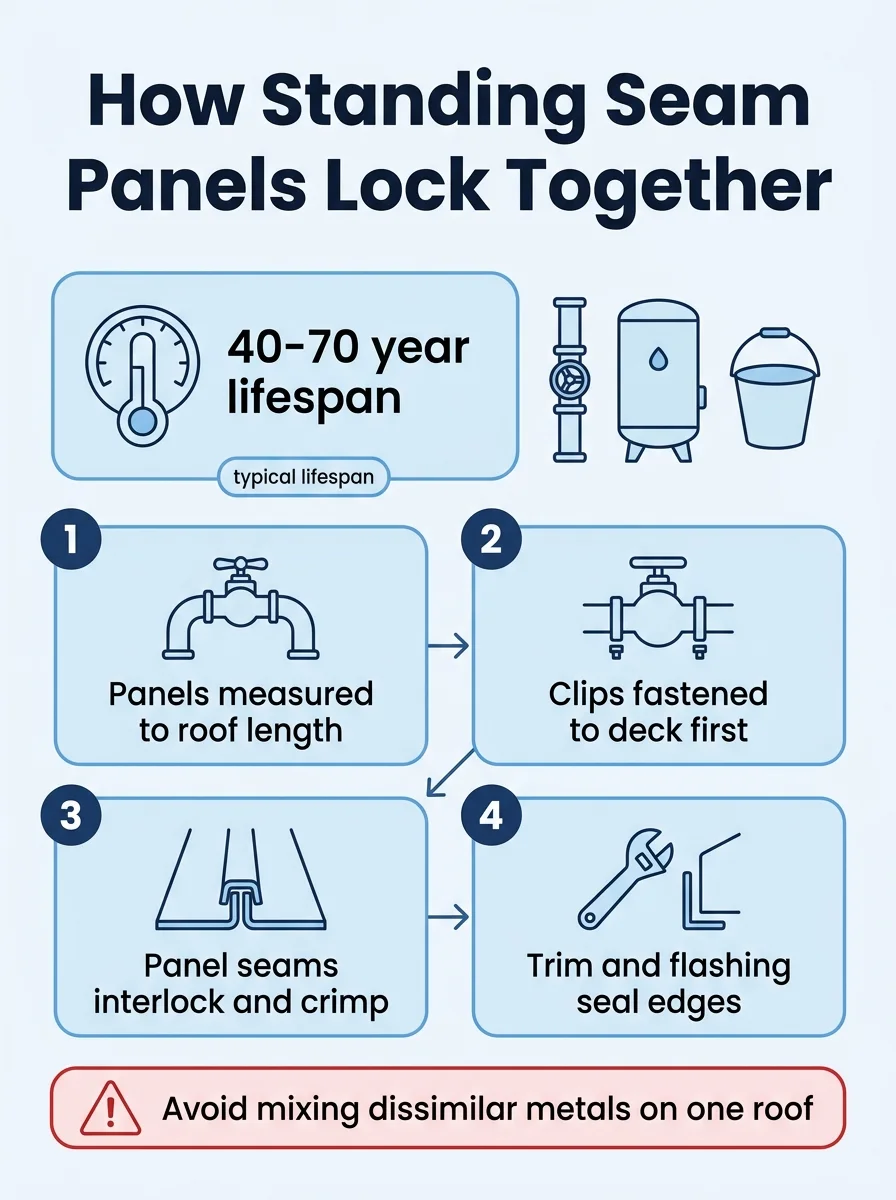
- Measure and cut panels: Panels are measured to the exact run length of each roof plane, since standing seam panels typically run in one piece from eave to ridge.
- Set clips or fasteners: For standing seam, concealed clips are screwed to the deck first; for screw-down panels, the fastening happens through the panel face at marked intervals.
- Install and seam panels: Panels are set into place and, for standing seam, the seams are mechanically crimped or snap-locked together to close out the fastening points.
- Flash and trim: Ridge caps, valley flashing, and edge trim are custom-fit and sealed to close out every transition point on the roof.
What to Look For Once the Roof Is Done
Seams and Panel Lines
On a standing seam roof, the vertical seams should run straight and tight with no visible gaps or wavy panel lines. Wavy panels usually point to a deck that wasn't flat before installation or panels that weren't cut to a consistent length, both signs of rushed work.
On a screw-down roof, panel overlaps should be consistent and tight, with no daylight visible between adjoining panels. Loose or uneven overlaps are an early warning sign of water intrusion down the road, especially at the lower edge of each panel run.
Fasteners and Flashing
On screw-down panels, every screw should sit flush with a visible rubber washer compressed evenly, not over-driven or stripped. Over time, exposed screws are the most common point of failure on this panel type, so uniform fastening at the time of install matters for long-term performance.
Flashing at chimneys, vents, and valleys should be formed to match the panel profile rather than generic trim pieces caulked into place. Caulk is a short-term fix, not a substitute for properly formed flashing, and it's one of the first things a roofer checks during a follow-up inspection.
DIY vs Calling a Licensed Roofer
Metal roofing is one of the least DIY-friendly roof types on the market, and that's true even for homeowners comfortable with general home repair. The panels are sharp-edged, heavy per linear foot, and unforgiving of small measurement errors, since a single misaligned seam can throw off an entire panel run.
A homeowner can reasonably handle inspecting the roof from the ground with binoculars, checking gutters for granule buildup (not applicable to metal, but worth noting if comparing against shingles), and watching the attic for any sign of a leak after heavy rain. Anything beyond visual monitoring, including walking the roof itself, carries real fall risk on a metal surface that can be slick even when dry.
Panel fabrication, seaming, and flashing work all require specialized tools and training that go well beyond what a general contractor or handy homeowner typically has on hand. A roof replacement in metal is a job for a crew that installs this material regularly, not a weekend project.
Is a Metal Roof Right for Your Home?
Metal roofing makes the most sense for homeowners planning to stay in a house long-term, since the higher upfront investment pays off over a service life that can run several decades longer than asphalt. It also suits homes where reduced attic heat and lower cooling costs are a priority, or where the architectural look of standing seam fits the style of the house.
If you're still deciding between materials, it helps to first understand how long different roofing options actually last in this climate, covered in our guide on how long a roof lasts in Texas. Absolute Professional Roofing Contractors LLC can walk you through whether standing seam, screw-down, or a different material fits your home and your budget.
Frequently asked questions
Is a metal roof worth it in Texas?
For a lot of homeowners, yes. Metal holds up well against hail and high wind compared to some other materials, reflects heat instead of absorbing it, and carries a long service life, though the right choice depends on your home's structure, your budget, and how long you plan to stay in the house.
Is metal roofing loud when it rains?
Modern metal roofing installed over solid decking and underlayment is not noticeably louder than other roofing materials from inside the house. The loud tin-roof sound people remember usually comes from older installations over open framing with no decking underneath.
Does metal roofing attract lightning?
No, metal roofing does not attract lightning any more than other roofing materials. Metal is noncombustible and, in the rare event a strike does occur, it disperses the charge rather than igniting, which is actually a safety advantage over some materials.
How long does a metal roof last compared to shingles?
A well-installed metal roof typically outlasts asphalt shingles by a wide margin, often by decades, because the panels themselves don't shed granules or crack from UV exposure the same way. Actual lifespan still depends on the gauge of metal, the coating, and the quality of the install.
Can you install metal roofing over existing shingles?
It's sometimes possible with screw-down panels and a compatible underlayment, but most roofers recommend a full tear-off so the deck can be inspected and the new system fastened correctly. Standing seam systems in particular perform better over a clean, solid deck.