Why roof lifespan is a moving target in North Texas
A shingle wrapper might promise 20, 25, or even 30 years, but that number comes from lab testing in controlled conditions, not from a Plano attic in August. Across the DFW Metro, roofs deal with triple-digit summer heat, sudden hail events, and wide temperature swings that expand and contract roofing materials all year long. That combination is why the real-world lifespan of a roof in this region often lands closer to the lower end of the industry range.
Homeowners in Plano, Frisco, McKinney, and the surrounding towns we serve tend to ask this question after a hailstorm, or when they notice granules piling up in the gutters. The honest answer is that lifespan depends on the material, the installation quality, attic ventilation, and how quickly small problems got addressed along the way. This guide breaks down what actually drives that number for a Texas roof.
What actually determines how long a roof lasts
Three things drive a roof's real-world lifespan more than any manufacturer rating: the material itself, how well it was installed, and the environment it sits in. Get all three right and a roof can outlast its rated years. Get one wrong and it can fail well before the warranty clock runs out.
Material and installation quality
Asphalt shingles, metal panels, and tile all age differently, and the gap between a correctly installed roof and a rushed one is significant. Nail placement, underlayment choice, and flashing details around chimneys and vents matter as much as the shingle brand itself. A roof replacement done to manufacturer specification, with proper ventilation built in, is what actually earns the years printed on the product label.
Corners cut during installation, like reused flashing or improper nail patterns, tend to show up as leaks or shingle blow-off years before they should. That's why the crew and the process matter just as much as the material sitting on the pallet in the driveway.
Climate exposure in the DFW Metro
North Texas sees some of the widest weather swings in the country: baking summer sun, sudden hailstorms, and hard freezes in the same calendar year. That cycle stresses asphalt shingles in particular, drying out the asphalt binder and making the mat brittle faster than in a milder, more consistent climate.
Hail is its own category of wear. A single significant hailstorm can bruise or crack shingles across an entire roof face without an obvious leak showing up right away. That hidden damage shortens the roof's remaining life even when nothing looks wrong from the driveway, which is why post-storm inspections matter so much in this region.
| Roofing material | Typical industry lifespan | Main wear factor in Texas |
|---|---|---|
| Asphalt shingle | 18-22 years | UV exposure and hail impact |
| Metal panel | 40-plus years | Fastener wear, minimal UV effect |
| Tile | 50-plus years | Underlayment failure beneath tiles |
The roofing system, not just the shingle
A roof is a system, and the shingle or panel on top is only one piece of it. Underlayment, flashing, decking, and ventilation all work together, and a weak link in any of them can cut short the life of an otherwise good shingle. That's why two roofs with the identical shingle brand can age at very different rates.
Ventilation deserves special attention in Texas. An attic that traps heat cooks the underside of the roof deck and the shingles above it year-round, accelerating aging from the inside out. Ridge vents, turbines, and solar-powered attic vents are the kind of upgrades that quietly add years to a roof by keeping attic temperatures closer to outdoor ambient.
Step-by-step: checking your own roof's condition
You don't need to climb onto the roof to get a rough read on its condition. These checks can be done safely from the ground and inside the attic, and they'll tell you whether it's time to call for a closer look.
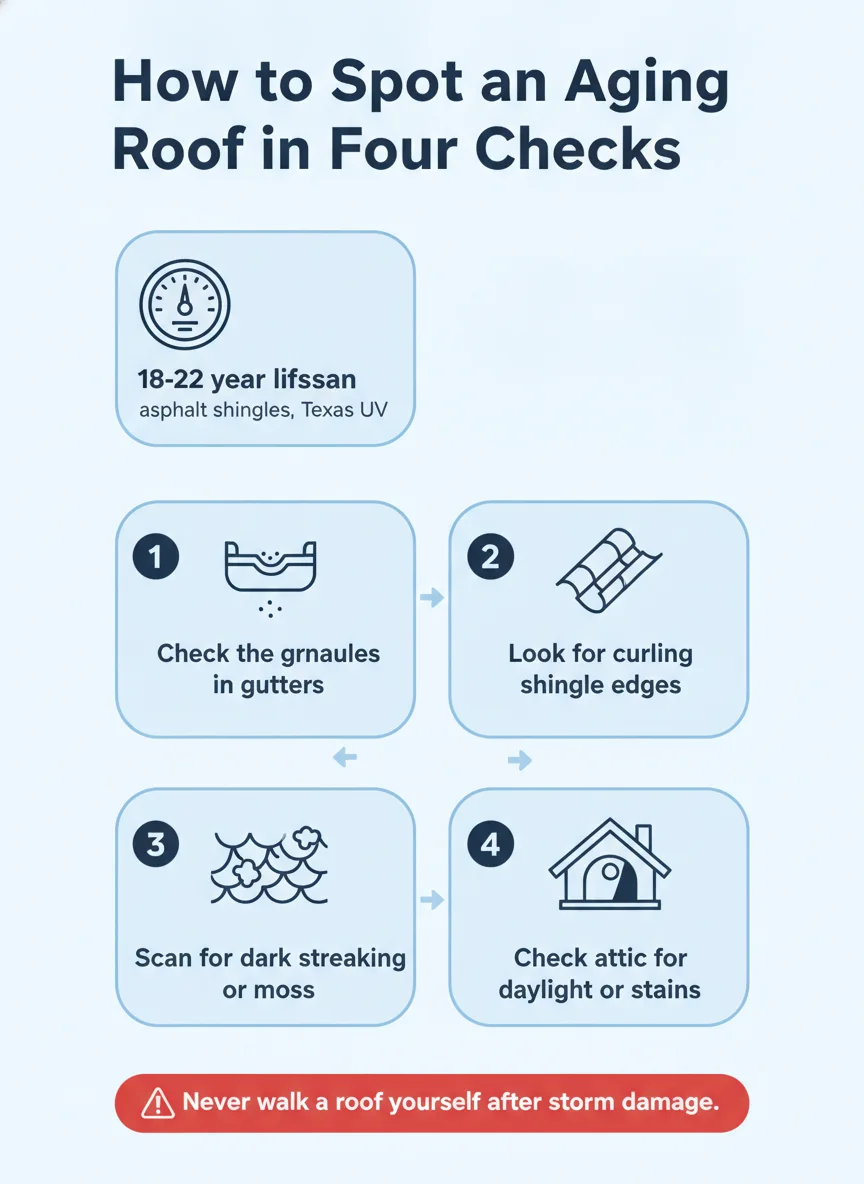
- Check the gutters: Look for a buildup of dark, sand-like granules, which signals the shingle surface is wearing down faster than it should.
- Scan roof edges: Binoculars from the ground can reveal curling, cupping, or lifted shingle edges, all signs of aging asphalt.
- Look for streaking: Dark streaks or moss patches point to trapped moisture and a roof surface that's holding onto water longer than it should.
- Check the attic: Daylight coming through the roof deck, or water stains on the underside, mean moisture is already getting in.
- Note your last hailstorm: If a significant hail event has hit the area since your last inspection, damage may be present even without visible leaks.
- Review your roof's age: A roof approaching or past its expected material lifespan is worth a professional look even without visible symptoms.
What an aging roof actually looks like up close
Age-related wear shows up differently depending on where you look and what caused it. Knowing the difference between normal weathering and a roof that's actually failing helps you decide how urgently to act.
Cosmetic wear versus structural concern
Some fading and minor granule loss is completely normal for a roof that's several years in and doesn't mean failure is imminent. The concern level rises when granule loss is widespread and even, exposing the black asphalt mat underneath across large sections rather than just isolated spots.
Structural concerns look different: soft spots underfoot, sagging rooflines, or repeated leaks in the same location after repairs. Those point to decking or underlayment problems rather than simple shingle aging, and they usually call for roof repair or replacement rather than a wait-and-see approach.
Storm damage versus gradual aging
Hail damage tends to appear as scattered, random bruising or cracked shingle mat, often concentrated on one slope depending on wind direction during the storm. Gradual aging, by contrast, spreads evenly across the whole roof and tends to start at the ridgeline and south-facing slopes that see the most sun.
Telling the two apart matters for insurance purposes as well as repair planning. A roof affected by storm and hail restoration work may qualify for a different repair path than one simply reaching the end of its material life.
DIY checks versus calling a licensed roofer
Ground-level and attic checks are safe and useful for any homeowner to do on their own, and they're a good habit to build into a seasonal routine. Anything beyond that, walking the roof surface itself, gets riskier and harder to judge accurately without training.
Determining whether granule loss, curling, or a soft spot means repair or replacement takes an experienced eye and, often, a closer physical inspection of the deck underneath. Hail bruising in particular is easy to miss from the ground and easy to misjudge even up close without experience assessing storm damage specifically.
A licensed roofer can also document findings properly, which matters if an insurance claim ends up being part of the conversation. That documentation, paired with an honest assessment of remaining lifespan, is usually worth more than guessing based on age alone.
Getting a straight answer on your roof's remaining years
There's no substitute for a physical look when it comes to knowing exactly how many years a specific roof has left. Material, installation quality, ventilation, and storm history all factor in differently for every home, which is why two roofs of the same age can be in very different shape.
If your roof is showing any of the signs above, or it's simply been a long time since anyone's had eyes on it, Absolute Professional Roofing Contractors LLC can walk you through exactly where it stands and what your realistic options are.
Frequently asked questions
How long does a roof last in Texas?
Asphalt shingle roofs typically last 18 to 22 years across the industry when installed correctly, though DFW's intense summer UV and hail exposure can shorten that on the lower end. Metal and tile systems generally outlast asphalt by a wide margin.
Does Texas heat really shorten a roof's life?
Yes. Sustained attic temperatures and UV exposure dry out asphalt shingles faster than in milder climates, making granule loss and brittleness show up sooner than the manufacturer's rated lifespan suggests.
What shortens a roof's lifespan the most?
Poor attic ventilation, hail impacts that go unrepaired, and skipping regular maintenance are the biggest culprits. A roof that traps heat or takes repeated small hits ages faster than its rating implies.
Can I extend my roof's life without replacing it?
Often yes, through timely repairs, gutter maintenance, and improved ventilation. Catching a small leak or a few lifted shingles early keeps the deck dry and adds years to the system.
How do I know if my roof needs replacing instead of repair?
Widespread granule loss, multiple leak points, or a roof past its expected lifespan usually points to replacement rather than another repair. A physical inspection is the only reliable way to know for sure.