
When a Tree Limb or a Storm Opens Your Roof
North Texas gets its share of violent weather fast. A straight-line wind event, a falling limb, or a sudden hailstorm can crack open a section of roof decking in seconds, and suddenly you've got daylight coming through your attic and water finding its way into a bedroom ceiling. The damage itself is bad enough, but what you do in the next few hours matters almost as much.
This is the moment homeowners either make smart, fast decisions or make things worse trying to fix it themselves in the dark with a flashlight and a ladder. The goal in the first 24 hours isn't a permanent repair. It's limiting the damage, documenting what happened, and getting a professional tarp in place until a crew can do the real work.
Why the First Few Hours Matter So Much
Every hour an open roof sits uncovered, more water works its way into insulation, drywall, and framing. What starts as a single wet spot on a ceiling can turn into sagging drywall, warped flooring, or mold growth within a couple days if it isn't addressed.
Inside the House
Water doesn't fall straight down from the hole in the roof. It travels along rafters and sheetrock, showing up several feet from where the actual opening is. That's why a stained ceiling in a hallway can trace back to damage over a bedroom on the other side of the attic.
Moving furniture, electronics, and anything water-sensitive out from under the affected area right away protects your belongings while you wait for help. A few towels, a bucket, and a tarp spread over furniture you can't move will catch most of the immediate drip.
Outside on the Roof
Outside, the open section is exposed to sun, wind, and the next band of rain. A properly staked tarp, pulled taut and anchored past the edges of the damage, keeps wind from getting underneath and peeling it back off in the night.
This part is where most homeowners get into trouble. Climbing a ladder onto a wet roof deck that may already be structurally compromised is how a bad day turns into a much worse one.
| Situation | What to Do Inside | What to Do Outside |
|---|---|---|
| Active leak during the storm | Move valuables, set buckets, protect flooring | Wait until wind and lightning pass completely |
| Storm has passed, daylight hole visible | Photograph ceiling stains and water damage | Photograph exterior damage from the ground |
| Crew is on the way | Keep the area clear and ventilated | Stay off the roof, let the crew assess first |
| Tarp is up, rain returns | Monitor for new drips or spreading stains | Check tarp edges from the ground, not the roof |
What a Tarp Actually Does and Doesn't Do
A tarp is a temporary barrier, not a repair. Its job is to shed water off the damaged section and buy time until a crew can get up and assess the full extent of what's underneath. A good tarp job extends well past the edges of the visible hole, because wind can drive rain sideways under a tarp that's cut too close to the damage.
What it won't do is restore the structural integrity of damaged decking, stop every drop of moisture in a heavy wind-driven rain, or hold indefinitely. Tarps degrade fast in Texas sun and wind, which is why Storm & Hail Restoration work should follow as soon as it reasonably can.
Step-by-Step: What to Do in the First 24 Hours
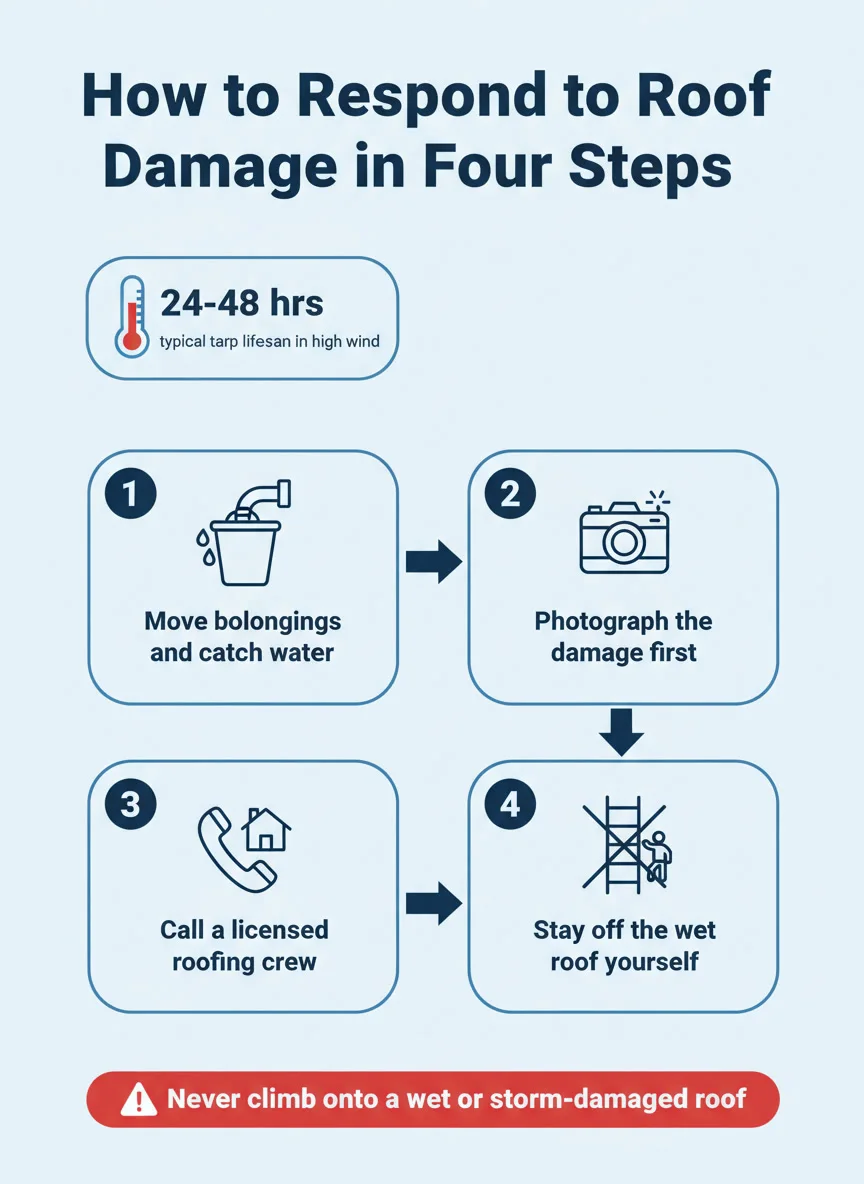
Once the immediate weather event has passed and it's safe to move around the property, work through these steps in order rather than jumping straight to the roof.
- Check for safety first: Make sure there's no standing water near electrical outlets or fixtures, and shut off power to any affected circuits if water is dripping near them.
- Move belongings and catch water: Pull furniture and electronics away from the leak, and set buckets or towels down to protect flooring while you wait.
- Photograph everything: Take wide and close-up photos of interior water damage and exterior roof damage from the ground before anything is moved or covered.
- Call a licensed roofing crew: A trained crew can assess whether the deck is safe to walk and tarp the opening correctly the first time.
- Let the crew handle the roof: Stay off the roof yourself, even if it looks dry enough to walk. Storm-weakened decking can give way without warning.
- Contact your insurance provider: Report the damage and the temporary tarp as soon as you reasonably can, with your photos ready to share.
- Schedule the full repair: Book a follow-up visit to assess the damage properly and plan the permanent fix once the tarp is holding.
What You'll Find Once the Tarp Is Up
Signs the Tarp Held
A tarp that did its job leaves the interior dry after the next rain, with no new staining spreading beyond what was already there. The edges stay staked down and the surface stays taut without flapping loose in wind.
This is a good sign the opening is fully covered and that the crew sized the tarp correctly past the visible damage. It buys real time to schedule the actual repair without panic.
Signs Water Still Got In
New or spreading stains after a tarp has been up usually mean water is finding a path around an edge, a seam, or a spot where the tarp wasn't pulled tight enough against the roofline.
If this happens, don't attempt to re-stake or adjust the tarp yourself. Call the crew back out, since a loose or shifted tarp in windy conditions can come off entirely and leave the opening exposed again.
What You Can Handle Yourself vs What Needs a Crew
Inside the house, you're in good shape to act fast. Moving belongings, setting out buckets, cutting power to a wet fixture, and photographing the damage are all things any homeowner can safely do without special training.
Anything on the roof itself is a different story. Walking a storm-damaged deck, identifying how far the damage actually extends, and installing a tarp that will actually hold in Texas wind all take experience most homeowners don't have and shouldn't try to pick up mid-emergency.
A licensed crew also knows what to look for beyond the obvious hole, including stress cracks, lifted material nearby, and weak spots that aren't visible from the ground. That full picture matters once it's time to move from the temporary tarp to Roof Repair or a larger project.
Getting Through the First 24 Hours
Storm damage is stressful, but the actions that matter most in the first day are simple ones: protect what's inside, document what happened, and get a professional tarp on the opening instead of improvising one yourself. For a broader rundown of what to check before the next system rolls through, see our storm season checklist for homeowners across the Dallas area.
Once the tarp is holding and your insurance call is made, the urgency shifts to scheduling the real repair before the next rain tests that temporary cover again. Absolute Professional Roofing Contractors LLC handles that next step once the emergency has passed.
Frequently asked questions
Should I try to tarp my own roof after storm damage?
No, most homeowners should not climb onto a damaged roof themselves. A wet, wind-weakened roof deck is unpredictable footing, and a fall is far more costly than a few extra hours of exposure while you wait for a crew.
How long can a tarp stay on a roof before real repairs happen?
A properly installed tarp is a short-term measure, generally meant to hold for a matter of days to a couple weeks, not a permanent fix. Wind, sun, and rain all wear on tarp material fast, so scheduling a repair or replacement visit soon after is important.
What should I photograph before anyone touches the damage?
Photograph the exterior damage from the ground at multiple angles, any interior water stains or drips, and the specific spot where debris entered, before anything is moved or covered. These photos become the backbone of an insurance claim and a clear record of what happened.
Does a tarp stop all water from getting in?
A tarp reduces water intrusion but does not guarantee a dry attic, especially in heavy or wind-driven rain. It's a stopgap that buys time until a crew can get up and make a real repair.
Who do I call first, my insurance company or a roofer?
Either order works, but don't wait on one to start the other. Get a tarp on the damage quickly to limit further loss, and loop in your insurance company as soon as you reasonably can.