
Severe Weather in the DFW Metro Is a When, Not an If
Homeowners across Plano, Frisco, McKinney, and the rest of the DFW metro deal with a stretch of the year where the forecast seems to turn fast, with wind, hail, and heavy rain showing up with little warning. You don't need to overhaul your routine for this, but a short pre-storm checklist makes a real difference in how your roof holds up and how smooth any follow-up claim goes.
The goal isn't to climb up and inspect every shingle before every front moves through. It's a handful of ground-level steps, done ahead of time, that protect both your property and your paperwork if something does go wrong. Most of this takes less time than it takes the sky to turn green.
Why a Few Minutes of Prep Actually Matters
Two things happen when a storm damages a roof: physical wear on the materials, and a gap in your record of what the roof looked like before. Prep work addresses both. Clearing debris and securing loose items reduces the odds of impact damage, and photographing the roof beforehand gives you something to compare against if you ever need to show an insurer what changed.
Documentation Before the Storm
Walk around the outside of your house and take photos of each roof slope you can see from the ground, along with the gutters, downspouts, and any vents or flashing. Date the photos, either by the phone's metadata or by jotting the date somewhere you'll remember, and keep them stored somewhere other than just your phone.
This habit costs almost nothing and pays off the one time you need it. If a storm does cause damage, having a clear before picture makes the difference between a quick, well-supported claim and a drawn-out back-and-forth over what was already there.
Physical Prep Around the House
Loose items in the yard, from patio furniture to trash cans to anything leaning against the house, become wind-driven debris in a strong storm, and debris striking a roof is one of the more preventable sources of damage. Bring in or tie down anything that could move in high wind.
Branches that overhang the roofline are another common culprit. A limb that looks harmless on a calm day can snap and land on shingles or a gutter run once wind gusts pick up, so trimming anything within reach of the roof is worth doing well before storm season gets going.
| Task | When to Do It | Why It Matters |
|---|---|---|
| Photograph roof and gutters | Before the forecast turns | Gives you a before record for comparison and any future claim |
| Clear gutters and downspouts | Before heavy rain is expected | Prevents water backup that can push under shingles or flashing |
| Secure loose yard items | As soon as a storm is forecast | Reduces wind-driven debris that can strike and damage the roof |
| Trim overhanging branches | Routinely, ahead of storm season | Removes limbs that can snap and land on the roof in high wind |
What's Actually at Risk Up There
The roof system takes the brunt of severe weather, but it's not just the shingles. Flashing around vents, chimneys, and skylights can lift or loosen under wind pressure, and gutters packed with debris can overflow and push water back under the roof edge instead of away from the house.
Ridge vents, turbines, and other exposed ventilation hardware are also more vulnerable than people expect, since they sit at the highest point of the roof and take the most direct wind load. Knowing these are the weak points helps you know where to look once a storm has passed.
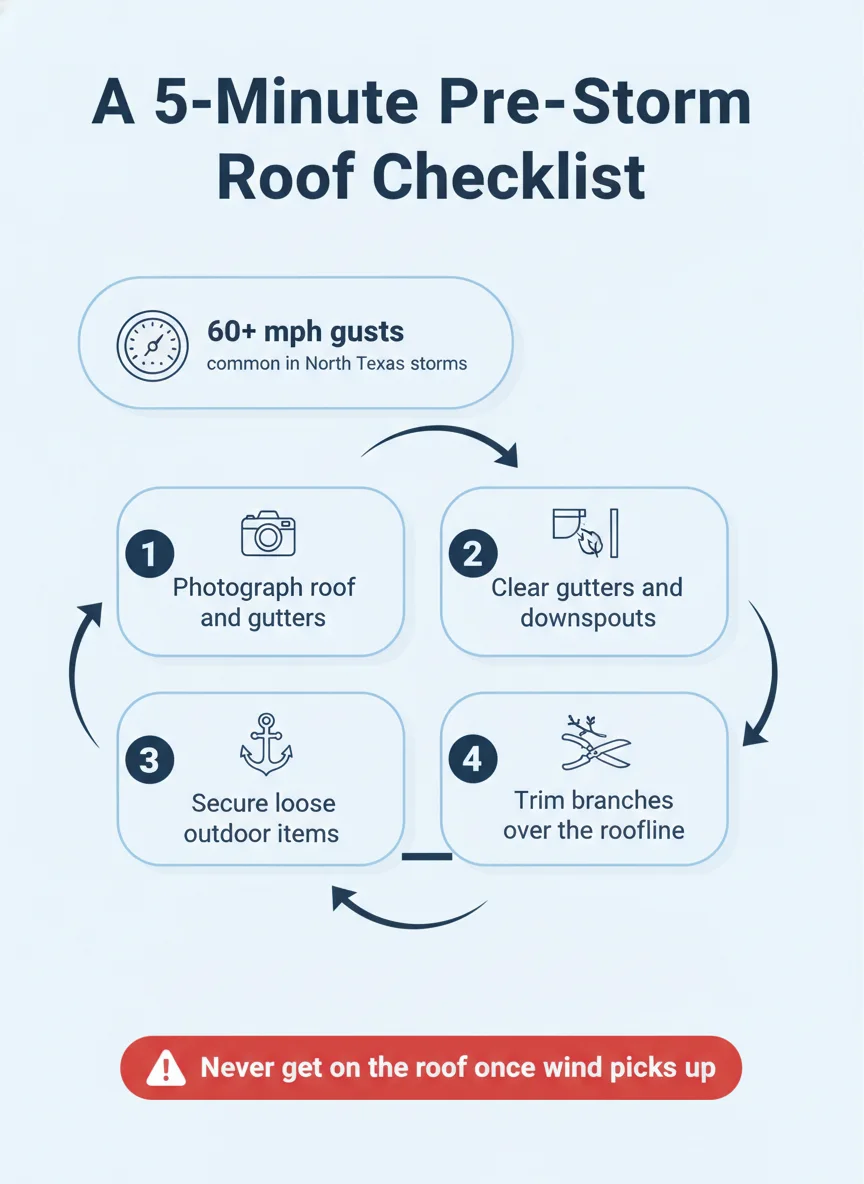
Step-by-step: Your 5-Minute Pre-Storm Roof Checklist
Run through this list whenever a severe weather forecast shows up for your area. None of it requires a ladder.
- Photograph the roof: Take wide shots of each visible roof slope, the gutters, and any vents or flashing from ground level.
- Clear gutters and downspouts: Remove leaves and debris so rainwater can drain freely instead of backing up under the roof edge.
- Secure loose items: Bring in patio furniture, planters, and anything else that could become wind-driven debris.
- Trim overhanging branches: Cut back anything hanging over the roofline that could snap and fall during high wind.
- Locate your attic access: Know where it is ahead of time in case you need to check for a leak quickly after the storm.
- Know your water shutoff: Find your main water shutoff valve so you're ready if a leak causes interior water damage.
- Park vehicles under cover: Move cars into a garage or away from large trees if hail or falling limbs are a concern.
The Morning After: What You'll Find
Signs You Can See From the Ground
Walk the perimeter of the house in daylight and look at the gutters first. Granules collecting in the gutter troughs or piled at the downspout outlet are one of the earliest signs of surface wear on shingles. Also look for shingles that appear curled, cracked, or out of place compared to your before photos, and check for dented vents, turbines, or flashing.
Inside the house, check ceilings and upper walls for new discoloration or a damp smell, especially in rooms directly under the attic. Water doesn't always show up right away, so it's worth a second check a day or two later if the storm was significant.
Signs That Mean It's Time to Call Someone
Visible gaps where shingles are missing, a sagging section of roofline, or any water actively coming through the ceiling are all reasons to get a professional look right away rather than waiting. These aren't cosmetic issues, they're entry points for ongoing water damage.
If you're not sure whether what you're seeing is significant, a storm and hail restoration inspection gives you a clear, documented answer instead of a guess, and that documentation matters if you decide to file a claim.
DIY vs Calling a Pro
Everything on the pre-storm checklist, clearing gutters, securing items, trimming branches, taking photos, is reasonable for most homeowners to handle themselves. These are ground-level or low-ladder tasks that don't require special training.
What changes after the storm is the roof surface itself. Walking a roof to assess damage means knowing what you're looking at and how to move safely on a slope that may have hidden soft spots or loose material, which is where a licensed roofer earns their keep.
If your home has gutters that took a hit, or you suspect wind lifted shingles along a ridge, a professional roof repair visit identifies the full scope in a way a ground-level check can't. It also creates documentation that stands up if you're working with an insurance adjuster.
Make the Checklist a Habit, Not a One-Time Scramble
The homeowners who come through severe weather season with the least stress are usually the ones who treat this checklist as routine rather than something they scramble to do once a warning is already on the TV. A few minutes a couple of times a year keeps your documentation current and your property genuinely more prepared. For more on reading what a storm left behind, see how to check your roof for hail damage from the ground.
If a storm does leave something behind, whether that's a handful of missing shingles or something more serious, Absolute Professional Roofing Contractors LLC can walk the roof, document what's there, and help you figure out the right next step.
Frequently asked questions
What should I do to my roof before a storm hits?
Clear your gutters and downspouts, photograph the roof and exterior for a before record, secure or bring in anything loose in the yard, and trim branches hanging over the roofline. None of this requires getting on the roof itself.
How do I document roof damage for an insurance claim?
Take dated photos of the roof, gutters, and any visible damage both before and after the storm so you have a clear before-and-after comparison. Photos from the ground, including wide shots of each roof slope, are usually enough to start a claim.
Should I go on my roof after a storm to check for damage?
No, you should check from the ground first and only go up if it's safe, dry, and the storm has fully passed. A wet or wind-damaged roof deck can be unstable, and a professional inspection catches issues a ground view misses.
What are the first signs of storm damage on a roof?
Granules collecting in gutters or at downspout outlets, shingles that look curled, cracked, or missing, and dented metal vents or flashing are common early signs. Water stains on an interior ceiling after a storm are also a strong signal something got through.
How soon after a storm should I have my roof checked?
As soon as it's safe to do so, ideally within a few days, since minor damage left unaddressed can turn into a leak with the next rain. Acting early also keeps your documentation timeline clean if you end up filing an insurance claim.