
A Denial Letter Isn't Always the Final Word
Across the DFW Metro, plenty of homeowners open a denial letter or a lowball settlement check and assume that's the end of it. It usually isn't. Insurance companies deny or underpay roofing claims for specific, listed reasons, and most of those reasons can be challenged with the right documentation. Understanding what the letter actually says, and what your policy allows you to do next, changes a closed door into a negotiation.
This matters more in North Texas than in milder climates, because hail and wind events are common enough that insurers see a high volume of claims every storm season. That volume means adjusters move fast, and fast inspections sometimes miss damage, especially on slopes that are harder to access or on roofs with more than one layer of material. Knowing your options protects you from accepting a number that doesn't reflect the real scope of loss.
Why Claims Get Denied or Underpaid in the First Place
Most denials and lowball offers trace back to a disagreement over cause, scope, or timing of the damage, not fraud or bad faith on anyone's part. The adjuster's job is to estimate loss quickly across a large claim volume, and that process has blind spots a homeowner or a contractor on-site will catch that a quick walk-around won't.
Common reasons for denial
Wear and tear is the most frequent reason cited. If an adjuster believes your roofing material was already near the end of its service life, they may attribute damage to age rather than a specific storm. Cosmetic damage is another common finding, where hail marks are noted but ruled as not affecting function. Old damage from a prior storm the policy didn't cover is a third common reason, particularly on older roofs with layered impact history.
Missed slopes happen more often than homeowners expect. An adjuster may inspect the front-facing slope thoroughly and give a lighter look to a back slope or a lower-pitch section, especially if access is limited. A second, more thorough look frequently finds damage the first inspection didn't document, which is one of the strongest grounds for a re-inspection request.
What an underpaid claim usually looks like
An underpaid claim isn't denied outright, it's approved for less scope than the damage actually requires. This often shows up as an estimate that includes shingles but not gutters, or one that approves repair when the damage pattern actually supports full roof replacement. Comparing the insurer's written estimate line by line against a contractor's independent assessment is how these gaps get caught.
Underpayment can also come from pricing, where the insurer's estimate uses a lower per-square cost than current local material and labor rates. This is harder to dispute on documentation alone and is one of the situations where a supplement request, backed by current supplier pricing, carries real weight.
| Situation | What it usually means | Typical next step |
|---|---|---|
| Denied as wear and tear | Adjuster attributes damage to age, not storm | Independent inspection report with storm-date documentation |
| Denied as cosmetic | Damage noted but called non-functional | Manufacturer or industry guidance on functional impact |
| Scope underpaid | Approved estimate missing line items | Itemized supplement request with photos |
| Pricing underpaid | Approved amount below current material/labor cost | Current estimate comparison, possible appraisal |
The Tools in a Policy for Disputing a Decision
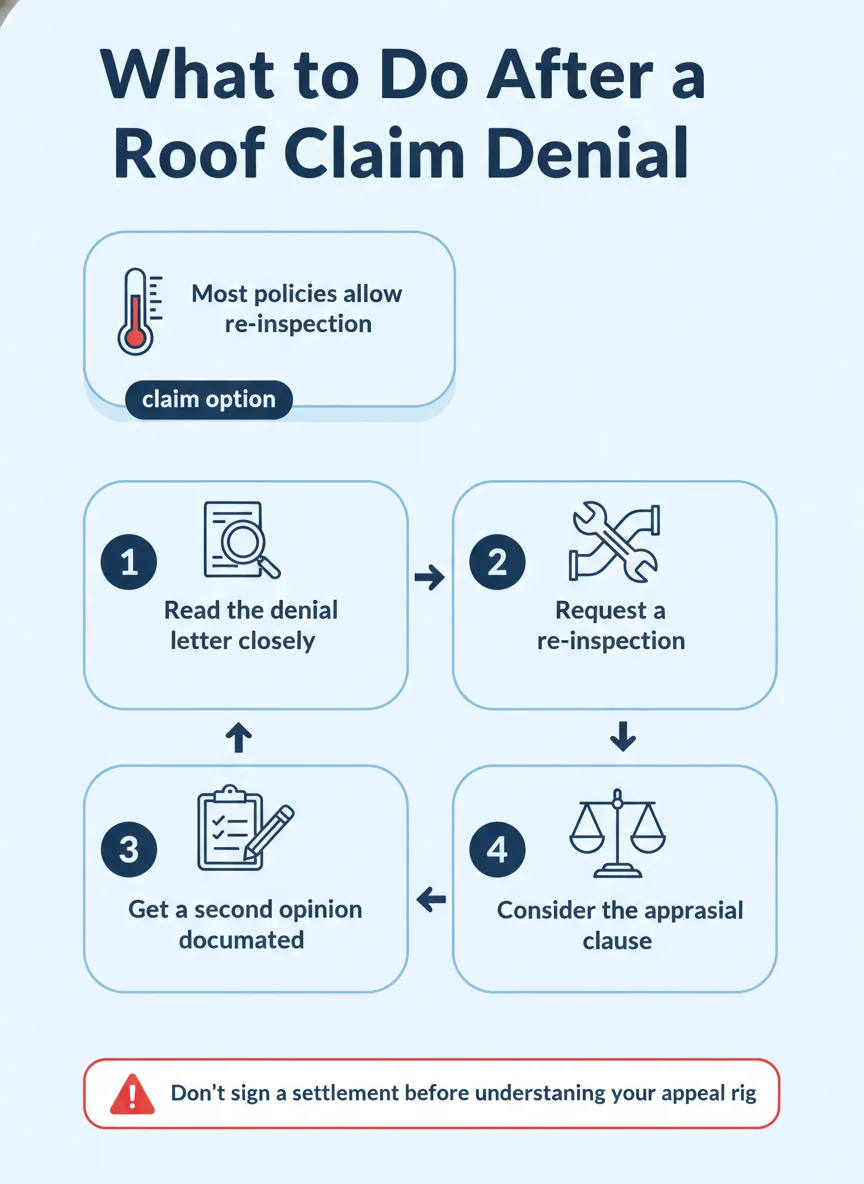
Homeowners policies generally include more than one mechanism for disagreement, and most people never read that far into the document. A re-inspection request is the lightest-weight option, essentially asking the insurer to send someone back out with new information. A supplement is a formal request for specific additional items once a claim is already approved at a lower scope. The appraisal clause is the most formal tool, bringing in independent appraisers from both sides to settle a disputed dollar amount.
Each of these tools has a different threshold for when it makes sense. Re-inspection fits situations where you believe the original inspection simply missed something. Supplements fit situations where the claim is approved but incomplete. Appraisal fits situations where you and the insurer have genuinely different opinions on the value of the loss after the first two steps haven't closed the gap.
Step-by-Step: What to Do After a Denial or Lowball Offer
The order you take these steps in matters. Moving straight to a formal dispute before gathering documentation often weakens your position instead of strengthening it.
- Read the full letter: Find the specific denial code or reason listed, not just the bottom-line number. The exact wording tells you which argument to build.
- Pull your own photos: Date-stamped photos of the damage, especially slopes that may not have been fully inspected, build your documentation file.
- Get an independent assessment: A storm and hail restoration inspection from a contractor gives you a second, detailed opinion to compare against the insurer's.
- Request a re-inspection: Submit your photos and contractor report in writing and ask for a new adjuster visit if the first inspection seems incomplete.
- File a supplement if scope is missing: List specific line items with photo support if the claim was approved but didn't cover everything the damage requires.
- Consider appraisal for pricing disputes: If the disagreement is about dollar value rather than scope, the appraisal clause in your policy is built for exactly this.
- Know when to escalate further: A complaint to your state's insurance department or a public adjuster are additional options if the process stalls.
What You'll Typically Find on Re-Inspection
When a second inspection happens, whether it's the same insurer coming back out or an independent contractor doing a walk-through, the findings usually fall into a predictable pattern. Damage on a slope that wasn't climbed the first time, bruising on soft metal components like vents or flashing that's easy to miss from the ground, and granule loss patterns consistent with impact rather than age are the three most common discoveries.
Documentation that strengthens your case
Close-up photos with a reference object for scale, a written description of the storm date pulled from weather records, and a contractor's written scope comparing material condition to manufacturer service-life expectations all add weight to a re-inspection or supplement request. The goal is making the case easy for a second adjuster to verify quickly.
When the gap is about money, not damage
Sometimes both sides agree on what's damaged but disagree on what it costs to fix. This is common when an insurer's estimating software uses regional averages that lag behind current material and labor costs. In these cases a current, itemized local estimate for comparison is often more persuasive than additional damage photos.
What You Can Handle Yourself vs. When to Bring in Help
Homeowners can absolutely read their own policy, document damage with photos, and request a re-inspection without hiring anyone. These first steps don't require specialized expertise, just attention to detail and a willingness to put requests in writing rather than only calling.
Where a licensed roofing contractor adds real value is in producing a detailed, credible scope of damage that an adjuster will take seriously, something that matches industry documentation standards rather than a homeowner's informal notes. A contractor who routinely works with roof repair and restoration claims knows what an adjuster expects to see in a report.
A public adjuster or attorney becomes worth considering when the dollar amount in dispute is large, when the insurer has denied multiple requests, or when you're heading toward appraisal or a formal complaint. That's a separate decision from the roofing work itself, and it's reasonable to pursue both tracks at the same time.
Getting Your Roof Back to Full Strength
A denial letter is frustrating, but it's rarely the end of the process. Most Texas homeowners who push back with proper documentation see their claim reconsidered, supplemented, or resolved through appraisal rather than left as a final no. The key is treating the first letter as the start of a conversation, not the verdict.
If you're dealing with a denied or underpaid claim anywhere in the DFW Metro, Absolute Professional Roofing Contractors can document the damage and put together the kind of detailed report that gives your next conversation with the insurer real weight.
Frequently asked questions
Why do roof insurance claims get denied in Texas?
Claims usually get denied for one of a handful of reasons: the adjuster classified damage as wear and tear instead of storm-related, the damage was ruled cosmetic, the slope with damage was missed during inspection, or the carrier believes the damage predates the policy period. Reading the exact denial reason in your letter tells you which of these applies and what evidence you need to counter it.
Can I ask my insurance company to re-inspect my roof?
Yes, most policies allow you to request a re-inspection, especially if you have new photos, a second contractor's report, or weather data the first adjuster didn't consider. A re-inspection is often the fastest, least adversarial way to get a claim reconsidered before escalating further.
What is a supplement in a roofing insurance claim?
A supplement is an additional request submitted after the initial estimate to cover items the adjuster missed or underscoped, like decking replacement, code-required upgrades, or extra flashing. Supplements are common and legitimate when there's documentation to back them up, not a way to pad a claim.
What is the appraisal clause in a homeowners policy?
The appraisal clause is a dispute-resolution process in most policies that lets you and your insurer each hire an independent appraiser to agree on the amount of loss when you disagree on the payout. It's a formal step, usually used after re-inspection and supplements haven't resolved the gap, and it typically doesn't require going to court.
Should I hire a public adjuster for a denied roof claim?
A public adjuster works for you, not the insurance company, and can be worth considering on larger or more contested claims where you want someone building your case full-time. It's a separate decision from hiring a roofing contractor, since your contractor documents and repairs the roof while a public adjuster negotiates the claim.