
Why the morning after matters so much
When a hailstorm or high-wind event rolls through the DFW Metro, the damage isn't always obvious from the driveway. A roof can take a real beating and still look fine at a glance, while the evidence that tells the real story is sitting in the yard, the gutters, and the attic. Checking all three the next morning, before rain washes debris away or another system moves through, gives you the clearest possible picture of what actually happened.
This matters for two reasons. First, catching a problem early, like a lifted shingle edge or a dented vent cap, keeps a small issue from turning into a water leak during the next rain. Second, if you end up filing an insurance claim, the condition of your property in the first 24 to 48 hours is the most convincing evidence you'll have. A quick, methodical walk-around costs you twenty minutes and can save weeks of back-and-forth later.
What actually happens to a roof during hail and wind
Hail doesn't punch holes in most roofs the way people picture it. More often it bruises the shingle mat, knocks granules loose, or cracks the fiberglass layer underneath, damage you can't always see from the ground but that shortens the life of the roof. Wind works differently, lifting shingle edges, loosening nails, and peeling back the seal strip that keeps shingles locked flat. Both leave clues scattered around the property that are easier to find on the ground than on the roof itself.
Granules and shingle pieces
Check your gutters, downspout splash areas, and flower beds for shingle granules, which look like coarse sand, usually black, gray, or a color matching your roof. A light dusting is normal after any rain. A heavy, gritty accumulation, especially right after hail, usually means the hail impact stripped protective granules off the shingle surface in a way that's worth having checked.
Also look for actual shingle fragments or whole tabs in the yard, especially downwind of the house. Wind-torn pieces often land some distance from where they came off, so check the neighbor's yard line and any fence lines too. Picking up and bagging a sample piece, while photographing where you found it, gives a roofer a useful reference when they inspect.
Dented soft metals and vents
Hail dents soft metal before it visibly damages shingles, so check anything metal and exposed: window screens, AC condenser fins, mailbox tops, and car hoods if they were outside. Dents in these softer materials are a strong indicator that hail large enough to bruise shingles also hit your roof.
From the ground, use binoculars to scan exposed roof vents, turbine caps, and any flashing you can see around chimneys or plumbing stacks. Dented or dislodged vent covers are common after hail and wind and are visible without ever leaving the yard. If something looks crushed or crooked, note which side of the house it's on.
| Signal | What it usually means | What to do |
|---|---|---|
| Light granule dusting in gutters | Normal wear, not storm-related | No action needed |
| Heavy granule buildup after hail | Shingle surface likely bruised | Schedule an inspection |
| Dented vent caps or screens | Hail large enough to affect the roof | Photograph and call a roofer |
| Daylight or damp in the attic | Active breach in the roof surface | Call promptly, don't wait |
The gutter and downspout system after a storm
Gutters catch a lot of what falls off the roof, which makes them one of the best places to look for evidence. After a storm, walk the full perimeter and check for sections pulled away from the fascia, dented or crushed runs, and downspouts that have come loose at the elbow joints. Heavy wind can rack a gutter run sideways even when the roof itself looks untouched.
Clear out any debris that collected during the storm, branches, leaves, and granules, and watch how water moves through the system during the next rain if you can. A downspout that's suddenly overflowing where it never did before often means something upstream is dented, clogged, or disconnected. If your gutters took a hard enough hit that the hangers pulled loose, that's worth repairing before the next system rolls in.
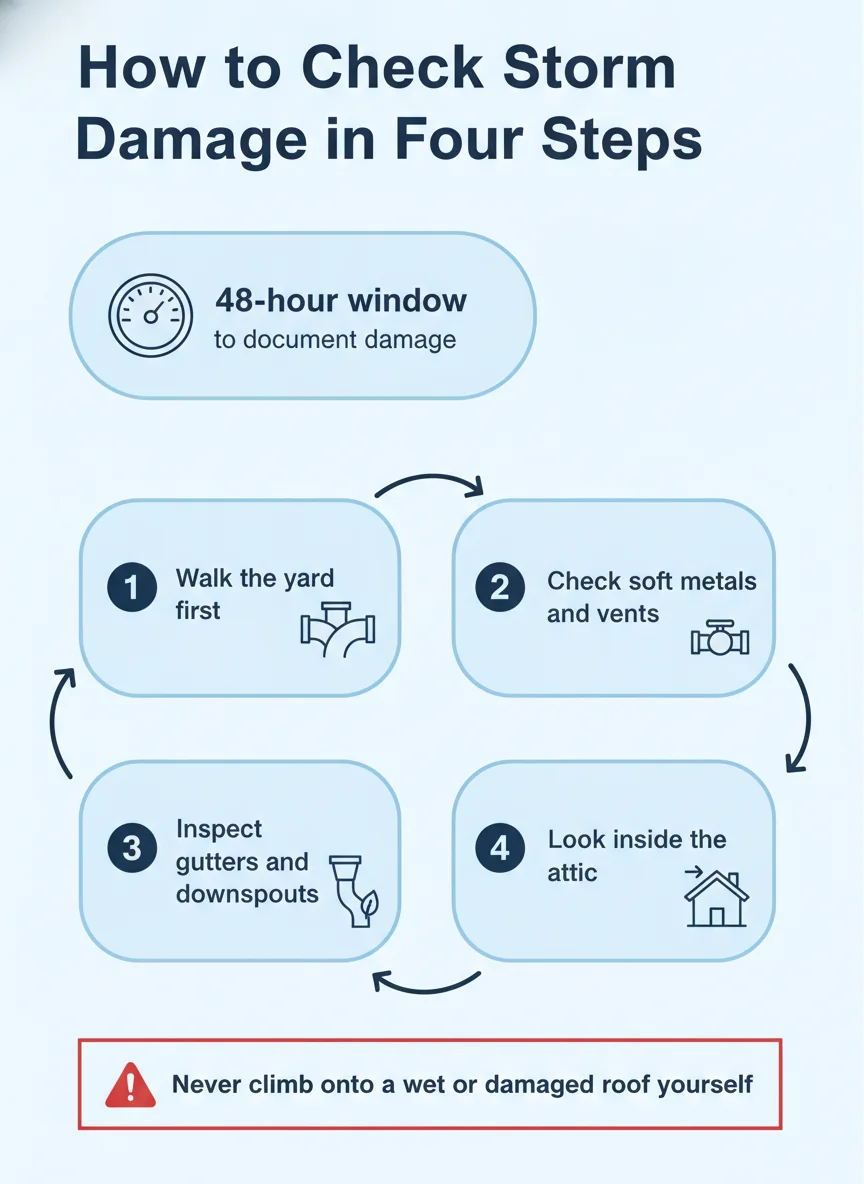
Step-by-step: walking the property the morning after
Work from the ground up and outside in. This order keeps you safe and makes sure you don't miss anything before cleanup starts.
- Walk the yard: Look for shingle pieces, granules, and any debris that doesn't belong, checking downwind areas and fence lines, not just directly below the roof edge.
- Check soft metals: Scan AC fins, window screens, and mailbox tops for dents, which confirm hail size even before you look at the roof itself.
- Scope the roof with binoculars: From the ground, look at vents, flashing, and ridge lines for anything dented, lifted, or missing, without climbing up yourself.
- Clear and inspect gutters: Remove debris and check for pulled hangers, dents, or disconnected downspouts around the full perimeter of the house.
- Check the attic: With a flashlight, look for daylight coming through the decking, damp insulation, or water stains on the rafters, especially near valleys and vents.
- Photograph everything: Take wide shots and close-ups of anything unusual, with a time stamp, before you clean up debris or move items.
- Call for an inspection: If you found granules, dents, or any sign of a breach, schedule a professional look before the next rain tests the roof further.
What the attic tells you that the roof can't
Signs of an active breach
A flashlight check of the attic is one of the fastest ways to confirm whether a storm actually broke through the roof surface. Look for pinpoints of daylight coming through the decking, which usually shows up near ridge lines, valleys, or around vent pipes where flashing failures are most common. Daylight means water has a path in too, even if you haven't seen a drip inside yet.
Also run your hand along exposed rafters and sniff for a musty smell, which can show up before visible staining does. Damp or darkened wood near a vent stack or chimney chase is a strong sign that water already found its way past the roof covering during the storm.
Signs everything held
If the attic is dry, free of daylight, and the insulation looks undisturbed, that's a good sign the roof surface itself held up even if the yard had debris in it. Minor granule loss or a few dented vent caps without any attic breach often means repair rather than full replacement is the right call.
Still, a dry attic the morning after doesn't rule out hidden bruising to the shingle mat, which can shorten the roof's life without leaking right away. That's why a ground-level check plus an attic check is a starting point, not a final verdict, on what the storm actually did.
What you can check yourself versus what needs a professional
Everything on this checklist, the yard walk, the gutter check, the attic look with a flashlight, is safe and reasonable for a homeowner to do solo. These steps don't require a ladder against the roof edge or any special equipment, just good light and a methodical pass around the property.
What you shouldn't do yourself is walk the roof surface to assess shingle condition up close, or try to diagnose flashing and seal strip damage from a ladder. Wet granules are slick, damaged decking can be soft in spots you can't see, and an untrained eye often misses bruised shingles that look fine until they fail months later.
A roof repair visit or a full storm and hail restoration inspection covers the parts of this check that require getting on the roof, documenting hail impacts the way an insurance adjuster expects to see them, and handling anything the ground check flagged. If you're not sure which you need, a straightforward inspection answers that question before any work gets scheduled.
Keep the records, make the call
The habit worth building is simple: after any significant hail or wind event, give yourself twenty minutes the next morning to walk the yard, scan the roof from the ground, check the gutters, and peek into the attic before anything gets cleaned up or rained on again. That single pass, backed up with a handful of photos, puts you in a strong position whether the damage turns out to be minor or significant. For a deeper look at preparing before the next system arrives, see our storm prep checklist.
If your walk-around in Frisco or anywhere else in the DFW Metro turns up granules, dented metal, or attic daylight, don't wait on it. Absolute Professional Roofing Contractors LLC can get out, document what's there, and tell you plainly whether you're looking at a repair or something bigger.
Frequently asked questions
What should I check first after a storm?
Start on the ground, not the roof. Walk your yard and driveway looking for granules, shingle pieces, or metal fragments, then check gutters, downspouts, and the attic before you ever think about climbing a ladder.
Is it normal to find shingle granules in the gutter after hail?
A few loose granules are normal wear, but a heavy, gritty buildup right after a hailstorm usually means the hail stripped the protective coating off the shingles. That's a sign worth having a professional look at soon.
Can I inspect my own roof after a storm?
You can look from the ground with binoculars or check the attic for daylight and damp spots, but walking the roof surface yourself is risky, especially after rain, and can mask or worsen damage. Leave the roof surface itself to a trained eye.
How soon do I need to call a roofer after storm damage?
Sooner is better, especially if you see daylight in the attic, active dripping, or missing shingles, since exposed decking lets water in with every additional rain event. Even if nothing looks urgent, a prompt inspection catches problems before they spread.
What should I photograph for an insurance claim?
Photograph anything out of place before you clean it up, including debris in the yard, dented metal, damaged gutters, and any interior water stains, with a wide shot and a close-up of each item. Time-stamped photos taken the same day are the most useful record you can have.