Storm Damage Decisions Across North Texas
North Texas sees its share of severe weather, and homeowners in Rockwall, Wylie, and towns across the region know the drill after a bad storm rolls through: check the roof, check the gutters, and figure out what needs to happen next. The decision that follows isn't always as simple as repair versus replace.
After hail or wind damage, homeowners generally end up choosing between two real paths: a full restoration that addresses the whole roof surface, or a targeted partial repair limited to the areas with confirmed damage. Both are legitimate options depending on how the storm actually hit the house.
Why the Right Choice Depends on Damage Pattern
Hail rarely hits a roof evenly. Wind direction, roof pitch, and even which side of the house faced the storm all affect where the worst damage lands, which is exactly why the repair-versus-restoration choice depends so heavily on inspection findings rather than assumption.
When Damage Is Contained
Some storms cause damage that's genuinely limited to one slope or section of the roof, often the side that faced into the wind and hail. In these cases, a partial repair addressing just the affected shingles and any related flashing can restore the roof's protection without touching undamaged sections.
This approach tends to work best when the rest of the roof is still relatively young and in good condition, since matching new shingles to an older, weathered roof section can create a visible difference in color and texture.
When Damage Is Widespread
Other storms, particularly ones with larger hail or sustained high winds, cause damage across the entire roof surface. When impact marks, granule loss, or wind-lifted shingles show up on every slope, a full restoration usually makes more sense than trying to patch multiple isolated areas.
Widespread damage also raises the odds that some impacts have compromised the shingle mat without being immediately visible, which is part of why a full storm and hail restoration often gets recommended once damage is confirmed across the whole roof.
| Situation | Partial Repair | Full Restoration |
|---|---|---|
| Damage spread | Limited to one slope or section | Present across most or all of the roof |
| Roof age | Newer roof with strong remaining life | Older roof or already near replacement age |
| Shingle matching | Manageable if section is small | Not a concern, whole roof is uniform |
| Insurance scope | Adjuster approves specific line items | Adjuster approves full roof scope |
What Hail and Wind Actually Do to a Roof
Hail impact bruises the shingle mat underneath the granule surface, which weakens the shingle's ability to shed water even when there's no visible hole or crack. This is why hail damage is often harder to spot than wind damage, which more commonly shows up as visibly lifted, torn, or missing shingles.
Wind damage tends to concentrate at roof edges and ridge lines where uplift forces are strongest, while hail damage is usually more evenly distributed across whatever slope faced the storm. Both types can compromise a roof's protection even when the damage isn't obvious from a ladder or the ground.
Step-by-Step: What Happens After You Report Storm Damage
Once you suspect storm damage, the process from first inspection to completed work generally follows a consistent path.
- Schedule an inspection: A roofer walks the full roof surface, photographing impact marks, granule loss, and any flashing or vent damage found.
- Review findings together: The roofer walks you through what was found, section by section, so you understand the full scope before anything else happens.
- File the insurance claim: If damage supports a claim, documentation is submitted and an adjuster meeting is scheduled to review the roofer's findings.
- Meet the adjuster: The roofer meets with your adjuster on-site to walk through the documented damage and answer any scope questions.
- Review the approved scope: Once the adjuster approves a scope, it's reviewed line by line to confirm nothing significant was missed.
- Complete the work: The approved repair or restoration work is scheduled and completed according to the finalized scope.
What an Inspection Typically Reveals
Confirmed Hail Impact
A confirmed hail hit shows up as circular bruising on the shingle surface, often with granules displaced or missing at the impact point. On metal components like vents, flashing, or gutters, hail impact typically leaves visible dents that help confirm the size and intensity of the storm.
When these signs are found consistently across a roof slope, it supports a broader restoration scope rather than treating each impact as an isolated repair item.
Confirmed Wind Damage
Wind damage usually presents as shingles that are cracked, torn, curled upward, or missing entirely, most commonly along roof edges, ridges, and any area where shingles were already slightly compromised before the storm. Flashing can also shift or lift under strong wind, opening a path for water intrusion.
An inspection documents exactly where wind damage occurred and whether it's isolated to edges and ridges or has affected the broader field of the roof, which shapes whether repair or restoration is the better fit.
DIY vs Calling a Pro
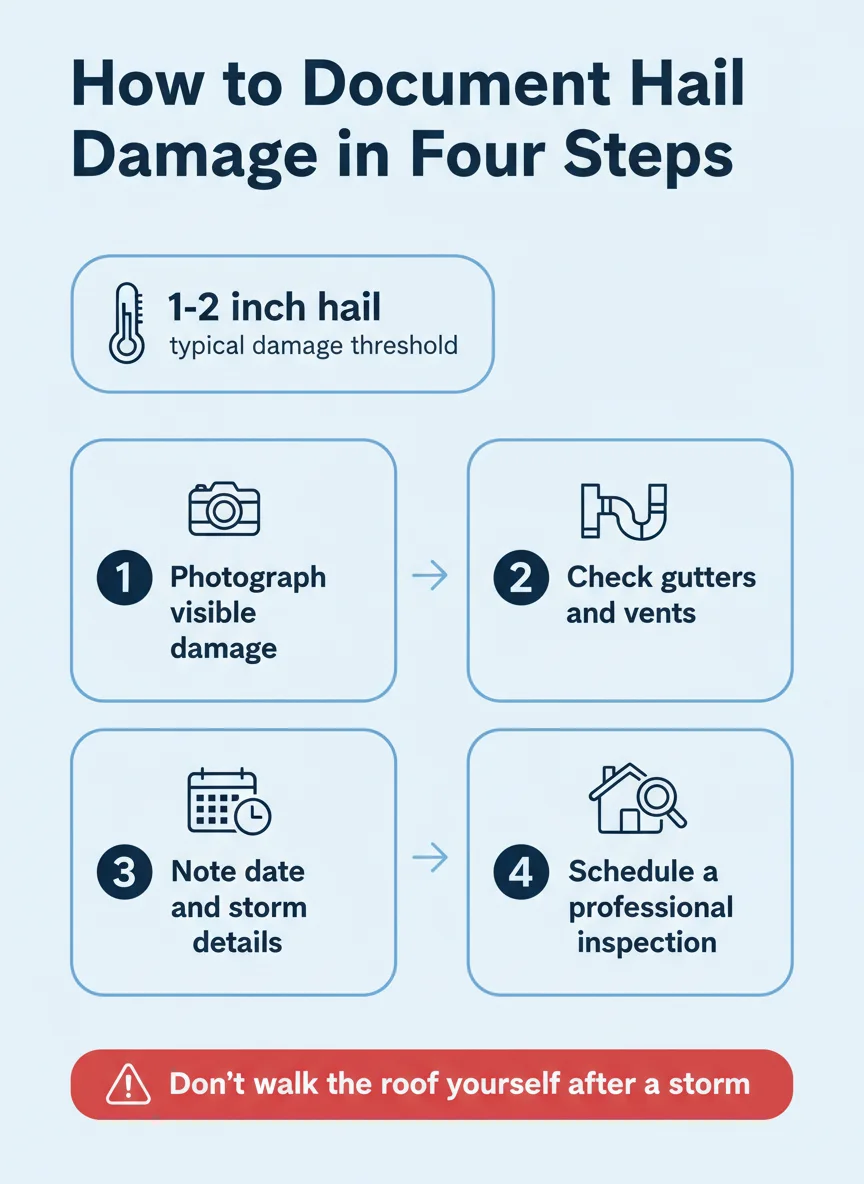
Homeowners can safely check gutters at ground level for granule buildup and look at downspouts, window screens, and any exterior metal fixtures for dents, all of which offer early clues about whether hail hit the property hard enough to warrant an inspection.
The roof itself, however, should always be assessed by a licensed roofer. Confirming shingle bruising or wind lift requires close-up, hands-on inspection, and an inaccurate self-assessment can either miss real damage or lead to an insurance claim built on incomplete information.
A licensed roofer also brings the documentation and adjuster experience that homeowners generally don't have on their own, which matters when the goal is getting a fair and accurate scope approved rather than guessing at what a claim should include.
Choosing the Path That Fits Your Roof
Full restoration and partial repair are both legitimate responses to storm damage, and the right one depends entirely on how the damage is actually distributed across your roof. A thorough inspection is what turns that decision from a guess into an informed choice.
Absolute Professional Roofing Contractors documents damage carefully and works alongside adjusters so homeowners across the DFW Metro end up with the option that actually matches what their roof needs.
Frequently asked questions
How do I know if my roof has hail damage?
Hail damage often shows up as dented or bruised shingles, granule loss visible in gutters, and dings on metal vents, gutters, or window screens. Because damage isn't always visible from the ground, a professional inspection is the most reliable way to confirm it.
Should I repair or fully restore my roof after a hailstorm?
It depends on how widespread the damage is. Isolated damage to one section can often be repaired, while impact spread across the whole roof surface usually calls for full restoration to ensure consistent protection and appearance.
Will my insurance pay for a full roof restoration or just a repair?
Coverage depends on your policy and how the adjuster documents the damage during inspection, not on which option you'd prefer. A thorough, well-documented inspection gives the adjuster the clearest picture of what the damage actually requires.
How soon after a storm should I get my roof inspected?
Getting an inspection as soon as reasonably possible after a storm helps catch damage before it worsens from additional weather exposure. It also strengthens your position if you end up filing an insurance claim.
Can hail damage be hidden and show up as a leak later?
Yes, hail can bruise shingles or crack the underlying mat without an obvious visible dent, and that weakened spot can develop into a leak weeks or months later. This is why a hands-on inspection matters more than a visual check from the ground.