Why storm restoration pricing looks different from a standard repair
Storm and hail restoration sits in its own category, separate from a routine leak fix or a planned replacement, because insurance is usually part of the picture. That changes both how the scope gets defined and how the final cost gets determined, since it's built around an adjuster's approved estimate rather than a simple homeowner-to-contractor quote.
Across Plano, Rockwall, Wylie, Rowlett, and the rest of the DFW Metro, hail events can affect entire neighborhoods at once, and the resulting restoration cost depends heavily on the extent of damage found and how thoroughly that damage gets documented for the claim. This guide breaks down what actually shapes that number.
The factors that shape a storm restoration scope
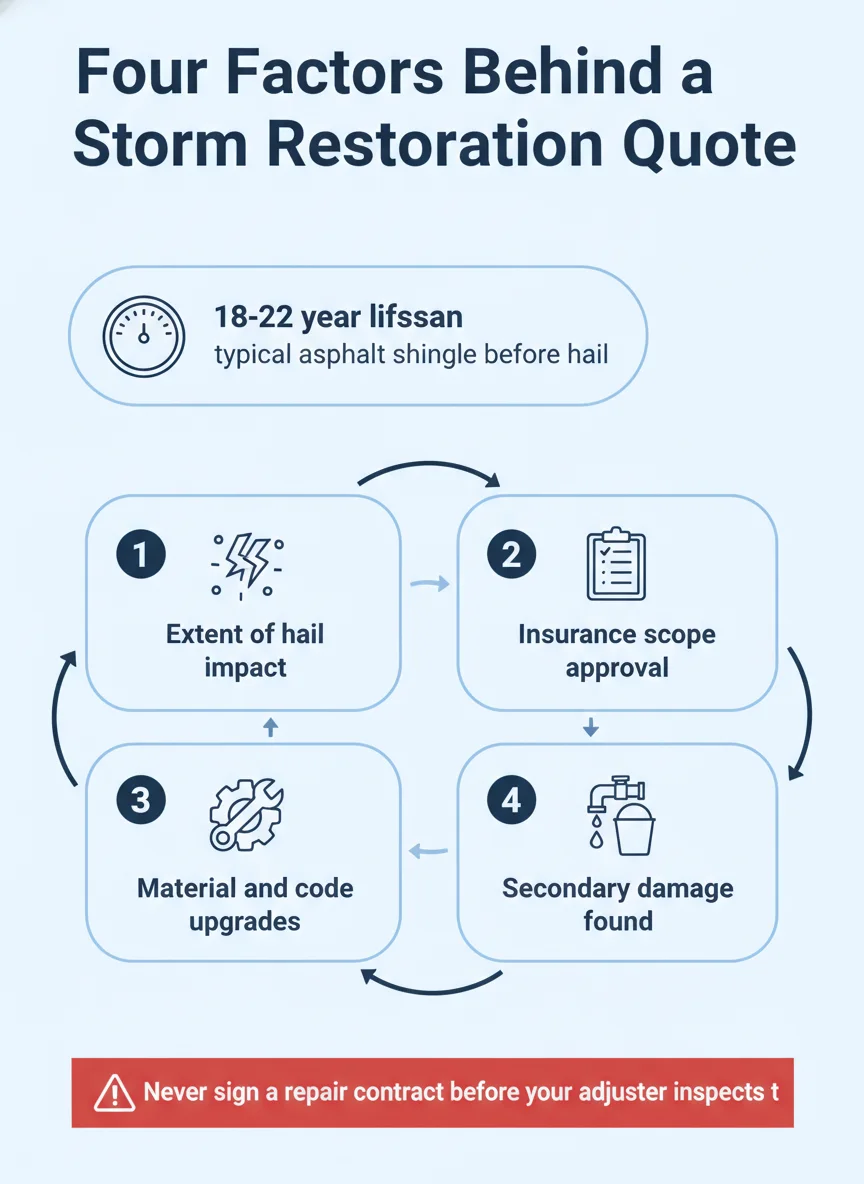
Storm restoration cost comes down to how much of the roof was actually affected, what the insurance adjuster approves as covered scope, and whether any secondary systems, like gutters or ventilation, were also damaged in the same event.
Extent and pattern of hail impact
Hail damage rarely hits a roof evenly. Wind direction during the storm often means one slope takes far more impact than another, and the density of hits across a given area determines whether that slope needs full replacement or a targeted repair.
A thorough storm and hail restoration inspection documents every impact point with photos, which matters both for scoping the work correctly and for supporting an insurance claim if the damage turns out to be more extensive than it first appeared from the ground.
The insurance claim process
Once a claim is filed, an adjuster inspects the roof and produces an estimate that defines what's covered. That approved scope drives the restoration cost more than almost any other factor, since it determines whether the project covers full replacement, partial repair, or just isolated spot fixes.
If the initial estimate misses damage that a closer inspection reveals, a legitimate supplement can be submitted for adjuster review to correct the scope. This process works best when the original inspection was thorough and well-documented from the start.
| Damage pattern | Typical scope | Cost driver |
|---|---|---|
| Isolated hits, one slope | Targeted repair | Localized labor and material |
| Impact across most of roof | Full replacement | Material and full tear-off |
| Damage to gutters and vents too | Restoration plus secondary repair | Additional systems affected |
| Damage found after initial estimate | Supplement to approved scope | Additional documentation and review |
What a full restoration actually covers
A storm restoration project isn't limited to the roof surface itself. Depending on the storm, it can involve gutters that were dented or pulled loose, ventilation components damaged by wind or impact, and flashing that got compromised along with the shingles.
Bringing all of that back to full strength is the point of restoration versus a narrow repair. It's also why documenting every affected system matters during the initial inspection, so nothing gets missed in the insurance scope before work begins.
Step-by-step: how a storm restoration project moves forward
Storm restoration follows a more structured path than a typical repair because of the insurance component involved. Here's roughly how that process unfolds from first inspection to finished project.
- Damage inspection: A full inspection documents every impact point across the roof, plus any gutter, flashing, or ventilation damage found.
- File the claim: Photos and documentation support the insurance claim, giving the adjuster a clear picture of the actual damage present.
- Adjuster meeting: Meeting the adjuster on-site helps ensure the approved scope matches what the inspection actually found.
- Scope review: The approved estimate is reviewed carefully for anything that may have been missed before work begins.
- Supplement if needed: Any legitimately overlooked damage is documented and submitted to the adjuster for additional review.
- Restoration work: Once the scope is finalized, the roof, and any secondary systems affected, are restored to full strength.
What gets found once the restoration begins
Storm damage doesn't always announce itself clearly from the ground, which is why what gets uncovered during the actual restoration can shift the picture from the initial estimate.
When the damage matches the estimate
When the initial inspection was thorough and the adjuster's estimate reflects the actual condition of the roof, restoration tends to move smoothly from approval to completion without major scope changes. This is the outcome a well-documented claim is built to produce.
It's also the more common outcome when a claim is filed promptly after the storm, before further weathering can compound the original hail damage.
When additional damage surfaces
Sometimes tear-off reveals decking damage, hidden flashing failure, or hail bruising on a slope that wasn't fully visible during the initial inspection. When that happens, documenting it clearly and submitting it as a supplement is the legitimate path to getting the full scope covered.
This is also where an honest advocate matters most in the process, since the goal is making sure the claim reflects everything the storm actually did to the roof.
What a homeowner handles versus what the claims process needs
A homeowner can absolutely photograph visible damage, note the date of the storm, and reach out to their insurance company promptly after a hail event. Acting quickly on those first steps genuinely helps the claim move faster.
What's much harder to do alone is a full roof-level damage assessment, meeting an adjuster with the technical knowledge to point out impact patterns, or knowing what a legitimate supplement should include. That's a specialized part of the process that benefits from experience.
A roofer experienced in storm claims can inspect thoroughly, meet the adjuster with documentation in hand, and advocate for a scope that reflects the real damage, start to finish.
Getting a restoration scope that matches your roof's real condition
Storm and hail restoration cost across the DFW Metro depends on the extent of the damage, how well it's documented, and how the insurance scope gets defined and, if needed, corrected. None of that is guesswork when the initial inspection is done right.
For homeowners weighing restoration against a smaller roof repair, or wanting to understand how long a roof actually lasts after storm damage, Absolute Professional Roofing Contractors LLC provides a free inspection and photo report the same day.
Frequently asked questions
What determines storm and hail restoration cost?
The main factors are how widespread the hail damage is, whether the insurance-approved scope covers full replacement or partial repair, and whether secondary damage like gutters or vents is also affected. A small, isolated hit costs far less to address than a roof with impact damage across every slope.
Does insurance cover the full cost of hail damage?
It depends on the policy and the adjuster's assessment of the damage, which is why documentation matters so much during the claims process. A thorough inspection with photo evidence helps ensure the approved scope reflects the actual damage present.
Why do restoration quotes sometimes get supplemented?
Supplements happen when additional damage is found once work begins, or when the initial insurance estimate missed items that were actually damaged in the storm. A legitimate supplement request is backed by documentation and submitted for adjuster review.
Does the size of the hail affect repair cost?
Yes, larger hail tends to cause deeper bruising or cracking that's more likely to compromise the shingle mat, while smaller hail may cause less severe, more cosmetic damage. The size and density of impacts across the roof both factor into the assessment.
Can I choose a different material during storm restoration?
In many cases yes, homeowners can upgrade materials during a storm-driven replacement, though insurance typically covers the cost to restore like-for-like coverage. Any upgrade beyond that scope is usually an out-of-pocket difference.