
Why Roof Replacement Comes Up So Often In Plano
Plano sits in the heart of the DFW Metro, where roofs deal with intense summer UV, occasional hail, and enough temperature swings across the year to stress even a well-installed roof over time. Homes built during Plano's biggest growth periods are now reaching the age where asphalt shingles start showing their wear, which is why replacement conversations come up so regularly across the city's established neighborhoods.
It's not always a dramatic event that triggers the decision. Sometimes it's a string of small repairs that finally adds up to more sense as a full replacement, and sometimes it's a hailstorm that pushes an aging roof past the point where a patch makes sense. Either way, understanding what local homes actually run into helps set realistic expectations before you're standing in your driveway looking up at a problem.
What Causes Plano Homeowners To Need A New Roof
There are really two paths that lead to a roof replacement: gradual age-related wear, and sudden damage from a specific storm event. Both are common across Plano, and knowing which one applies to your situation changes how the process unfolds, especially when insurance is involved.
Age And Wear Over Time
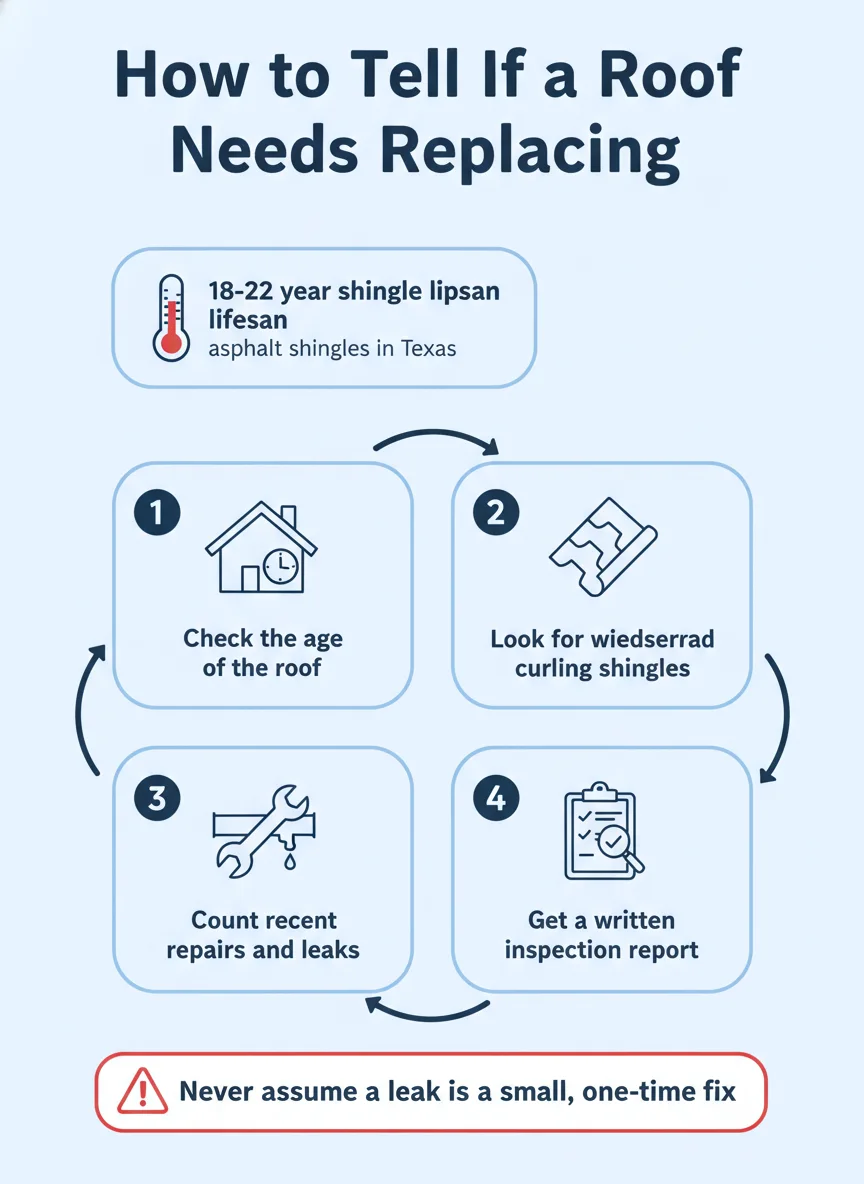
Asphalt shingles in the Texas climate typically last somewhere in the range of 18 to 22 years across the industry, though the exact number depends on the shingle quality, the roof's ventilation, and how much direct sun exposure it gets. As a roof approaches that range, granule loss accelerates, shingles start to curl at the edges, and the underlayment beneath them becomes more brittle.
By this stage, repairs tend to become more frequent and less effective, since patching one worn area doesn't address the fact that the rest of the roof is aging at the same rate. This is usually the point where a full Roof Replacement makes more financial sense than continuing to chase individual repairs.
Storm And Hail Damage
Plano's location in North Texas means hail and high wind events are a real factor, and a single significant storm can push a roof that had years of life left into replacement territory. Hail impact can bruise or crack shingles in ways that aren't always visible from the ground, which is why a professional inspection after any notable storm is worth doing even if nothing looks obviously wrong.
In these cases, the path to replacement often runs through an insurance claim rather than an out-of-pocket decision. Documentation matters a great deal here, since the difference between storm damage and ordinary wear determines what a policy will actually cover.
| Trigger | What It Looks Like | Typical Path |
|---|---|---|
| Age and wear | Widespread curling, granule loss, frequent repairs | Planned replacement, no insurance involved |
| Hail impact | Bruised or cracked shingles after a storm | Inspection and possible insurance claim |
| Wind damage | Missing or lifted shingles after high wind | Inspection and possible insurance claim |
| Ongoing leaks | Recurring interior water stains | Diagnosis, then repair or replacement decision |
What A Roof Replacement Actually Involves
A full replacement is more than swapping old shingles for new ones. It starts with removing the existing roofing material down to the decking, inspecting that decking for rot or damage that needs to be addressed before anything new goes on, and then installing new underlayment, flashing, and shingles to manufacturer specifications.
The details matter as much as the shingles themselves. Flashing around chimneys and vents, proper ventilation to keep the attic performing well, and correct fastening for Texas wind conditions all affect how long the new roof actually lasts. A rushed installation on any of these points can shorten the life of even the best materials.
Step-by-step: What The Replacement Process Looks Like
Here's the general sequence homeowners can expect once they've decided to move forward with a replacement, whether it's age-driven or storm-related.
- Free inspection: A roofer gets on the roof, photographs the condition, and provides a detailed written report the same day.
- Scope and materials: You review the recommended materials and scope of work based on what the inspection found.
- Insurance coordination: If storm damage is involved, documentation is shared with your adjuster to support the claim.
- Material delivery: Shingles and related materials are delivered to the property ahead of the install date.
- Tear-off and decking check: Old roofing is removed and the decking is inspected for any hidden rot or damage.
- Installation: New underlayment, flashing, ventilation, and shingles go on to manufacturer specifications.
- Final walkthrough: The finished roof is reviewed and cleanup is completed before the crew leaves the property.
How To Tell Which Situation Applies To Your Roof
Signs Pointing To Age-Related Replacement
If your roof is approaching or past the upper end of its expected lifespan and you've noticed widespread curling, fading, or granule loss across multiple roof planes rather than one isolated spot, that's a sign the whole system is wearing out together. Frequent small repairs that keep popping back up in different spots are another signal that patching has run its course.
In these cases, there's usually no single storm to point to. It's the cumulative effect of years of Texas sun and temperature swings, and a full replacement addresses the whole roof rather than treating one symptom at a time.
Signs Pointing To Storm-Related Replacement
If the roof was performing fine before a specific storm and you're now seeing missing shingles, visible impact marks, or a new leak that started shortly after high wind or hail, that points toward storm damage. This is worth a professional inspection even if the visible damage looks minor, since hail bruising isn't always obvious from the ground.
This is also the scenario where working through insurance makes sense, and where thorough documentation of the damage matters most for getting a fair outcome from the claim.
DIY vs Calling A Pro For Roof Replacement Decisions
There's very little of a full roof replacement that a homeowner should attempt themselves. Beyond basic ground-level and attic checks to spot warning signs, the actual tear-off, decking repair, and installation require licensed, insured professionals working safely at height with the right materials.
Where a homeowner's judgment does matter is in the decision-making stage, deciding whether to get a second opinion, understanding what an inspection report is actually telling you, and knowing enough about the process to ask good questions of any contractor bidding the work.
A written, photo-documented inspection is the best tool for making that decision with confidence, since it separates what's actually failing from what still has useful life left. That clarity matters whether you're paying out of pocket or working through an insurance claim.
Getting Started On A Roof Replacement In Plano
Whether your roof is showing its age or recovering from a recent storm, the first step is the same: get a clear, honest look at what's actually going on before deciding anything. For a deeper look at what factors into pricing, see our guide on what drives the cost of roof replacement in Texas.
Homeowners across Plano can start with a free, no-obligation inspection that includes photos and a same-day written report, which gives you a real basis for deciding between a repair and a full replacement. Absolute Professional Roofing Contractors has served the Plano area and the wider DFW Metro since 2009.
Frequently asked questions
How do I know if my roof in Plano needs to be replaced instead of repaired?
A roof usually needs replacing rather than repairing when the shingles show widespread wear across most of the roof, when you've had multiple repairs in a short period, or when the roof is near or past its expected lifespan. A single localized issue, like one damaged section after a storm, is often repairable instead.
How long does a roof replacement take in Plano?
Most residential replacements are completed in a matter of days once materials are on site, though the exact timeline depends on the size and complexity of the roof and current weather conditions. A detailed inspection upfront gives a much clearer picture of what to expect for your specific home.
What drives the cost of a roof replacement in Plano?
Cost is driven by the size and pitch of the roof, the materials chosen, how many layers of old roofing need to be removed, and any underlying decking repairs the crew finds once the old roof comes off. Getting a written scope after an inspection is the clearest way to understand what applies to your home.
Will my homeowners insurance cover a roof replacement in Plano?
It depends on the cause of the damage. Storm and hail damage is often covered under a standard policy, while wear from age generally is not, which is why an honest inspection that distinguishes storm damage from normal aging matters before filing a claim.
What should I look for when choosing a roofing contractor in Plano?
Look for a licensed, insured contractor who provides a detailed written inspection and scope rather than a verbal estimate, and who is upfront about what's storm damage versus normal wear. A contractor who documents everything with photos gives you a much clearer basis for decisions and, if needed, an insurance claim.