
Hail damage roof repair, restored right.
Bruised shingles and dented vents don't always show up from the driveway. We document the damage across the DFW Metro and get your roof back to full strength.
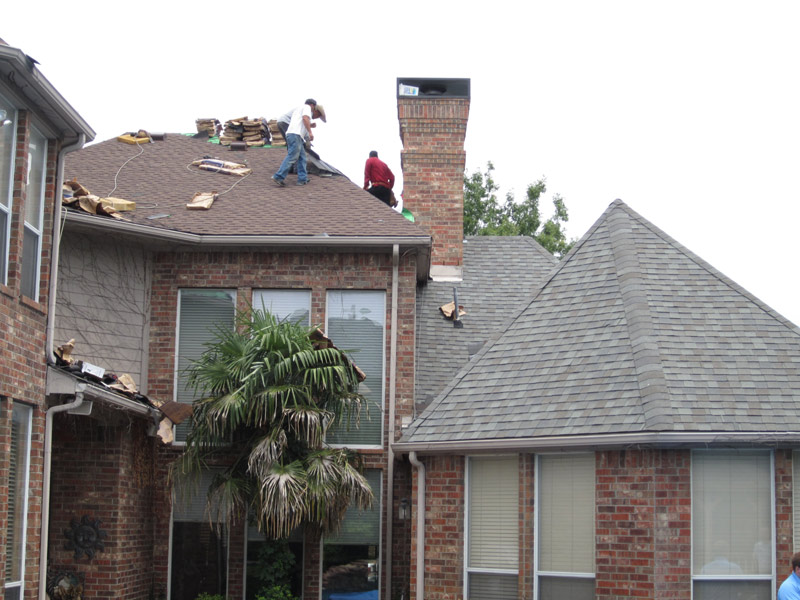
Absolute Professional Roofing Contractors handles hail damage roof repair across the DFW Metro, from Plano out to Dallas, Frisco, and McKinney. We're a licensed Texas roofing contractor (TX #80001716) and GAF factory-certified, and hail work is a big part of what we do here. After a hailstorm rolls through, we get on the roof, document what's there, and tell you plainly whether it's a repair or a full replacement.
Can hail damage a roof without leaving visible holes?
Yes, and that's exactly why hail damage gets missed for years. Hail rarely punches through shingles, it bruises the mat underneath and knocks loose the granules that protect it from the sun. From the ground the roof can look completely normal. Up close, an inspector finds soft spots where the mat has been crushed, dented soft metals like vents and gutter caps, and a pile of granules collecting at the downspouts. Bruised shingles fail early because the sun goes straight to work on the exposed asphalt underneath, so a roof that looks fine today can start leaking well before its expected life is up.
Warning signs to watch for
Bruised or soft shingles
Press gently on a shingle and feel for a spongy or dented spot instead of a firm surface. That's the shingle mat being crushed from underneath, and it doesn't heal on its own.
Granules collecting in the gutters
A handful of loose granules at every downspout after a storm means the shingle surface took a beating. Bald patches follow soon after.
Dented vents, gutters, or flashing
Soft metal on the roof dents easier than shingles, so a run of small dents on a turbine vent or gutter cap is often the first visible clue that hail hit the property.
Collateral damage on siding or the AC unit
Cracked screens, dinged siding, or bent fins on the outside AC unit usually line up with the same storm, and they're worth pointing out to an adjuster along with the roof.
What is causing the damage
Direct hail impact
Hailstones striking at an angle bruise the mat of the shingle and knock granules loose on contact, weakening the shingle even when no hole forms.
Roof age and brittleness
Older shingles have less flex left in them, so the same size hailstone does more damage to a roof nearing the end of its life than it would to a newer one.
Slope and wind direction during the storm
Slopes facing into the wind during the storm usually take a heavier hit than sheltered slopes, which is why hail damage is often worse on one or two sides of the roof.
Thin or lower-grade shingle materials
Some shingle products resist impact better than others, and a roof installed with a thinner product tends to show bruising sooner.
What to expect during the visit
We inspect and photograph every slope of the roof, along with the gutters, vents, and any exposed soft metal. We chalk and count hail hits per test square the way an insurance adjuster does, so the documentation holds up if you file a claim. We also check for collateral damage on siding, screens, and the outside AC unit, since that helps build the full picture of what the storm did. Once we've walked the whole roof, we explain whether the damage is repairable or points to a full replacement, and if you're filing a claim, we walk you through what that process looks like from here.
Related services you may need
If the hail hit is widespread enough that patch repairs won't hold, we'll talk through a full Roof Replacement instead. Dented or clogged gutters from the same storm often get addressed at the same time under Gutters, and if only a section of the roof is affected, Roof Repair covers that scope on its own.
The cost of waiting
Bruised shingles don't stay bruised, they keep breaking down. Once the protective granules are gone, the sun bakes the exposed mat faster than the rest of the roof, and what started as scattered soft spots turns into active leaks a season or two later. Waiting also risks the insurance filing window closing on damage that was there the whole time but never got documented, so a roof that would have been covered ends up looking like ordinary wear and tear instead.
How do I know if my roof has hail damage?
The most reliable way is a close inspection on the roof itself, since bruising and granule loss rarely show from the ground. Look for granules piling up at the downspouts and dents on vents or gutter caps as early clues, then have someone walk the slopes to check for soft spots in the shingle mat.
Will insurance cover hail damage repair?
Whether a claim is approved depends on the extent and pattern of the damage and the terms of your specific policy, not on how the roof looks from the street. We document every slope with photos and test-square counts, and if you file, we meet with your adjuster and review the approved scope so nothing gets missed.
How long does hail damage roof repair take?
The inspection itself typically takes an hour or two to document properly. The repair timeline after that depends on how much of the roof was affected, whether it's a targeted repair or a full replacement, and whether an insurance claim is part of the process.
If a recent storm rolled through your part of the DFW Metro, give us a call and we'll get on the roof to see what's really there. It's a straightforward way to know where you stand before small hail damage turns into a bigger problem.
- Storm and hail inspections, insurance claim help from start to finish, and repairs that bring your roof back to full strength.