Flat roof repair, done right.
Ponding, punctures, and seam failures don't fix themselves on a low-slope roof, and they rarely show up where the water is actually getting in. We repair flat roofs across the DFW Metro and tell you plainly when a repair is enough and when it isn't.
A leaking flat roof rarely leaks straight below where you find the stain, because water spreads across the deck before it finds a way through the ceiling. Absolute Professional Roofing Contractors repairs flat and low-slope commercial roofs across the DFW Metro, from a single puncture to a section of membrane that has aged past its limit. This page covers the repair side of flat roofing: what causes it, what we check, and when a repair genuinely holds.
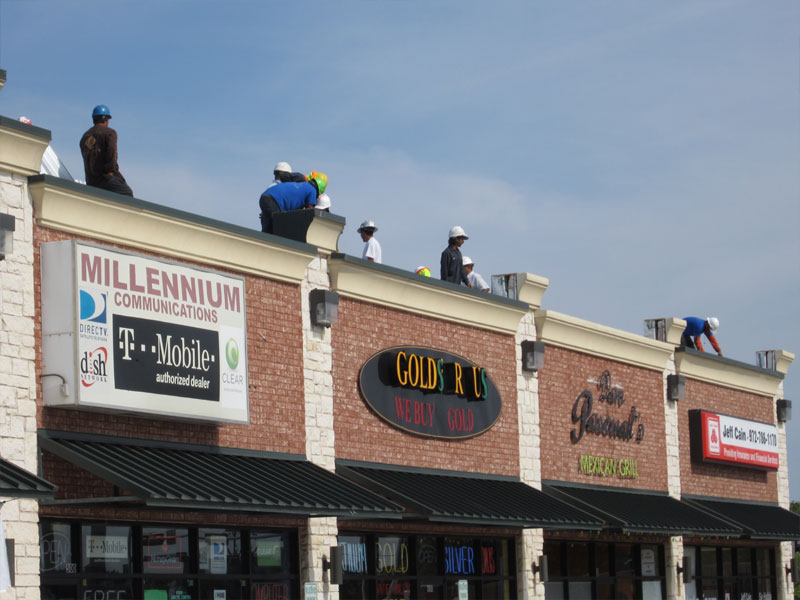
Is water pooling on your roof instead of draining off?
Ponding water that sits for more than a day or two is a sign the roof's slope or drainage isn't moving water where it needs to go. It puts constant weight and moisture pressure on the membrane and any seams in that low spot, and over time it accelerates aging right where the roof can least afford it. Ponding by itself isn't always an emergency, but it is a pattern worth having looked at before a small low spot turns into a chronic leak point.
Warning signs to watch for
Water pooling more than 48 hours after rain
Persistent ponding means the drainage slope isn't working the way it was designed to, and it puts long-term stress on the membrane sitting under the water.
Visible punctures or tears in the membrane
Foot traffic, dropped tools, or storm debris can puncture a membrane cleanly, and a small tear left unsealed lets water in every time it rains.
Bubbling or soft spots underfoot
A soft or spongy section usually means moisture has already gotten under the membrane and is saturating the insulation below it.
Interior ceiling stains below the roofline
A stain inside the building means water has already traveled through the roof assembly, and the entry point on the roof surface is often several feet from the stain itself.
What is causing the problem
Seam failure
Welded or adhered seams open with age and temperature cycling, and an open seam is one of the most common paths water takes into a low-slope roof.
Physical damage to the membrane
Punctures from equipment, tools, or storm debris break the membrane's seal in a single spot, and that spot needs patching before it grows.
Drainage that can't keep up
Undersized or poorly placed drains leave water sitting on the roof longer than the membrane was built to handle.
A membrane near the end of its service life
Repeated repairs across different parts of the same roof usually mean the membrane itself is aging out rather than failing in isolated spots.
What to expect during the visit
We start with a free, documented inspection of the roof surface, the drainage, and the trouble area, with photos of everything we find. If there's an active leak, we address that first to stop water from getting further into the building. From there we walk you through what caused the failure and whether a targeted repair, patch, or section replacement is the right call, and we give you that answer honestly rather than defaulting to the most expensive option.
Related services you may need
If a repair uncovers wider membrane aging, a full commercial re-roof may be the better long-term fix, and coatings can extend a roof that's still sound overall.
The cost of waiting
A single puncture or open seam is usually a quick, contained repair. Given a few more rain cycles, that same opening lets water track under the membrane, soak the insulation, and spread damage far past the original spot. By the time it reaches the ceiling inside the building, the repair often grows from patching a membrane to replacing insulation and decking as well.
How do I know if my flat roof needs repair or replacement?
It comes down to how widespread the damage is. A localized puncture, seam, or ponding issue is typically a repair, while a membrane that's failing in multiple, unrelated spots is usually telling you it's near the end of its life and replacement is the better investment.
How much does flat roof repair cost?
Cost depends on how much of the membrane and insulation is affected and how the roof is accessed. A documented inspection is what turns that into an accurate number rather than a guess.
Can a flat roof be repaired in cold or wet weather?
Emergency repairs to stop active water intrusion can be done in most conditions, though permanent membrane repairs generally need dry conditions for proper adhesion or welding, which we account for when we schedule the work.
If your flat roof is ponding, leaking, or showing a punctured membrane, call us for a free inspection anywhere across the DFW Metro.
- TPO, EPDM, and modified bitumen membranes, protective coatings, and repair for flat and low-slope roofs.